Key facts
- Gaza cancer patients are dying at two to three times the rate seen before the war.
- Israel destroyed Gaza's specialized cancer hospital, leaving 17,000 patients without local treatment options.
- Israel restricts travel for Gazans seeking treatment abroad, despite a ceasefire deal requiring free movement.
- COGAT stated medical evacuations are contingent on receiving country requests and security screening.
- Since the Rafah crossing partially reopened, approximately 5,800 Gazans have exited for medical treatment.
- Doctors report a significant increase in daily cancer deaths due to lack of chemotherapy and border restrictions.
Gaza's cancer patients are experiencing a significantly higher death rate, estimated at two to three times the pre-war pace, due to Israeli restrictions on travel for treatment and the destruction of specialized medical facilities. Doctors report that an estimated 17,000 Gazans with cancer now lack access to chemotherapy and advanced therapies locally.
Israel demolished Gaza's sole specialized cancer hospital, citing the discovery of a Hamas tunnel beneath it. This leaves patients with few options, as traveling abroad is expensive and subject to strict Israeli caps on daily crossings to Egypt, despite a 2025 ceasefire deal that stipulated free movement. COGAT, the Israeli military agency, stated that medical evacuations are coordinated with the World Health Organization and depend on receiving countries' requests and security screenings.
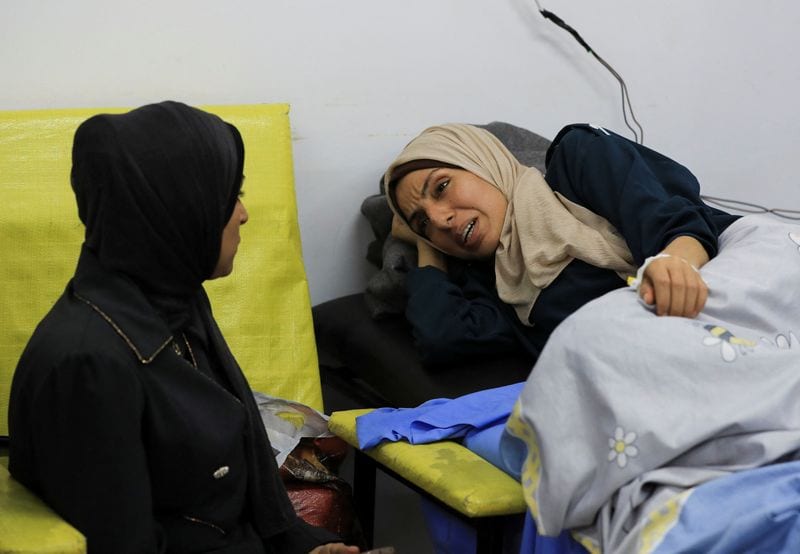
Khuloud Abu Sahmoud, a 33-year-old mother of two with advanced ovarian cancer, described her deteriorating condition and her wait for treatment abroad since last October, with her cancer having spread to her lungs and bones. COGAT reported that approximately 5,800 Gazans needing medical care have exited to Egypt since the Rafah border crossing was partially reopened in February. However, Palestinian health officials indicated that only 11,000 patients, a figure less than half of what was anticipated under the ceasefire agreement, have passed through Rafah. An additional 20,000 patients, including 5,000 with cancer, are registered for treatment abroad but have not yet been permitted to leave.
Before the war, local health services had seen progress, but most Gaza hospitals are now destroyed or damaged, with remaining facilities stripped of up to 70% of essential medical supplies. Dozens of specialists, including cancer experts who worked at the Turkish-Palestinian Friendship Hospital, were killed during the conflict. Mohamed Abu Selmia, head of Al Shifa hospital, stated that three to five cancer patients are dying daily due to the absence of necessary chemotherapy. Sobhi Skaik, a Palestinian surgeon and former head of the Turkish-Palestinian Friendship Hospital, noted that the pre-war death rate was around one to two per day, with some statistics placing it at 1.7 daily. Skaik also suggested that cancer might be spreading faster due to toxic materials from Israeli explosives, in addition to the lack of local treatment and border restrictions. Approximately 11,000 cancer patients were registered before the war, and Skaik estimates another 6,000 have likely developed cancer since, many unaware and without access to care.