Key facts
- Russia is employing FPV drones and glide bombs in escalating attacks on Zaporizhzhia.
- Residents have adopted the term 'safari' to describe drones hunting civilians and vehicles.
- Officials report that Russia's objective is to create panic and damage infrastructure.
- FPV drones are targeting civilian groups, vehicles, and public transport in the city's south.
- Glide bombs, difficult to intercept, are being used with increased frequency.
- Recent attacks have resulted in civilian casualties and damage to property and public transport.
Russia is intensifying its air campaign against Ukraine's southeastern city of Zaporizhzhia, employing a new wave of attacks that include first-person-view (FPV) drones and larger, more destructive glide bombs. Residents describe the tactics as a 'safari,' with drones 'hunting down' civilians and vehicles in the streets, a tactic previously seen in cities like Kherson.
Officials in Zaporizhzhia state that Russia's objective is to sow panic and damage infrastructure, creating maximum pressure on the civilian population. Governor Ivan Fedorov noted that FPV drones are being used to attack groups of civilians, vehicles, and public transport, particularly in the southern part of the city. These drones have been developed to extend their range, while air-launched glide bombs, like those that struck Kateryna Lahuta's seafood business, cannot be intercepted without more advanced air defense systems.
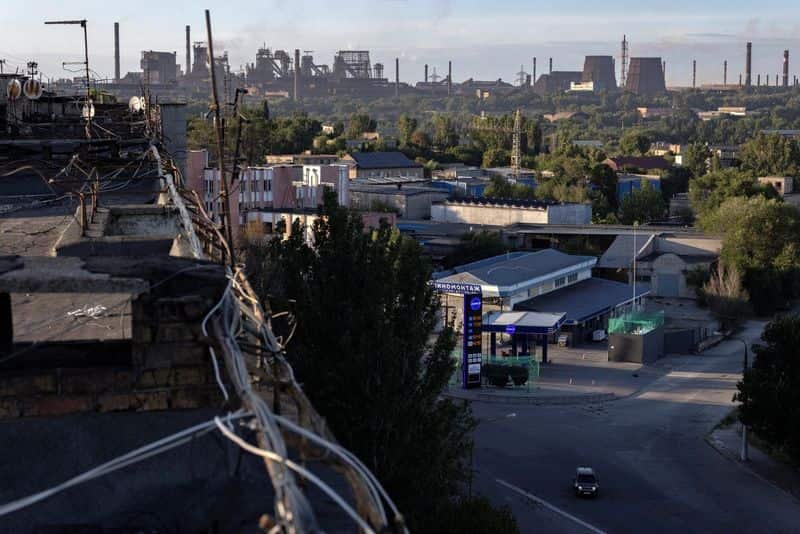
Life in Zaporizhzhia has become increasingly dangerous, with frequent air-raid alerts and visible scars of bombardment on buildings. Measures such as drone netting are being installed in some areas, and the city transit authority is experimenting with drone monitors and shatterproof glass for buses, though officials acknowledge these may not protect against larger munitions. Despite damage to public transport and the constant threat, services are not being reduced.
Similar tactics are being employed in other frontline cities, with the mayor of Kharkiv reporting FPV drone attacks as a primary instrument of terror. Russia has been attacking Zaporizhzhia four to six times daily with glide bombs. In a recent incident, eight bombs were dropped on residential areas within a short period, resulting in one death and 31 injuries. Residents are learning to adapt to the constant danger, with some expressing emotional exhaustion and a sense of resignation.