HomeEverythingEducationTV
Equities & FundsCrypto & Digital AssetsAI & TechnologyBusiness & CorporateUS Politics & PolicyGeopolitics & Global RiskMacro, Rates & FXCommodities & EnergyEuropean Politics & MarketsAsia-PacificReal Estate & Property
Story archiveAll categories
← All Stories

Rubio warns Iran controlling Hormuz Strait sets 'dangerous precedent'

Created at 22 Jul · 3:06 AM2 sources↑ Market-relevant
IN SHORT

U.S. Secretary of State Marco Rubio warned that Iran controlling the Strait of Hormuz would set a dangerous global precedent, stating international waterways are not the property of any nation. His comments come amid escalating conflict in the region, with oil prices rising and Houthi forces threatening shipping in the Red Sea.

✉Newsletter

PiQ Daily

Pick your topics. Get only what matters, on your cadence.

Key Numbers

$91Brent crude price per barrel
$4US gasoline price per gallon
11consecutive nights of US strikes against Iran
18US service members killed in the war

Who's Involved

Marco Rubio
U.S. Secretary of State warning about Iran controlling the Strait of Hormuz
Donald Trump
President threatening strikes on Iran's nuclear facilities
Houthi forces
Yemen-based group threatening Saudi vessels in the Red Sea
Eskandar Momeni
Iran's Interior Minister visiting Pakistan for mediation
ASEAN foreign ministers
Meeting attendees where Rubio made his remarks
Rubio warns Iran controlling Hormuz Strait sets 'dangerous precedent'

↳ Why This Matters

The escalating conflict in the Middle East and potential control of vital shipping lanes like the Strait of Hormuz and the Red Sea pose significant risks to global energy supply and prices, impacting economies worldwide. The diplomatic efforts and military actions highlight the volatile geopolitical situation and the potential for wider regional instability.

Key facts

  • U.S. Secretary of State Marco Rubio warned that Iran controlling the Strait of Hormuz would set a dangerous global precedent.
  • Rubio stated that international waterways are not the property of any nation and charging tolls for their use is unacceptable.
  • The U.S. military has conducted 11 consecutive nights of strikes against Iran.
  • Oil prices rose over 2% following threats from Iran-aligned Houthis against shipping in the Red Sea.
  • President Donald Trump confirmed 18 U.S. service members have been killed in the conflict.

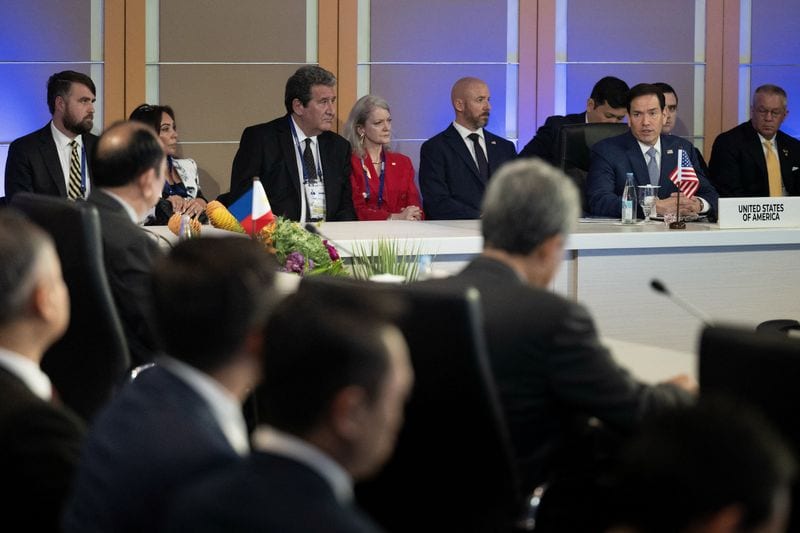
U.S. Secretary of State Marco Rubio stated that Iran controlling the Strait of Hormuz would establish a dangerous global precedent, emphasizing that international waterways are not the property of any single nation and that charging tolls for their use is unacceptable. Rubio made these remarks in Manila during a meeting of Southeast Asian foreign ministers, drawing parallels to territorial disputes in the South China Sea.

His comments come amidst escalating conflict in the Middle East. The U.S. military has conducted 11 consecutive nights of strikes across Iran, with explosions reported in several cities. Iran has also targeted U.S. military sites in Bahrain, Kuwait, and Jordan, and a tanker was reportedly hit in the Strait of Hormuz. Iran claimed to have struck Amazon infrastructure in Bahrain.

Regional tensions have been further heightened by threats from Yemen's Iran-aligned Houthi forces. Three oil tankers carrying Saudi crude reversed course in the Red Sea following Houthi warnings against ships loading or discharging Saudi oil. The Houthis have also announced a naval blockade on Saudi Arabia. President Donald Trump confirmed that 18 U.S. service members have been killed in the conflict and threatened further strikes on Iran's nuclear facilities.

Oil prices saw a further increase in Asian trade, climbing over 2% on Tuesday. The conflict has disrupted critical energy chokepoints, including the Strait of Hormuz and the Red Sea. Despite the ongoing hostilities, diplomatic efforts continue, with Iran reportedly receiving a proposal for a 10-day ceasefire and its Interior Minister visiting Pakistan to seek continued mediation.

Frequently asked questions

U.S. Secretary of State Marco Rubio warned that Iran controlling the Strait of Hormuz would set a dangerous global precedent, stating international waterways are not the property of any nation and charging tolls for their use is unacceptable.

The U.S. military has conducted 11 consecutive nights of strikes across Iran, with explosions reported in several cities. Iran has also targeted U.S. military sites and a tanker was reportedly hit in the Strait of Hormuz.

Houthi threats in the Red Sea have caused oil prices to rise, with three oil tankers carrying Saudi crude reversing course. This disruption affects major oil export routes.

Yes, Iran has reportedly received a proposal for a 10-day ceasefire, and Iran's Interior Minister has visited Pakistan to seek continued mediation efforts.

What Happens Next

01US Central Command to confirm any further strikes against Iran.
02Further statements expected from US and Iranian officials regarding the Strait of Hormuz.
03Monitoring of naval activity and potential Houthi actions in the Red Sea.

Get the newsletter.

Pick the topics you actually care about. We'll email when there's news worth your time, on the cadence you choose. Cancel any time from your account.

Cadence

How It Developed

US Secretary of State Marco Rubio stated that Iranian control of the Strait of Hormuz would establish a dangerous global precedent.
Rubio said the United States is willing to negotiate an end to the Iran crisis but Tehran is not serious about talks.
Three oil tankers carrying Saudi crude to Asia reversed course in the Red Sea due to threats from Yemen's Iran-aligned Houthis.
The Houthis announced a naval blockade on Saudi Arabia, opening a potential new front in the war.
Iran has threatened shipping through the Strait of Hormuz, making the Red Sea the main alternate route for Saudi oil exports.
A senior Iranian official stated Tehran received a proposal for a 10-day ceasefire.
Iran's Interior Minister Eskandar Momeni visited Pakistan to ask for continued mediation efforts.
Rubio stressed that Iran could not be allowed to control the Strait of Hormuz, arguing it would create a dangerous precedent.

Sources

T1
Rubio says US still willing to negotiate over Iran crisisReuters
T1
Iranian control of Hormus Strait Rubio sets 'dangerous precedent', Rubio warnsMiddle East Eye
T2
Marco Rubio Warns Iran Against Tolls in Strategic Strait of Hormuz ...english.mathrubhumi.com
T2
US strikes Iran for 11th night as Hegseth reveals $37.5b cost; Rubio ...gulfnews.com
T2
Hormuz Doesn't Belong To Anyone; Tolls Set 'Unacceptable Precedent ...ndtvprofit.com

Related Stories

Japan seeks Southeast Asia sea lanes to avoid regional instability
22 Jul · 12:05 AM
Trump says U.S. will 'take care of' Houthis if Red Sea blockade imposed
21 Jul · 6:06 PM
Hormuz vessel crossings fall amid lingering security concerns
21 Jul · 7:11 PM
Red Sea tankers turn back as Houthis open new front in US-Iran war
22 Jul · 2:00 AM
Iran warns Bulgaria against aiding US military operations
21 Jul · 3:29 PM