HomeEverythingEducationTV
Equities & FundsCrypto & Digital AssetsAI & TechnologyBusiness & CorporateUS Politics & PolicyGeopolitics & Global RiskMacro, Rates & FXCommodities & EnergyEuropean Politics & MarketsAsia-PacificReal Estate & Property
Story archiveAll categories
← All Stories

Red Sea tankers turn back as Houthis open new front in US-Iran war

Created at 22 Jul · 2:00 AM1 source↑ Market-relevant
IN SHORT

Two oil tankers carrying Saudi crude reversed course in the Red Sea after threats from Yemen's Iran-aligned Houthis, disrupting shipping through critical energy chokepoints. The U.S. military continued bombing targets across Iran for an 11th night.

✉Newsletter

PiQ Daily

Pick your topics. Get only what matters, on your cadence.

Key Numbers

2oil tankers that reversed course
11consecutive nights of U.S. bombing in Iran
18U.S. service members killed
$37.5 billioncost of the war so far
$70 billionsupplemental funds requested
50civilians killed in U.S. strikes
500civilians wounded in U.S. strikes
$91per barrel for Brent crude
$4per gallon for U.S. gasoline

Who's Involved

Houthis
Yemen's Iran-aligned militants threatening Red Sea shipping
U.S. military
conducting bombing raids across Iran
Donald Trump
U.S. President commenting on the conflict and threats
Iran
striking U.S. military sites and infrastructure
Saudi Arabia
whose crude oil tankers reversed course
Amazon
infrastructure in Bahrain allegedly targeted by Iran
Pete Hegseth
U.S. Defense Secretary testifying to Congress
Eskandar Momeni
Iran's Interior Minister visiting Pakistan
Red Sea tankers turn back as Houthis open new front in US-Iran war

↳ Why This Matters

The escalating conflict in the Middle East is disrupting global energy supply chains, impacting vital shipping lanes like the Red Sea and Strait of Hormuz, and leading to increased oil prices. The widening conflict also carries significant human cost and financial implications for the involved nations.

Key facts

  • Two oil tankers carrying Saudi crude reversed course in the Red Sea due to threats from Yemen's Houthis.
  • The Houthis announced a naval blockade on Saudi Arabia, opening a new front in the conflict.
  • The U.S. military continued bombing targets across Iran for the 11th consecutive night.
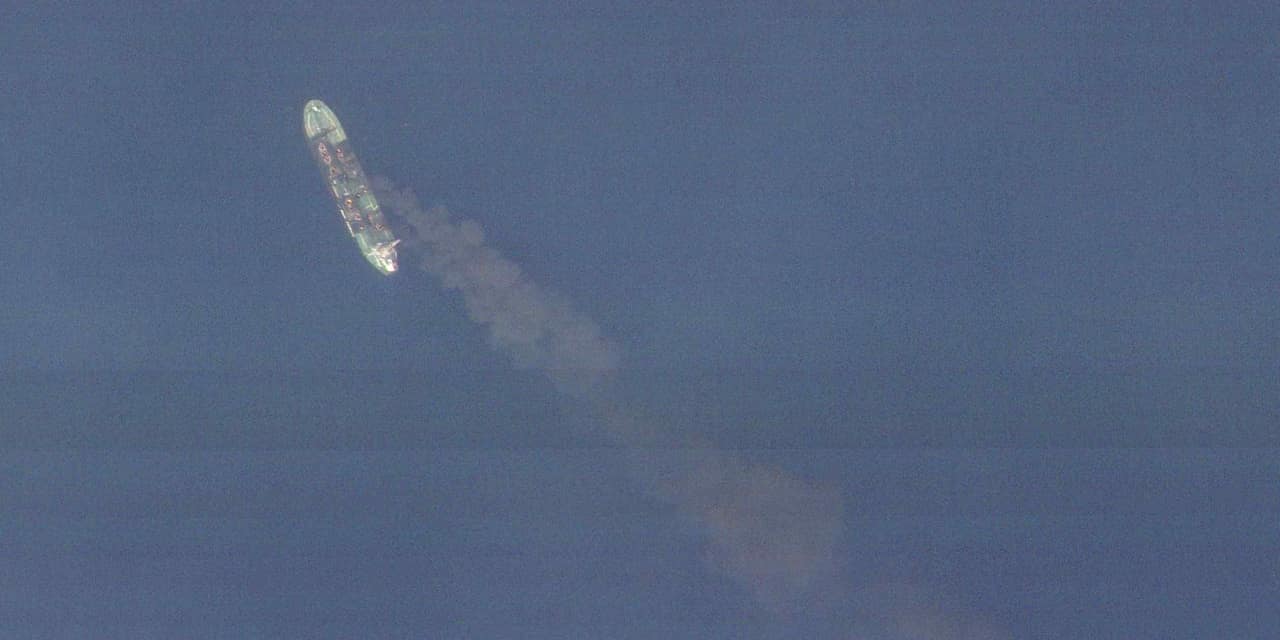
  • A tanker was struck by a projectile in the Strait of Hormuz, forcing its crew to abandon ship.
  • Explosions were reported in multiple Iranian cities, including near its only nuclear power plant.

Two oil tankers carrying Saudi crude oil reversed course in the Red Sea on Tuesday after threats from Yemen's Iran-aligned Houthis, as a widening Middle East conflict disrupted shipping through critical energy chokepoints. The U.S. military stated late Tuesday it was bombing targets across Iran for an 11th consecutive night, with Tehran residents reporting explosions and activated air defenses.

Explosions were also reported in the Iranian coastal cities of Chabahar and Konarak, and in Bushehr, home to the country's sole nuclear power plant. Earlier, Iran claimed to have targeted U.S. military sites in Bahrain, Kuwait, and Jordan, and a tanker was hit in the Strait of Hormuz.

The Houthis, who control significant parts of Yemen including the Red Sea coast, announced a naval blockade on Saudi Arabia on Monday, potentially opening a new front in the conflict that began on February 28 with U.S. and Israeli attacks on Iran. The Houthis threatened to attack any ships loading or discharging Saudi oil.

U.S. President Donald Trump commented that the Bab el-Mandeb strait had not yet been shut, but threatened action if it were. He also confirmed that 18 U.S. service members have been killed in recent Iranian attacks. The conflict has reportedly cost $37.5 billion so far, with a request for an additional $70 billion in supplemental funds.

The two tankers that had loaded Saudi crude at the port of Yanbu made U-turns, heading towards the Suez Canal instead of the Bab el-Mandeb. This disruption comes as the Strait of Hormuz remains largely shut, making the Red Sea a primary alternate route for Saudi oil exports. Oil prices rose more than 2% on Tuesday, with Brent crude above $91 a barrel and U.S. gasoline over $4 a gallon.

U.S. Central Command confirmed strikes on Iranian military command centers, missile and drone launch sites, and air defense systems. President Trump also renewed threats to attack Iran's nuclear facilities at Natanz. A health ministry official reported 50 civilians killed and 500 wounded in recent U.S. strikes on Iran.

Iran launched renewed attacks across the Gulf, including on desalination facilities, raising concerns for water supplies in dependent countries. Kuwait reported responding to a drone and missile attack. Iran's Revolutionary Guards stated two oil tankers caught fire after explosions while transiting the southern shipping lane of the Strait of Hormuz.

Frequently asked questions

The Red Sea, accessed via the Bab el-Mandeb strait, and the Strait of Hormuz are critical global energy chokepoints. They are vital routes for millions of barrels of oil and other commodities daily.

The conflict has escalated with continuous U.S. bombing of Iranian targets and Iranian attacks on U.S. military sites, infrastructure, and shipping. A ceasefire agreement has collapsed.

Oil prices have gained more than 2%, with Brent crude trading above $91 a barrel and U.S. gasoline exceeding $4 a gallon, due to the disruptions in key shipping lanes.

What Happens Next

01The U.S. military is expected to continue its bombing campaign across Iran.
02Further Iranian retaliatory actions or threats against shipping are possible.
03Diplomatic efforts for a ceasefire may continue, with Iran's Interior Minister visiting Pakistan.

Get the newsletter.

Pick the topics you actually care about. We'll email when there's news worth your time, on the cadence you choose. Cancel any time from your account.

Cadence

How It Developed

The Houthis announced a naval blockade on Saudi Arabia.
Two tankers loaded with Saudi crude bound for Asia made U-turns in the Red Sea.
A tanker in the Strait of Hormuz reported being struck by a projectile.
Iran targeted U.S. military sites in Bahrain, Kuwait, and Jordan.
The U.S. military continued bombing targets across Iran for an 11th night.
Explosions were reported in Chabahar, Konarak, and Bushehr, Iran.
Iran claimed to have struck Amazon infrastructure in Bahrain.
U.S. President Donald Trump stated the Bab el-Mandeb strait had not yet been shut.

Sources

T1
Red Sea tankers turn back as Houthis open new front in US-Iran warNikkei Asia

Related Stories

Tanker struck in Strait of Hormuz amid escalating US-Iran conflict
21 Jul · 3:26 AM
US forces strike military area near Tabriz, Iran
22 Jul · 12:36 AM
Houthis warn shipping companies against using Saudi ports
21 Jul · 11:26 AM
Iranian vessels transit Hormuz amid US blockade claims
21 Jul · 7:11 PM
Iran threatens to bomb own territory amid fears of broader Gulf conflict
21 Jul · 12:06 PM