Key facts
- A US strike on an oil tanker in the Gulf of Oman killed three Indian sailors and strained US-India relations.
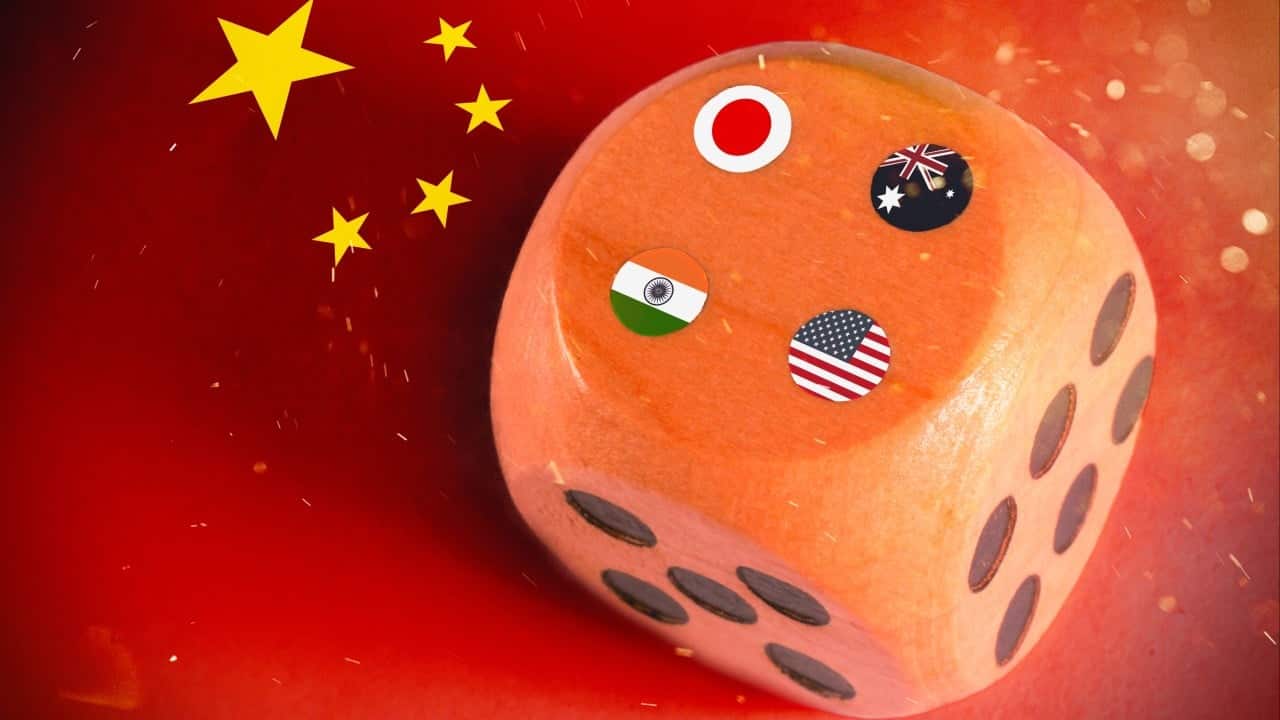
- The incident has raised questions about the unity of the Quad bloc, comprising the US, Japan, Australia, and India.
- The Quad's agenda aims to reduce China's dominant grip on critical mineral supply chains.
- Analysts believe shared concerns over dependence on China could strengthen the Quad's resolve despite bilateral tensions.
- US Secretary of State Marco Rubio visited India to address bilateral friction and reaffirm commitment to the Quad.
A recent US strike on an oil tanker in the Gulf of Oman, which resulted in the deaths of three Indian sailors, has exacerbated existing tensions between the United States and India. This incident has cast a shadow over the unity of the Quad, an informal alliance including the US, Japan, Australia, and India, and its ambitious goals to challenge China's dominance in critical mineral supply chains.
Despite these bilateral frictions, which analysts suggest could impede the Quad's progress, a shared concern among member nations regarding their dependence on China for essential supplies may serve as a counter-unifying force. Geoffrey Pyatt, Assistant Secretary of State for Energy Resources, stated that governments remain committed to the Quad's objectives. Rick Rossow, a senior adviser at the Centre for Strategic and International Studies (CSIS), echoed this sentiment, noting that while tensions might slow the agenda, all members recognize the vital importance of diversifying supply chains.