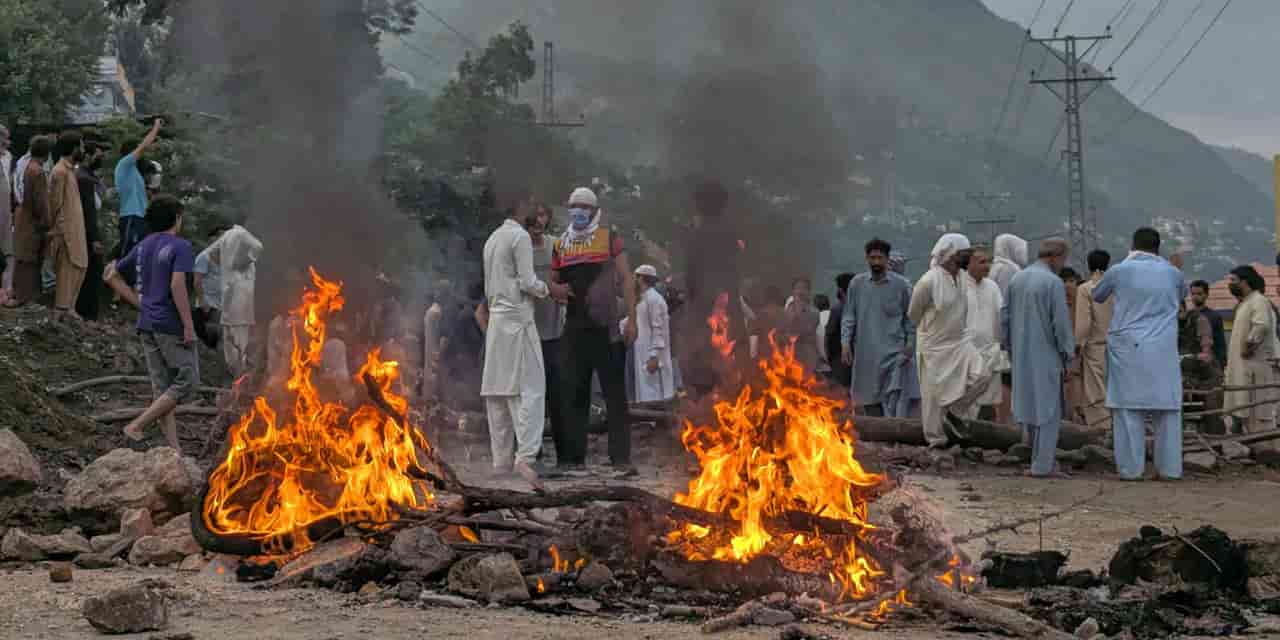
Pakistan is confronting significant challenges to its authority in Pakistan-administered Kashmir, where protests and an election boycott have intensified disputes over political representation for refugees. While global attention has historically focused on the Indian-administered side of Kashmir, the region officially known as Azad Jammu and Kashmir (AJK) is now experiencing substantial popular unrest.
The protests, spearheaded by the Joint Awami Action Committee (JAAC), initially stemmed from frustrations over soaring electricity bills and flour prices. However, these economic grievances have evolved into a broader critique of governance and a demand for genuine political participation. The JAAC, formed outside traditional party structures, highlights issues such as high taxation, poor public services, and the region's lagging development, exacerbated by the lingering devastation from the 2005 earthquake.
Youth unemployment in AJK stands at approximately 27%, nearly three times Pakistan's national average, contributing to a growing population of unemployed young people. While the government made concessions in 2024 and 2025, including lowering electricity rates and subsidizing wheat, activists argue these are temporary fixes that fail to address deeper economic exclusion.
This unrest in Pakistan-administered Kashmir is occurring concurrently with an armed separatist movement in Balochistan, presenting a dual challenge to Pakistan's military leadership, particularly Army Chief Asim Munir. The situation in AJK reflects a shift from the old geopolitical focus on India to domestic disillusionment and demands for accountability and transparency.