Key facts
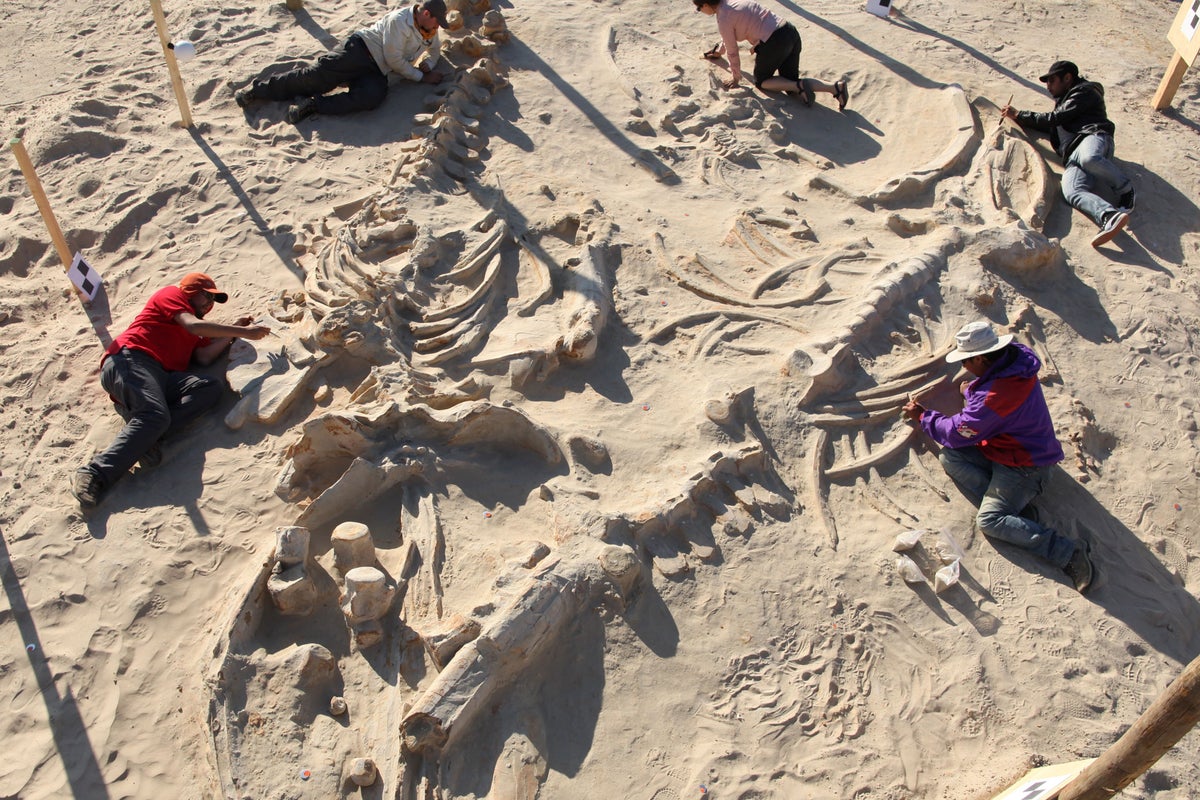
- A massive whale graveyard, spanning 1,200 km, has been discovered in the southeastern Indian Ocean.
- The site is located seven kilometers beneath the surface and contains fossils up to 5.3 million years old.
- The graveyard supports a diverse ecosystem of marine life, with some species potentially new to science.
- AI technology was employed to generate realistic visual representations of the ancient whale graveyard.
- This discovery offers insights into deep-sea ecosystems and the survival of life in extreme environments.
Scientists have uncovered a vast underwater whale graveyard in the southeastern Indian Ocean, providing a rare glimpse into deep-sea ecosystems. The site, located seven kilometers beneath the surface, is believed to be the deepest, oldest, and largest whale graveyard ever discovered, with some bones dating back as far as 5.3 million years. Researchers identified five whale carcass sites and numerous fossils during deep-sea submersible expeditions. The graveyard supports a remarkable ecosystem of marine creatures, including jellyfish, tubeworms, and brittle stars, many of which may be previously unknown to science. AI technology has been utilized to generate realistic images of this ancient site. The extraordinary preservation of the bones over millions of years is attributed to their density, extreme depth, and a thin mineral coating. Researchers are investigating why so many whales ended up in the same location, with possibilities including natural death in the area, illness associated with deep diving, or the seabed's V-shaped geography channelling remains. This discovery offers valuable insights into how life survives in extreme environments with high pressure and limited resources.