Key facts
- Maersk and Hapag-Lloyd will resume Suez Canal transits for their ME11 service.
- The decision is based on security assessments of the Red Sea area.
- The ME11 service connects India and the Middle East to the U.S. East Coast via the Suez Canal.
- Dedicated maritime assistance will be provided for safe navigation.
- The Gemini Cooperation partnership between Maersk and Hapag-Lloyd began on February 1, 2025.
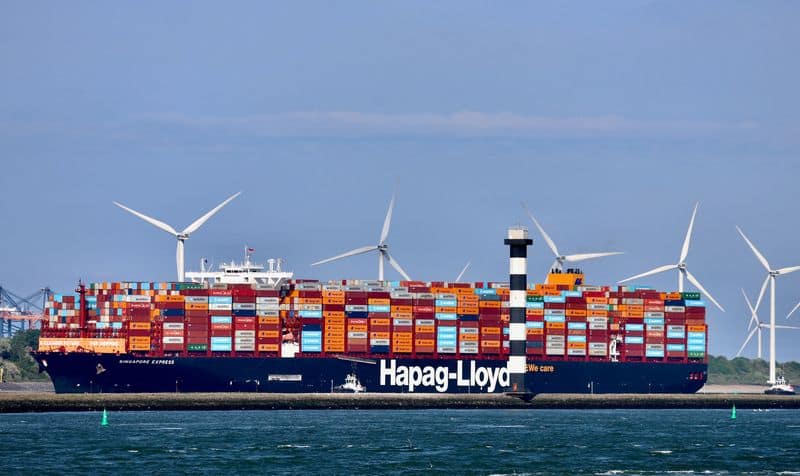
Danish shipping group Maersk announced that one of its services, the ME11, operated in partnership with Germany's Hapag-Lloyd under their Gemini Cooperation, will resume sailing through the Suez Canal. This decision, effective mid-February, marks a shift from the previous route around Africa's Cape of Good Hope, which was implemented due to security concerns in the Red Sea following attacks by Yemen's Houthis.
The rerouting of the ME11 service, connecting India and the Middle East to the U.S. East Coast, follows thorough assessments of the security situation. Maersk emphasized that the safety of crew, vessels, and cargo remains the highest priority. The Suez Canal is described as a vital maritime corridor and a key driver of efficient global supply chains, offering the fastest, most sustainable, and efficient transport between Asia and Europe.
Westbound voyages on the Albert Maersk and eastbound voyages on the Astrid Maersk will operate through the Red Sea and Suez Canal. Maersk and Hapag-Lloyd are also evaluating potential adjustments to their AE12 and AE15 services. Both companies stressed that all modifications will be implemented with minimal disruption, maintaining the Gemini Cooperation's commitment to reliability. Dedicated maritime assistance will be provided to ensure safe navigation through the Bab el-Mandeb Strait and Red Sea. Future routing decisions will be contingent on sustained stability in the region.