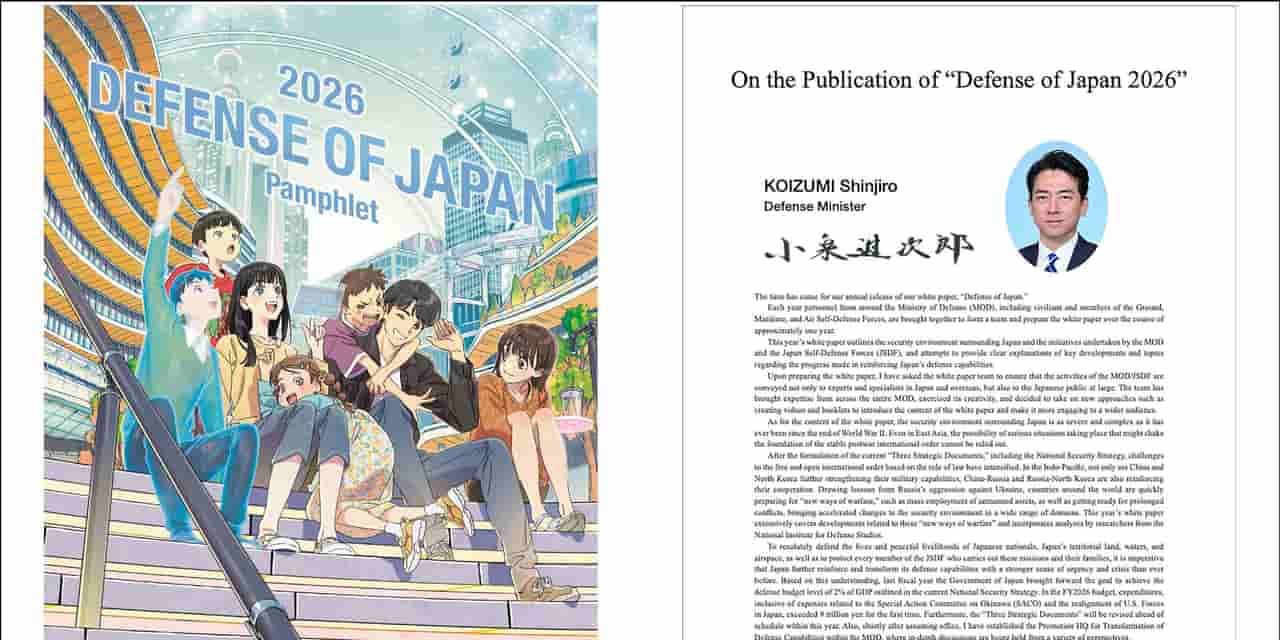
Japan's Defense Ministry has warned that deepening military cooperation between Russia and North Korea could significantly enhance Pyongyang's military capabilities, escalating security concerns across Asia. The annual white paper also highlights China as Japan's greatest strategic challenge.

Japan's increased military spending and its focus on deterring China, coupled with concerns over Russia-North Korea military ties, signal a significant shift in regional security dynamics and could lead to increased geopolitical tensions in the Asia-Pacific.
Japan's Ministry of Defense has issued a stark warning regarding the escalating military cooperation between Russia and North Korea, stating that such ties could significantly bolster Pyongyang's military capabilities and heighten security risks across Asia. The annual "Defense of Japan 2026" white paper highlights these growing threats, alongside identifying China as Japan's greatest strategic challenge.
The white paper advocates for Japan's accelerating military buildup not only as a means of national protection but also as a pathway to greater economic prosperity. It suggests that investment in defense, through harnessing technology, funding startups, and utilizing commercial components in weapons production, can stimulate economic growth. This message is reinforced by the document's futuristic, anime-style cover, intended to convey a positive outlook.
Prime Minister Sanae Takaichi's administration is preparing a new national security strategy, which military experts anticipate will call for further defense spending increases. The primary objective of this buildup is to deter China from initiating a conflict with Taiwan that could potentially draw Japan into a prolonged war. Beijing has previously reacted strongly to Takaichi's statements suggesting Japan could deploy its Self-Defense Forces if a Chinese attack on Taiwan threatened Japan's survival.
To finance its largest military buildup since World War II, Japan is assembling a combination of tax increases, spending reforms, and one-off revenues. Defense-related spending has already reached 2% of GDP. Much of the recent spending has been allocated to missiles capable of striking targets over 1,000 km away, with significant future increases expected to be directed towards drones and other unmanned weapons, drawing lessons from their extensive use in the Ukraine war.