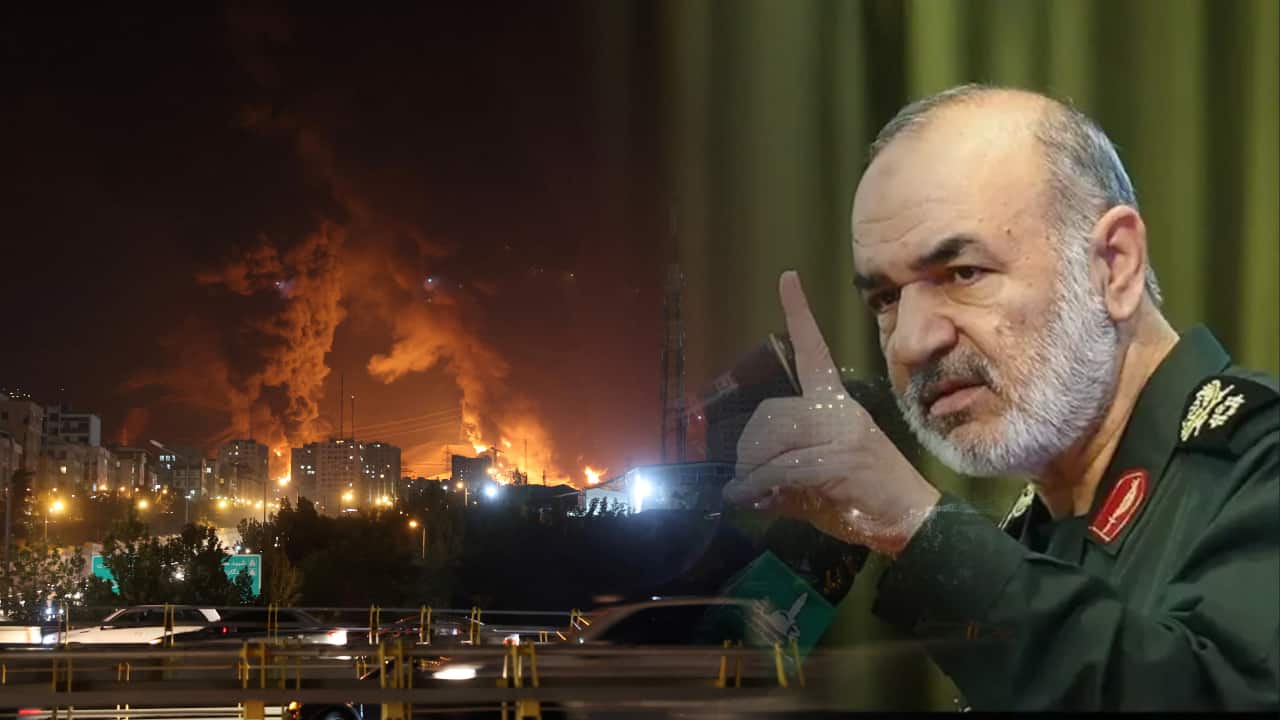
Iran's Islamic Revolutionary Guard Corps (IRGC) and the Army of the Islamic Republic of Iran announced a new wave of missile and drone strikes targeting US positions in Kuwait, Bahrain, and Jordan early Tuesday morning, July 21. The IRGC claimed that its forces destroyed infrastructure and "important facilities" at four US military bases in Kuwait and Bahrain during a joint missile-and-drone operation. The IRGC identified Camp Arifjan and Ali Al Salem Air Base in Kuwait, along with Naval Support Activity Bahrain in Juffair and Sheikh Isa Air Base in Bahrain, as the four facilities targeted. The strikes were carried out jointly by the IRGC Navy and Aerospace Force, according to a statement issued by the Iranian military organisation. Iran said missiles and drones were launched from "various parts of the country" hours after the latest American attacks on Iranian territory. The IRGC described the operation as the "first phase of the punitive response" against the United States. In Kuwait, the IRGC said its forces struck Camp Arifjan and Ali Al Salem Air Base. In Bahrain, the IRGC claimed strikes against the Juffair facility and Sheikh Isa Air Base. The IRGC also claimed to have struck Amazon’s primary data centre infrastructure in Bahrain using cruise missiles. In a separate statement, the IRGC announced an attack on a US military base in Jordan, claiming to have hit the facility’s missile defence radar system and destroyed a US F-15 fighter jet. The IRGC Public Relations Office further stated that the operation, codenamed "Nasr 24," remains ongoing. During the 24th wave of the operation, a housing compound for US military personnel in the Al-Rukban area of Jordan was targeted. The IRGC claimed that "several troops from the terrorist and child-killing US military were killed" in the strike. Concurrently, the IRGC and the Iranian Army claimed to have struck several US military bases in Kuwait. The IRGC stated that at Ahmad al-Jaber Air Base, it targeted an early-warning radar, a missile defence radar system, a PFS-117 radar, a Patriot air defence system, and a US air defence satellite communications system. Referring to the operation as "radar clearing," the IRGC claimed that the strikes laid the groundwork for "subsequent waves of drone and missile attacks." In a separate statement, the Army of the Islamic Republic announced that during the 18th stage of Operation "Sa’eqeh" (Thunderbolt), it had targeted HIMARS missile systems deployed at Camp Arifjan in Kuwait using surface-to-surface missiles. The Army’s Public Relations Office also claimed that administrative buildings, direction-finding antennas, US troop quarters at Ahmad al-Jaber Air Base, helicopter parking areas at Camp Buehring (Al-Adiri), and an MQ-9 drone hangar at Ali Al Salem Air Base in Kuwait were hit in drone strikes. In response, Bahrain issued a statement condemning the Islamic Republic’s attacks on Kuwait and Jordan, expressing solidarity with both nations and reaffirming its support for their measures to safeguard national security and sovereignty. Since the outbreak of the latest hostilities with the US, the Islamic Republic has repeatedly launched missile and drone strikes against Washington’s military bases across the region. In April 2026, during the 40-day conflict, the IRGC similarly claimed responsibility for an attack on Amazon’s data centre in Bahrain—an incident that Reuters reported at the time had caused disruptions and damage to a portion of the company’s cloud computing services.