All NewsEducationTV
Equities & FundsCrypto & Digital AssetsAI & TechnologyBusiness & CorporateUS Politics & PolicyGeopolitics & Global RiskMacro, Rates & FXCommodities & EnergyEuropean Politics & MarketsAsia-PacificReal Estate & Property
Story archiveAll categories
← All Stories

Iran war disrupts Balochistan's vital fuel trade, impacting thousands

Created at 13 Aug · 4:56 PM1 source↑ Market-relevant
IN SHORT

A conflict in the Middle East, described as a US-Israeli war on Iran, has severely disrupted the informal fuel trade along Pakistan's Balochistan coast. This disruption has halted a crucial economic lifeline for thousands of laborers and workers who depend on the movement of Iranian petrol and diesel.

✉Newsletter

PiQ Daily

Pick your topics. Get only what matters, on your cadence.

Key Numbers

150 kilometreswest of Gwadar, near Iranian border
April 2025Balochistan government set fuel prices
30 to 40 Pakistani rupeesprice increase per litre of Iranian petrol in Gwadar
11-14 centsprice increase per litre of Iranian petrol in Gwadar
5,000estimated number of fuel depots around Kuntani Hor
70 litrescapacity of fuel barrels
20 to 30 metresdistance barrels are carried to depots
1 footdepth workers' feet can sink in mud
10,000 rupeesdaily earnings for a worker on a busy day
$36daily earnings for a worker on a busy day
1,400-1,500 rupeesaverage daily earnings for unskilled labor in Pakistan
$5average daily earnings for unskilled labor in Pakistan

Who's Involved

Siraj
26-year-old anthropology graduate dependent on the informal fuel trade
Bakshi Baloch
Fuel depot operator at Kuntani Hor
Mohammad Asif
Worker in the informal fuel trade from Punjab
Sakhi Baksh
Laborer, known locally as an 'ammaal', at Kuntani Hor
Noroz
Worker in the informal fuel trade
Balochistan's provincial government
Set prices for fuel from the informal trade
Iran war disrupts Balochistan's vital fuel trade, impacting thousands

↳ Why This Matters

The disruption of the informal fuel trade in Balochistan highlights the far-reaching economic consequences of geopolitical conflicts, demonstrating how instability in one region can devastate livelihoods in another and underscore the precariousness of informal economies.

Key facts

  • An informal fuel trade operates along the Balochistan coast, near the Iranian border, involving boats bringing Iranian petrol and diesel into Pakistan.
  • Balochistan's provincial government has set prices for this fuel, recognizing its foundational role in the local economy.
  • The informal economy supports thousands of laborers, drivers, boat crews, and depot workers.
  • A conflict described as a US-Israeli war on Iran, starting February 28, 2025, has severely disrupted this trade.
  • The disruption has led to a halt in fuel supplies and significant economic hardship for those dependent on the trade.

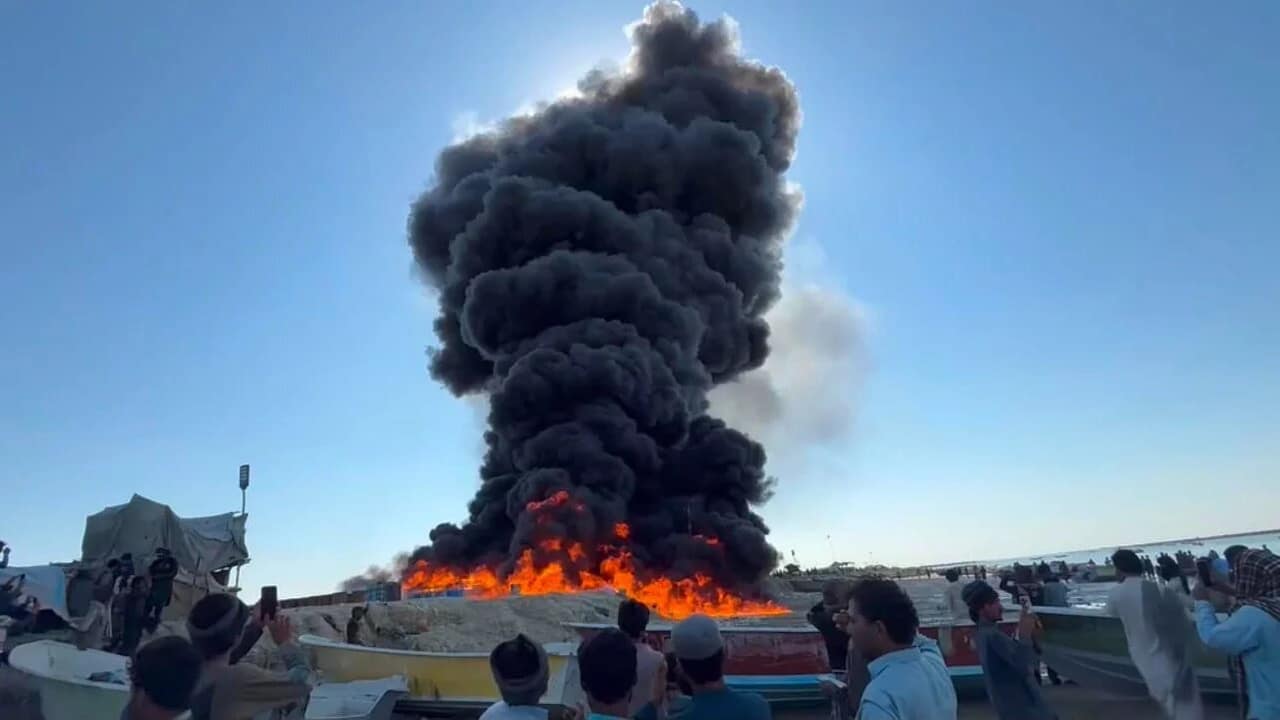
The informal fuel trade along Pakistan's remote Makran coast, particularly at Kuntani Hor near the Iranian border, has become a critical economic lifeline for thousands of individuals. This trade, which involves boats bringing Iranian petrol and diesel into Pakistan, has been so foundational that the Balochistan provincial government even set official prices for it in April 2025, pricing it below government-imported fuel and restricting its sale to within the province.

Thousands of laborers, drivers, boat crews, and depot workers rely on this trade for their livelihoods. Among them is Siraj, a 26-year-old anthropology graduate who turned to the trade after failing to find stable employment with his degree and facing financial difficulties after his father's death.

However, the ongoing conflict described as a US-Israeli war on Iran, which began on February 28, 2025, has severely disrupted this vital economic activity. The war, which has seen strikes on Iran and its military installations, has impacted coastal defenses and shipping routes around the Strait of Hormuz, leading to a significant decrease in fuel supplies reaching Pakistan.

Fuel dealers reported that the border closure at Kuntani Hor in May 2025 pushed the price of Iranian petrol in Gwadar up by 30 to 40 Pakistani rupees per liter. For workers like Siraj and thousands of others, this disruption has immediate and dire consequences, bringing much of the work at Kuntani Hor to a standstill.

Bakshi Baloch, a fuel depot operator at Kuntani Hor, stated that under normal circumstances, around 50 people depend directly on his operation, including laborers, an accountant, and boat crews. He estimated that over 5,000 depots operated around Kuntani Hor, each supporting dozens of people. Workers came from various parts of Pakistan, including Sindh, Punjab, and even Kashmir, seeking viable work. Now, they have scattered again, carrying the effects of the Middle Eastern war back to their communities.

Workers like Mohammad Asif described the work as both a means of survival and a daily encounter with death due to handling flammable fuel in extreme heat without protective equipment or emergency facilities. Despite the risks, the income, as high as 10,000 rupees ($36) on a busy day, is difficult to find elsewhere, compared to the average 1,400-1,500 rupees ($5) for unskilled labor in Pakistan.

Laborers known as 'ammaal' carry fuel barrels from boats to depots through thick mud, facing risks of spills and fire. Motorcycle riders, or 'cycali', then transport the fuel further inland. The workers emphasize that they must take these risks to earn a living, stating it's better to risk death than to die of hunger.

Frequently asked questions

It is a smuggling operation where boats bring Iranian petrol, diesel, and other goods into Pakistan's Balochistan province, primarily along the coast near the Iranian border.

It serves as a crucial economic lifeline for thousands of laborers, drivers, boat crews, and depot workers in a region with limited formal employment opportunities.

The conflict has disrupted the movement of fuel, leading to decreased supplies, border closures, and a halt in economic activity, causing immediate hardship for those dependent on it.

Workers handle large amounts of flammable fuel in extreme heat without protective equipment, facing daily risks of fire, spills, and potential injury or death.

What Happens Next

01Workers and depot operators are awaiting news on when the fuel trade might resume.
02The future of the informal economy in Kuntani Hor remains uncertain due to the ongoing conflict.

Get the newsletter.

Pick the topics you actually care about. We'll email when there's news worth your time, on the cadence you choose. Cancel any time from your account.

Cadence

How It Developed

An informal fuel trade exists along the Balochistan coast near the Iranian border.
Balochistan's government set prices for fuel from this trade, acknowledging its economic importance.
The US-Israeli war on Iran, beginning February 28, 2025, disrupted the movement of fuel.
Supplies of Iranian petrol and diesel decreased along Pakistan-Iran crossings.
The closure of the Kuntani Hor border crossing led to a price increase for Iranian petrol in Gwadar.
Thousands of workers who depended on the fuel trade for their livelihoods have been displaced.
The informal economy built around fuel trade has come to a standstill.

Sources

T1
Balochistan’s dangerous fuel trade is a lifeline. The Iran war is choking itMiddle East Eye

Related Stories

Iran signals shift to offensive military doctrine against US forces
13 Aug · 12:36 PM
Trump turns to economic pain as US bombings fail to sway Iran
13 Aug · 6:36 AM
Iran Mocks Trump Over Secret Plane Switch Amid Assassination Plot Scepticism
13 Aug · 11:11 AM
Ukraine offers Russia Black Sea truce amid intensified attacks
13 Aug · 6:08 AM
Pakistan's Kashmir region faces unrest over political representation
13 Aug · 6:47 AM