All NewsEducationTV
Equities & FundsCrypto & Digital AssetsAI & TechnologyBusiness & CorporateUS Politics & PolicyGeopolitics & Global RiskMacro, Rates & FXCommodities & EnergyEuropean Politics & MarketsAsia-PacificReal Estate & Property
Story archiveAll categories
← All Stories

Indonesia forest fires spread haze to Malaysia amid El Nino

Created at 13 Aug · 12:37 PM1 source↑ Market-relevant
IN SHORT

Indonesia's forest fires, worsened by El Nino, have led to a significant increase in hot spots and are causing unhealthy air quality in Malaysia. Cloud seeding, a key aerial suppression tool, is currently ineffective due to a lack of rain-bearing clouds.

✉Newsletter

PiQ Daily

Pick your topics. Get only what matters, on your cadence.

Key Numbers

3xincrease in forest fire hot spots in Indonesia this August vs. last year
180Air Pollutant Index reading in Serian, Malaysia
81PSI reading in Singapore
107,000hectares burned in Indonesia
18August, through which cloud seeding is unavailable
1.5-2.0degrees Celsius temperature anomaly for Super El Nino
6months projected dry season duration (April-October)

Who's Involved

Djamari Chaniago
Indonesia's coordinating minister for Political and Security Affairs
Indonesia's Meteorological, Climatological and Geophysical Agency (BMKG)
Monitoring atmospheric conditions for cloud seeding operations
Singapore's Haze Task Force
On alert for haze impacts
Singapore Institute of International Affairs
Issued a Red haze rating for 2026
Indonesia's National Research and Innovation Agency
Characterized the 2026 El Nino as a 'Super El Nino'
Indonesia forest fires spread haze to Malaysia amid El Nino

↳ Why This Matters

The escalating wildfires in Indonesia pose a significant regional public health and environmental crisis, impacting air quality across Southeast Asia and highlighting the growing threat of climate change-driven extreme weather events.

Key facts

  • Indonesia has seen a surge in forest fire hot spots in early August, more than tripling last year's figures for the same period.
  • Haze from these fires has spread to Malaysia, with air quality in Sarawak state reaching unhealthy levels.
  • Cloud seeding, an effective method for inducing rain to combat fires, is currently impossible due to a lack of suitable clouds.
  • The current dry conditions are attributed to a 'Super El Nino' event, amplified by a positive Indian Ocean Dipole.
  • Over 107,000 hectares have been burned in Indonesia's most affected provinces.

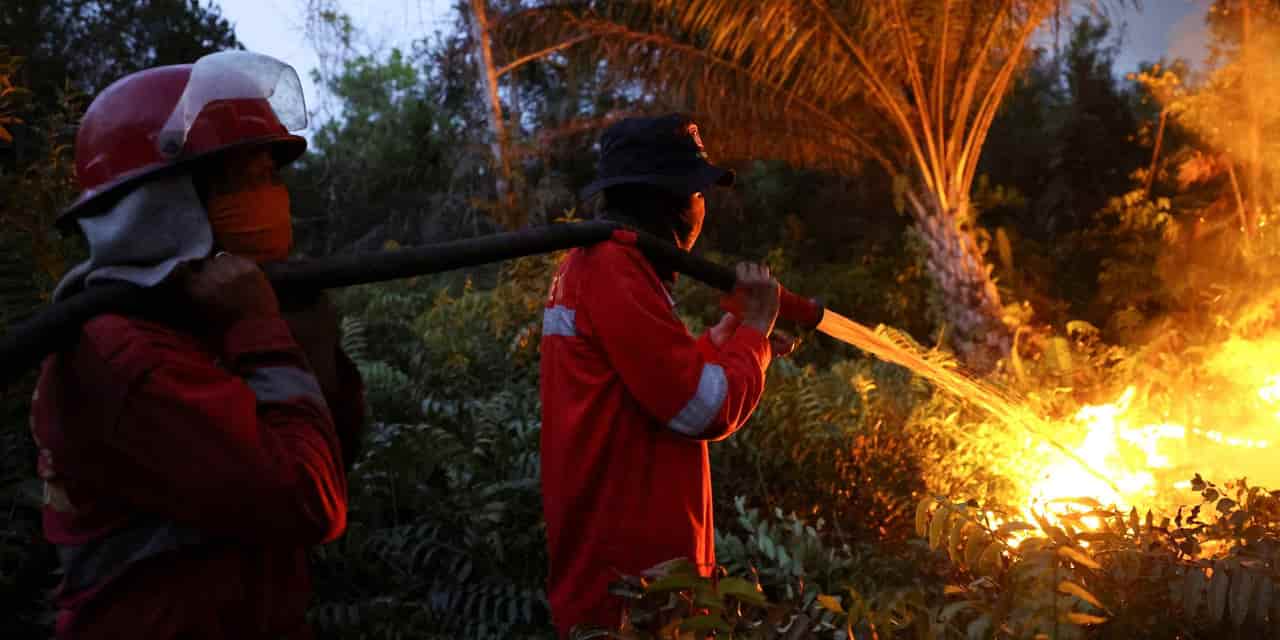
Indonesia is experiencing a severe wildfire crisis, exacerbated by the El Nino weather phenomenon, leading to widespread haze affecting neighboring Malaysia and Singapore. In the first 13 days of August, Indonesia recorded more than three times the number of forest fire hot spots compared to the entire month of August last year.

The smoke has pushed air quality in nine areas of Malaysia's Sarawak state above the national threshold for unhealthy air, with Serian district recording an Air Pollutant Index of 180. Singapore's National Environment Agency reported a PSI of 81, placing the city-state at the upper edge of the moderate range, prompting its Haze Task Force to remain on alert.

Coordinating Minister for Political and Security Affairs Djamari Chaniago confirmed that fires have burned over 107,000 hectares in the most affected provinces. A significant challenge in combating the fires is the current inability to conduct cloud seeding operations, Indonesia's most effective aerial suppression tool. This is because scientific monitoring has found no suitable rain-bearing clouds over the affected areas, a situation expected to persist through at least August 18.

Cloud seeding relies on dispersing particles into existing moisture-bearing clouds to induce rainfall. However, the combined effects of El Nino and a positive Indian Ocean Dipole have severely suppressed atmospheric moisture across maritime Southeast Asia. This year's El Nino has been characterized as a 'Super El Nino' by Indonesia's National Research and Innovation Agency, with Pacific temperature anomalies significantly above normal. The dry season, typically lasting through September-October, is projected to extend from April through October, a six-month period, even before the fire season officially began.

Frequently asked questions

The fires are exacerbated by the El Nino weather phenomenon, which reduces rainfall, and a positive Indian Ocean Dipole, which further suppresses moisture. These factors contribute to drier conditions and a longer dry season.

Cloud seeding requires suitable rain-bearing clouds, which are currently absent over the affected areas due to the severe drought conditions caused by El Nino and the Indian Ocean Dipole.

The haze has caused air quality in parts of Malaysia to exceed the national threshold for unhealthy air, posing public health risks. Singapore is also on alert for potential health impacts.

The fires have burned more than 107,000 hectares in Indonesia's most affected provinces.

What Happens Next

01Cloud seeding operations are expected to remain unavailable until at least August 18.
02Malaysia and Singapore will continue to monitor air quality and activate haze action plans as needed.
03Indonesia will continue efforts to combat fires with ground-based methods.

Get the newsletter.

Pick the topics you actually care about. We'll email when there's news worth your time, on the cadence you choose. Cancel any time from your account.

Cadence

How It Developed

Indonesia recorded more than three times as many forest fire hot spots in the first 13 days of August compared to the whole of August last year.
Smoke from Indonesian wildfires caused air quality in nine areas of Malaysia's Sarawak state to exceed the national threshold for unhealthy air.
Singapore's Haze Task Force was placed on alert, with the city-state reporting an Air Pollutant Index in the upper edge of the moderate range.
Fires have burned over 107,000 hectares in the most affected Indonesian provinces.
Cloud seeding operations are suspended until at least August 18 due to the absence of suitable rain-bearing clouds.
El Nino and a positive Indian Ocean Dipole are suppressing atmospheric moisture, making cloud seeding ineffective.
The 2026 El Nino has been characterized as a 'Super El Nino', with the dry season projected to extend from April through October.

Sources

T1
Effects of Indonesia forest fires blight Malaysia as hot spot number soarsNikkei Asia
T2
Haze returns to Malaysia's Sarawak, Selangor as Indonesian wildfires ...scmp.com
T2
Indonesia's Sumatra sees 14-fold spike in fire hotspots over 1. ... - CNAchannelnewsasia.com
T2
Indonesia Haze Strikes Malaysia and Singapore as El Nino Disables Cloud ...techtimes.com

Related Stories

Mekong floods exacerbate economic strain and conflict in affected communities
13 Aug · 12:36 PM
France battles wildfires amid heatwaves, evacuations underway
12 Aug · 4:46 PM
Pakistan's Kashmir region faces unrest over political representation
13 Aug · 6:47 AM
Moldova offers rail lifeline for Ukrainian food exports amid Black Sea blockade
13 Aug · 6:08 AM
Israeli forces bomb homes and start fires in southern Lebanon
13 Aug · 5:21 AM