Key facts
- AFC/M23 rebels managed an Ebola outbreak response in territory they control, separate from Kinshasa.
- The outbreak in rebel-held areas recorded four cases, with the rebels declaring it over after 21 days without new cases.
- Rwanda provided medical specialists and supplies to aid the rebel response efforts.
- Analysts note the limited test of the rebels' capacity with only four cases recorded.
- Fragmented response efforts could complicate containment if the outbreak spreads further.
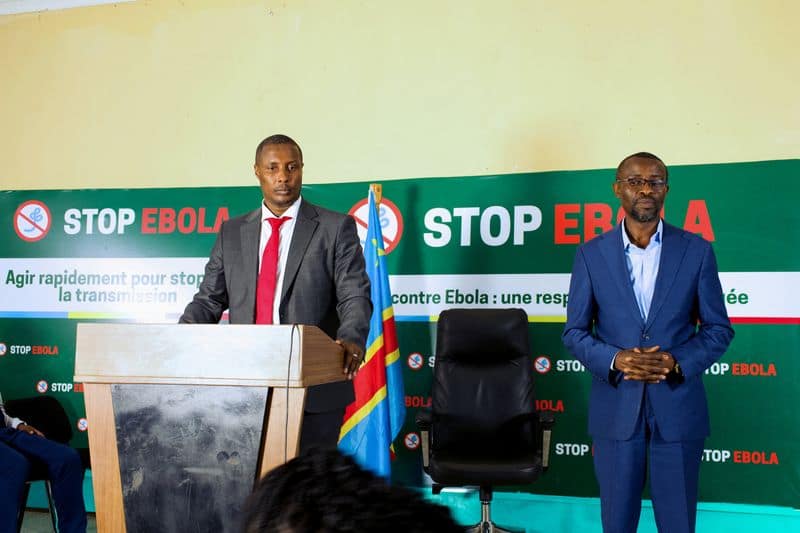
Congo's AFC/M23 rebels have utilized a small Ebola outbreak in territory they control to demonstrate their governance capabilities, mounting a response largely separate from the central government in Kinshasa and receiving partial support from neighboring Rwanda. This initiative highlights the rebels' establishment of parallel administrative structures in areas captured during a rapid advance last year.
According to response teams and official documents reviewed by Reuters, the rebel-held areas recorded four Ebola cases after the outbreak was declared on May 15. AFC/M23 declared the outbreak over in its territory late last month, citing a 21-day monitoring period without new cases. Freddy Kaniki, AFC/M23's deputy coordinator for the response, stated that 400 contacts had been monitored, with 98% receiving daily follow-up. Response documents indicated that 207 samples had been tested in rebel-controlled areas of North Kivu as of June 18.
This contrasts with the broader outbreak in Congo, which has infected 1,873 people and killed 672, according to government data. The rebels have used social media to showcase their response efforts, portraying themselves as a functioning administration. Kaniki acknowledged the larger challenge in government-held areas but argued that AFC/M23's response benefited from greater "discipline" and "anticipation," particularly in isolating cases and monitoring contacts. Strict containment measures, including suspending bus routes and isolating potential contacts, were imposed.
Analysts, however, express caution. Reagan Miviri of the Kinshasa-based Ebuteli research institute noted that while AFC/M23 aims to demonstrate state capacity, the test has been limited with only four cases. The rebels' response was coordinated through separate health administrations, with cooperation with Kinshasa largely confined to data sharing and laboratory testing. UN's interim humanitarian coordinator Damien Mama stated that aid agencies facilitated coordination between the two sides.
Without direct support from Kinshasa, AFC/M23 turned to Rwanda for medicine and supplies. Kigali deployed six specialists to Goma, and the Rwanda Biomedical Center supplied $6,891 worth of materials, while Gisenyi Hospital provided an additional $85,467 in supplies. Rwanda government spokesperson Yolande Makolo emphasized supporting regional surveillance and preparedness, stating that infectious diseases "do not respect borders."
The response has faced resource limitations, including shortages of protective equipment, infection-control kits, vehicles, and fuel. The laboratory in Goma had limited testing capacity due to a scarcity of extraction kits. The closure of Goma's airport and the shutdown of the banking system in rebel-held areas have further complicated efforts to move personnel, supplies, and funds. Analysts warn that the response could become significantly more complicated if the outbreak spreads and case numbers rise substantially.