All NewsEducationTV
Equities & FundsCrypto & Digital AssetsAI & TechnologyBusiness & CorporateUS Politics & PolicyGeopolitics & Global RiskMacro, Rates & FXCommodities & EnergyEuropean Politics & MarketsAsia-PacificReal Estate & Property
Story archiveAll categories
← All Stories

China's space program poses a geopolitical threat to the US

Created at 18 Aug · 4:36 PM1 source↑ Market-relevant
IN SHORT

China's Chang'e 7 lunar mission, set to launch soon, could represent a significant geopolitical win for Beijing if it successfully lands near the Moon's South Pole before NASA. This mission highlights the intensifying space race between the two superpowers.

Key Numbers

nearly two decadesduration of China's lunar exploration program

Who's Involved

China
launching Chang'e 7 lunar mission
NASA
aiming to return astronauts to the Moon
Jared Isaacman
NASA Administrator tasked with reforming lunar programs
China's space program poses a geopolitical threat to the US

↳ Why This Matters

China's potential success in landing on the Moon's South Pole before the US could significantly shift the geopolitical balance, offering Beijing a major propaganda victory and potentially leading to territorial claims on valuable lunar real estate.

Key facts

  • China's Chang'e 7 lunar mission is scheduled to launch soon.
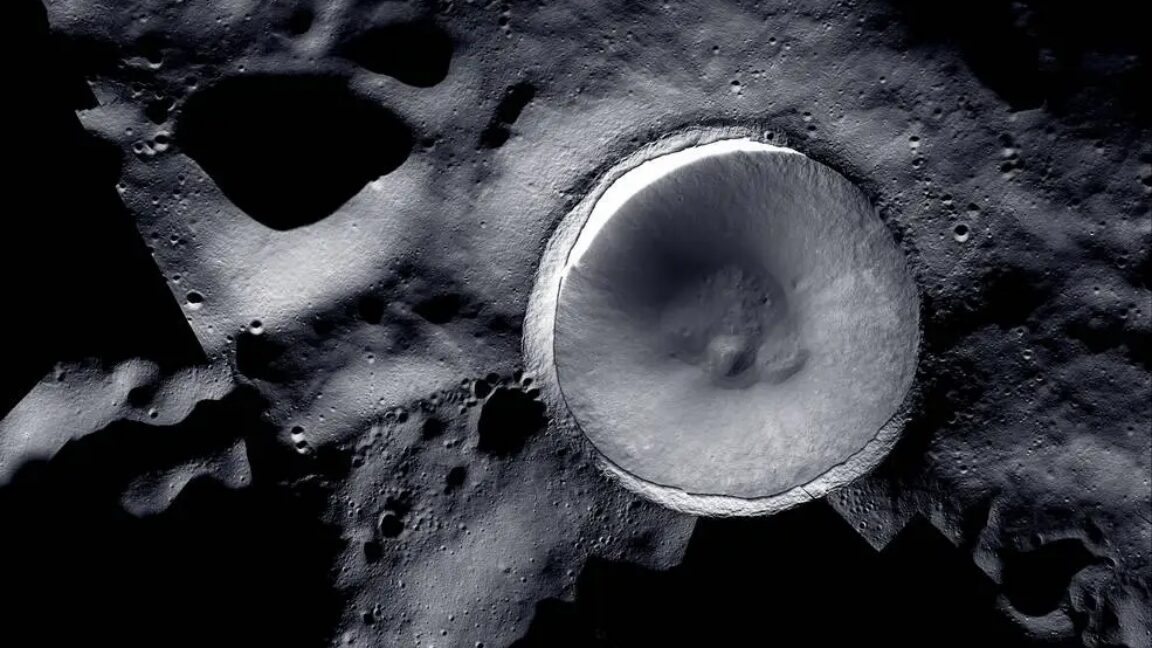
  • The mission aims to land near the Shackleton Crater at the Moon's South Pole.
  • This region is of interest for potential water ice deposits.
  • A successful landing would be a significant geopolitical win for China.
  • US Congress has empowered NASA Administrator Jared Isaacman to reform lunar programs.

The United States is facing a growing threat from China's ambitious space program, particularly its efforts to land humans on the Moon. While some in the Western space community believe NASA's past achievements are sufficient, others see the intensifying space race as a key front in the 21st-century geopolitical competition between the two superpowers.

China's upcoming Chang'e 7 mission, set to launch soon via a Long March 5 rocket, is a sophisticated lunar exploration endeavor. It includes an orbiter, lander, rover, and a mini-hopper, with a lander significantly larger than recent NASA-backed probes. The mission's target is the Shackleton Crater near the Moon's South Pole, a region rich in permanently shadowed areas known as 'cold traps,' which are believed to hold water ice and other valuable resources. No spacecraft has ever landed at the Moon's South Pole.

A successful landing and exploration by China's rover in this coveted region would be a major propaganda victory, allowing China to claim it has surpassed the United States as this century's superpower. This development is expected to serve as a wake-up call for the majority of Americans who may not be closely following the US-China space race.

In response, the US Congress has largely acknowledged the situation, granting new NASA Administrator Jared Isaacman broad latitude to make significant changes to the agency's lunar programs, including ending the development of the Lunar Gateway space station and an unnecessary upper stage for the Space Launch System rocket. Isaacman's primary challenge is to get the Artemis Program back on track and counter China's lunar ambitions.

The potential implications of Chang'e 7's success are significant. China could leverage the visuals from its vehicles traversing the Moon's South Pole to assert territorial rights or establish a keep-out zone for NASA. Such a move would be a clear provocation but could also galvanize US efforts to accelerate the Artemis program and provide Isaacman with further political capital to reform NASA.

Frequently asked questions

The South Pole, particularly regions like Shackleton Crater, contains permanently shadowed areas known as 'cold traps' that are believed to hold water ice and other valuable resources, making it a coveted location for long-term lunar settlement.

Chang'e 7 is China's latest and most sophisticated lunar exploration mission, comprising an orbiter, lander, rover, and a mini-hopper, designed to explore the Moon's South Pole region.

The US Congress has granted NASA Administrator Jared Isaacman the authority to make sweeping changes to lunar programs, including ending the development of the Lunar Gateway space station and an upper stage for the Space Launch System rocket, to refocus efforts on returning astronauts to the Moon.

What Happens Next

01China's Chang'e 7 mission is scheduled to launch.
02NASA Administrator Jared Isaacman will continue reforms to the Artemis Program.

How It Developed

China is preparing to launch its Chang'e 7 lunar exploration mission.
The mission includes an orbiter, lander, rover, and mini-hopper.
Chang'e 7 is targeting the Shackleton Crater near the Moon's South Pole.
This region is significant due to potential water ice deposits.
A successful landing would be a major geopolitical and propaganda victory for China.
US Congress has granted NASA Administrator Jared Isaacman authority to reform lunar programs.
Isaacman aims to get the Artemis Program on track and counter Chinese ambitions.

Sources

T1
The United States is about to wake up to the threat from China’s space programvar abtest_2167985 = new ABTest(2167985, 'impression');Ars Technica

Related Stories

Japan to revise security strategy amid drone and China threats
17 Aug · 9:06 PM
SCO Summit Highlights China-Russia Alliance Against West
18 Aug · 7:06 AM
UAE says Iran fired two ballistic missiles at its territory
18 Aug · 3:11 PM
Trump labels Strait of Hormuz 'US Territory', threatens Oman over Iran deal
18 Aug · 12:46 PM
US Navy destroyer lost power for four days in South China Sea
17 Aug · 6:21 PM