Key facts
- Canada has banned cattle imports from Texas due to a screwworm outbreak.
- A second infected calf has been confirmed in Texas.
- Texas has declared a state of disaster over the outbreak.
- The U.S. previously closed its border to Mexican livestock to prevent screwworm spread.
- Mexico's beef industry has seen significant expansion and increased exports to the U.S.
Canada has banned cattle imports from Texas following the confirmation of a flesh-eating screwworm outbreak, with a second infected calf identified and Texas declaring a state of disaster. This follows a year-long U.S. closure of its border to Mexican livestock, intended to prevent the spread of the pest.
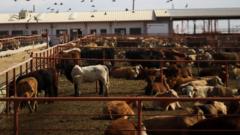
The border closure has significantly impacted U.S. feedlots like Lubbock Feeders in Texas, which is on the brink of closure due to a dried-up supply of Mexican cattle. U.S. beef prices have reached record highs, with domestic cattle supplies at a 75-year low, exacerbated by drought conditions and trade policies. The U.S. formerly imported over a million cattle annually from Mexico, which were fattened at U.S. feedlots and processed in the U.S., supporting jobs in trucking, farming, and meatpacking.
In contrast, Mexico's beef industry in states like Coahuila has capitalized on the situation. Ranchers are keeping cattle longer, expanding feedlots and processing facilities, and increasing beef exports to the U.S. Enrique García, a Mexican rancher, has doubled his workforce and seen his income increase. The U.S. Agriculture Secretary has defended the border closure as a measure to control the screwworm, a parasitic fly whose larvae feed on living flesh. Efforts are underway to resurrect a sterile fly production plant in Texas to combat the pest, similar to a successful 20th-century eradication campaign.
Producers in Texas, like Eddie Womack, are facing difficult decisions due to severe drought and high feed costs, potentially leading to herd reductions. President Trump has attempted to address high beef prices through various measures, including urging producers to lower prices and investigating meatpackers, but a larger U.S. cattle herd is seen as the most effective solution, a process that takes years.