Key facts
- Attendees at the Aspen Security Forum challenged Elbridge Colby's "middle powers" strategy.
- Chris Brose of Anduril stated that European allies want to be builders and are adapting to that reality.
- Senator Bill Cassidy and Senator Chris Murphy expressed concerns about European allies' increasing independence.
- A European diplomat suggested that long-term demand for U.S. capabilities might decline.
- Canadian Prime Minister Mark Carney and Finnish President Alexander Stubb proposed alternative coalition models.
- Finland's state secretary emphasized the procurement of sovereign satellites.
Discussions at the Aspen Security Forum revealed a growing sentiment among NATO allies to develop their own defense industrial capabilities, pushing back against U.S. policy that some attendees felt created a sense of backlash and fostered an environment where European nations are seeking greater independence.
Chris Brose, president and chief strategy officer at Anduril, noted that his company is adapting to this reality, citing a project to build low-cost missiles alongside Poland’s state-owned arms company. He stated that European allies want to be builders and that the U.S. administration's approach has alienated them.
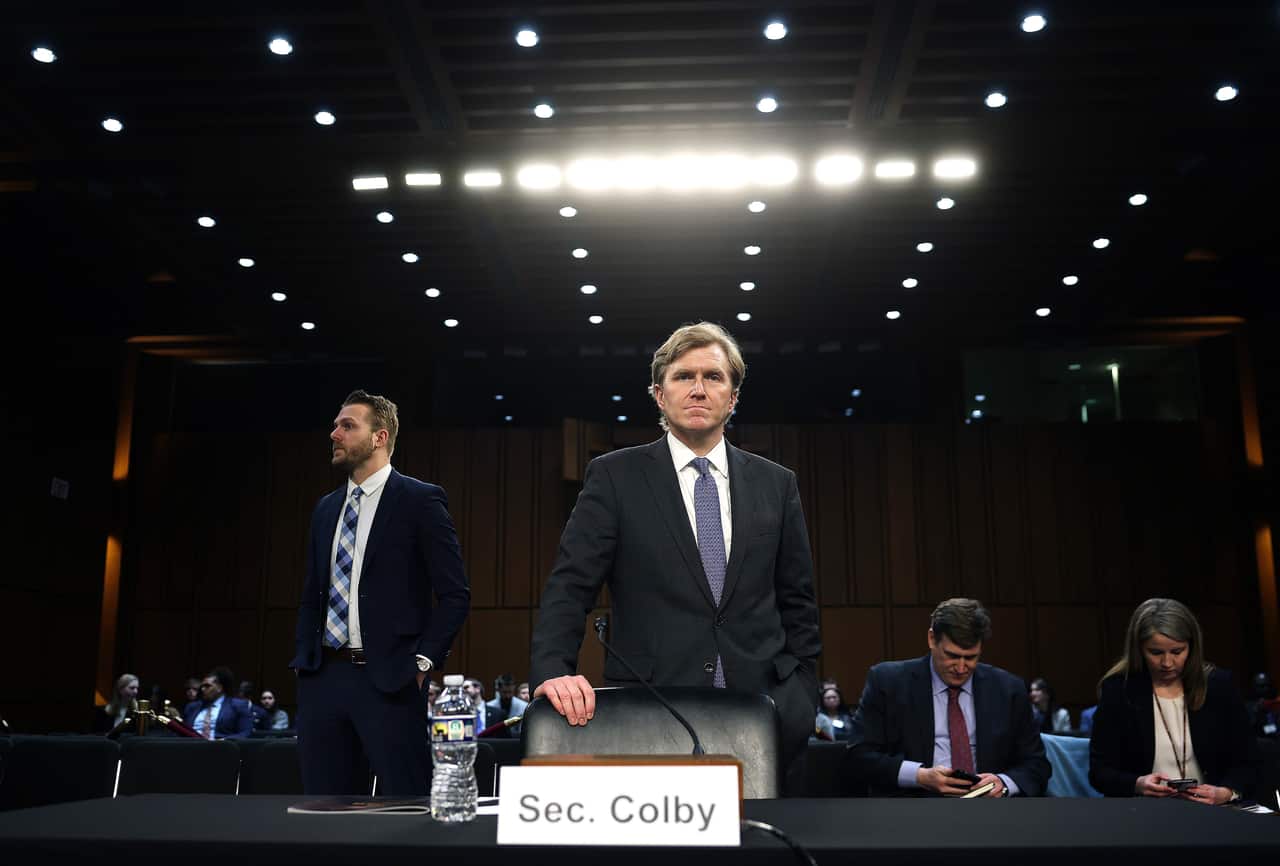
Pentagon policy chief Elbridge Colby's argument about the "middle powers" strategy not being serious drew sharp reactions. Colby had written that allies' investments in their own defense industrial bases should be collaborative with America's, rather than attempting to replicate or supplant it, and dismissed concerns about U.S. companies losing market share.
Senator Bill Cassidy (R-La.) argued that the idea of allies becoming vassal states is detrimental to both the U.S. and its partners. Senator Chris Murphy (D-Conn.) observed that European allies are moving forward with their own plans due to a lack of trust that the "isolationist, jingoistic Trump phenomenon" is over.
A European diplomat, speaking anonymously, suggested that Colby might be overlooking the long-term implications, predicting a potential decrease in demand for U.S. capabilities over time. This sentiment was echoed by discussions around an article by Canadian Prime Minister Mark Carney and Finnish President Alexander Stubb, who proposed replacing the old order with ad-hoc coalitions based on "values-based realism."
Pasi Rajala, Finland’s state secretary to the foreign minister, highlighted the increasing need for sovereign satellites. Kori Schake, who served on former President George W. Bush’s National Security Council, acknowledged that allies are searching for equations where the U.S. cannot be a spoiler, a dynamic she attributes to the policies of the Trump administration, while expressing skepticism about middle powers fully substituting for American power.