All NewsEducationTV
Equities & FundsCrypto & Digital AssetsAI & TechnologyBusiness & CorporateUS Politics & PolicyGeopolitics & Global RiskMacro, Rates & FXCommodities & EnergyEuropean Politics & MarketsAsia-PacificReal Estate & Property
Story archiveAll categories
← All Stories

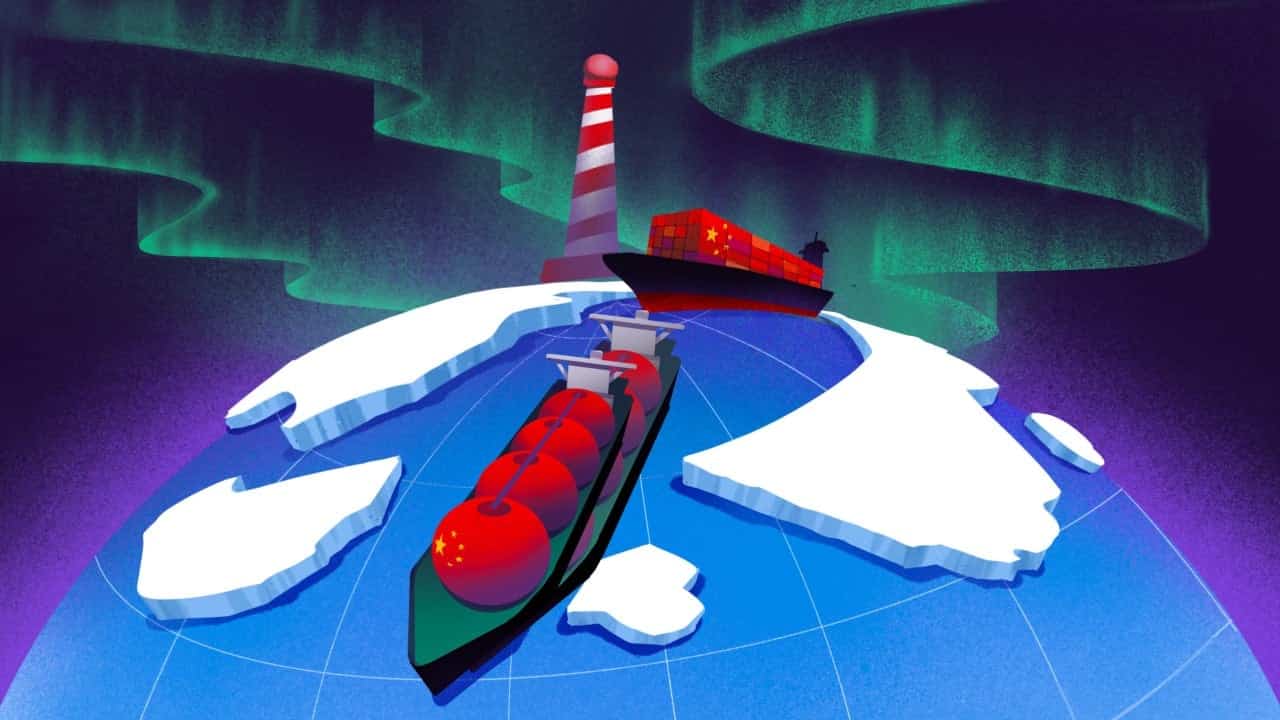
Middle East conflict pushes China to Arctic trade route

Created at 17 Aug · 3:06 PM2 sources↑ Market-relevant2 events
IN SHORT

China is increasing its use of the Arctic's Northern Sea Route for container shipments to Europe due to threats to Red Sea shipping. The route, made more accessible by melting ice, offers a significantly shorter journey but faces environmental and operational challenges.

✉Newsletter

PiQ Daily

Pick your topics. Get only what matters, on your cadence.

Key Numbers

531reported incidents in Arctic waters (decade to 2023)
261incidents due to machinery damage/failure in Arctic waters

Who's Involved

China
boosting use of Arctic trade route due to Middle East conflict
Russia
controls navigation and issues permits for the Northern Sea Route
Sea Legend
Chinese container shipping firm launching regular Arctic service
Maersk
Danish shipping giant avoiding Arctic route
Hapag Lloyd
Western container shipper avoiding Arctic route
MSC Mediterranean Shipping Company
Western shipper reaffirming commitment to avoid Northern Sea Route
Rosatom
Russian state corporation organizing navigation in the Northern Sea Route
Allianz
insurance giant cautioning on Arctic shipping risks
Middle East conflict pushes China to Arctic trade route

↳ Why This Matters

The increased use of the Arctic route by China, driven by geopolitical instability in the Middle East, highlights a significant shift in global trade patterns and underscores the growing strategic and economic importance of the Arctic region. It also exposes the vulnerabilities of traditional shipping lanes and the potential environmental risks associated with increased maritime activity in a frag

Key facts

  • China is increasing container shipments to Europe via the Arctic's Northern Sea Route due to Red Sea shipping threats.
  • Sea Legend, a Chinese firm, is launching the first regular weekly container shipping service on the Arctic route.
  • The Arctic route halves journey times between Asia and Europe compared to traditional routes.
  • Melting Arctic ice makes the route more accessible in summer, reducing the need for icebreaker vessels.
  • Western shippers remain hesitant due to environmental concerns and Russia's control over the route.
  • Operational risks in the Arctic include machinery failure, difficult rescue operations, and potential oil spills.

The Middle East conflict and heightened threats to shipping in the Red Sea are driving China to increase its utilization of the Arctic's Northern Sea Route for container transport to Europe. Melting Arctic ice is making this route, which Sea Legend refers to as the 'Ice Silk Road', more accessible during summer months, significantly cutting voyage times between Asia and Europe by approximately half.

While the Northern Sea Route offers a compelling alternative to the increasingly perilous Red Sea and Suez Canal passages, Western shippers like Maersk, Hapag Lloyd, and MSC remain hesitant. Their reluctance stems from environmental concerns, strained relations with Russia, and the underdeveloped infrastructure for commercial shipping in the Arctic. Russia, through its state corporation Rosatom, controls navigation and issues permits for the route.

Despite these hesitations, China is persevering, leveraging its relationship with Russia. However, the Arctic route is not without its own risks. Allianz has highlighted that machinery damage or failure is the most frequent cause of incidents in Arctic waters, with 531 reported incidents in the decade leading up to 2023. Other operational challenges include the difficulty of organizing search and rescue operations in the remote region and the potential for oil spills, which could endanger the sensitive ecosystem. Western shippers who deem the Arctic route unviable may opt for longer voyages around the Cape of Good Hope.

Frequently asked questions

The Northern Sea Route is a shipping lane that runs along Russia's Arctic coast, connecting the Pacific and Atlantic oceans. It is largely defined by the Arctic Ocean and seas such as the Barents Sea, Kara Sea, Laptev Sea, and East Siberian Sea.

Climate change is causing Arctic sea ice to melt, making the Northern Sea Route navigable for longer periods each year, thus increasing its accessibility for commercial shipping.

Western shippers are hesitant due to environmental concerns, strained relations with Russia (which controls the route), and the underdeveloped infrastructure for safe and reliable commercial navigation.

The main risks include machinery damage or failure, difficulties in organizing search and rescue operations, and the potential for oil spills that could harm the sensitive Arctic environment.

What Happens Next

01Sea Legend to launch regular weekly container shipping service via the Arctic.
02Continued monitoring of Houthi threats to shipping in the Red Sea and Bab el-Mandeb Strait.
03Further assessment of environmental impacts from increased Arctic shipping traffic.

Get the newsletter.

Pick the topics you actually care about. We'll email when there's news worth your time, on the cadence you choose. Cancel any time from your account.

Cadence

How It Developed

China and Russia are increasingly leveraging the Arctic sea route due to climate change and geopolitical shifts.
The Middle East conflict and threats to Red Sea shipping have prompted China to boost the use of the Arctic for container transport to Europe.
A Chinese container shipping firm, Sea Legend, is launching the first regular weekly shipping service via the Arctic to Europe.
The Arctic route, referred to as the 'Ice Silk Road', cuts voyage time between China and the UK by about half.
Melting polar ice caps make shipping via the Northern route around Russia easier and cheaper in the summer.
Western shippers like Maersk, Hapag Lloyd, and MSC remain wary of the Arctic route due to strained relations with Russia and environmental concerns.
Russia's State Atomic Energy Corporation Rosatom organizes navigation in the Northern Sea Route and issues permits.
Operational safety limits and threats in the Arctic include ships getting stuck in ice, difficult search and rescue, and the risk of oil spills.

Sources

T1
Why the Arctic sea route has become so important for China and RussiaSouth China Morning Post
T1
Middle East War Pushes China Toward the Arctic Trade RouteOilPrice.com

Related Stories

Iran Threatens Offensive in Strait of Hormuz if Diplomacy Fails
16 Aug · 11:56 PM
Yemen's Mocha becomes fighter hub amid Houthi Red Sea attacks
17 Aug · 12:11 PM
Nirupama Rao and Lin Minwang discuss India-China relations
16 Aug · 10:05 PM
US-China relations: Investment, Pentagon, and 'Chinese Schindler' reads
17 Aug · 2:05 PM
Myanmar junta leader Min Aung Hlaing visits Russia
17 Aug · 6:44 AM