Key facts
- US consumer sentiment hit a record low of 49.8 in April, the lowest in the survey's 74-year history.
- Average hourly earnings have risen 3.6% annually, but inflation is expected to be around 4%, leading to real wage cuts.
- Spending is bifurcated, with higher-income households driving most of the growth, while lower-income households face financial strain and increased debt.
- Wealth inequality is at its highest since the early 1900s, with significant disparities in savings and financial security.
- A majority of Americans report being stressed about money and believe their financial situation is worsening.
US consumer sentiment has fallen to its lowest point in the 74-year history of the University of Michigan survey, reflecting widespread financial anxiety among Americans. The latest reading of 49.8 indicates a significant disconnect between economic data and public perception, with three of the four lowest sentiment readings occurring in the past nine months.
While some economists caution that sentiment surveys can be influenced by partisanship and may not always align with actual spending behavior, experts like Heather Long, Chief Economist at Navy Federal Credit Union, believe the current sentiment reflects a genuine financial squeeze. "Americans are literally getting squeezed now," Long stated, emphasizing that it's a "financial reality" rather than just a "vibe."
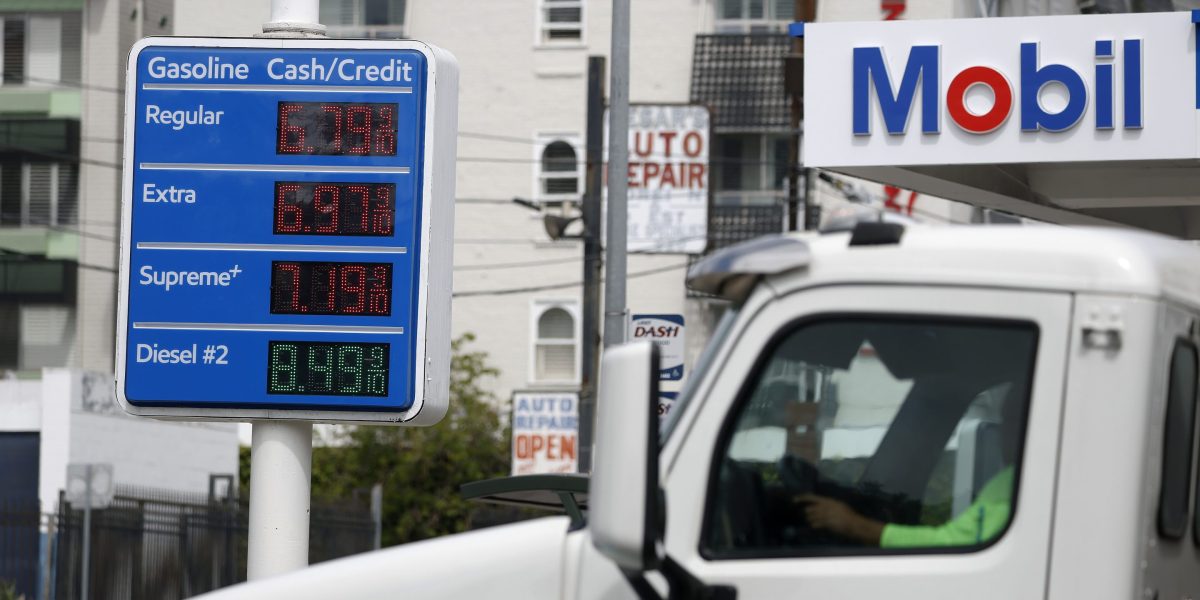
The resilience of American workers against persistent inflation may be waning. Although average hourly earnings have risen 3.6% over the past year, inflation is expected to hover around 4%, potentially leading to flat or negative real wage growth for April and May. This is partly attributed to supply shocks from geopolitical events, such as the U.S.-Israeli war in Iran, which has pushed gas prices above $4.55 per gallon nationally.
Spending patterns reveal a bifurcated economy. While retail sales continue to rise, driven primarily by higher-income households, lower- and middle-income families are facing significant financial strain. Research from the Federal Reserve Bank of New York and Bank of America highlights a "K-shaped pattern," where higher earners maintain their spending habits, including vacations and park bookings, while lower-income households cut back, increase reliance on debt, and substitute public transit for driving.
This economic divide is further exacerbated by extreme wealth inequality. The top 10% of the country owns nearly 95% of all stocks, while many Americans have no savings and are increasingly stressed about money. A CBS News poll found that 67% of Americans are actively stressed about their finances, and 55% believe their financial situation is worsening, a sentiment not seen since 2001.