Key facts
- Russian President Vladimir Putin reiterated maximalist war aims, stating Russia is advancing and will achieve its objectives.
- Putin's claims of territorial gains have been inconsistent, with a significant figure later corrected in official transcripts.
- Analysts indicate Ukraine has gained an advantage in medium-range strikes, targeting Russian logistics and military infrastructure.
- Recent battlefield gains for Russia have been minimal, with May's captured territory being the lowest since October 2023.
- Ukraine is focusing on inflicting maximum casualties and destroying vehicles to create problems for Russia.
- Putin claimed full control of Luhansk Oblast, while analysts estimate about 20% of Donetsk Oblast remains under Ukrainian control.
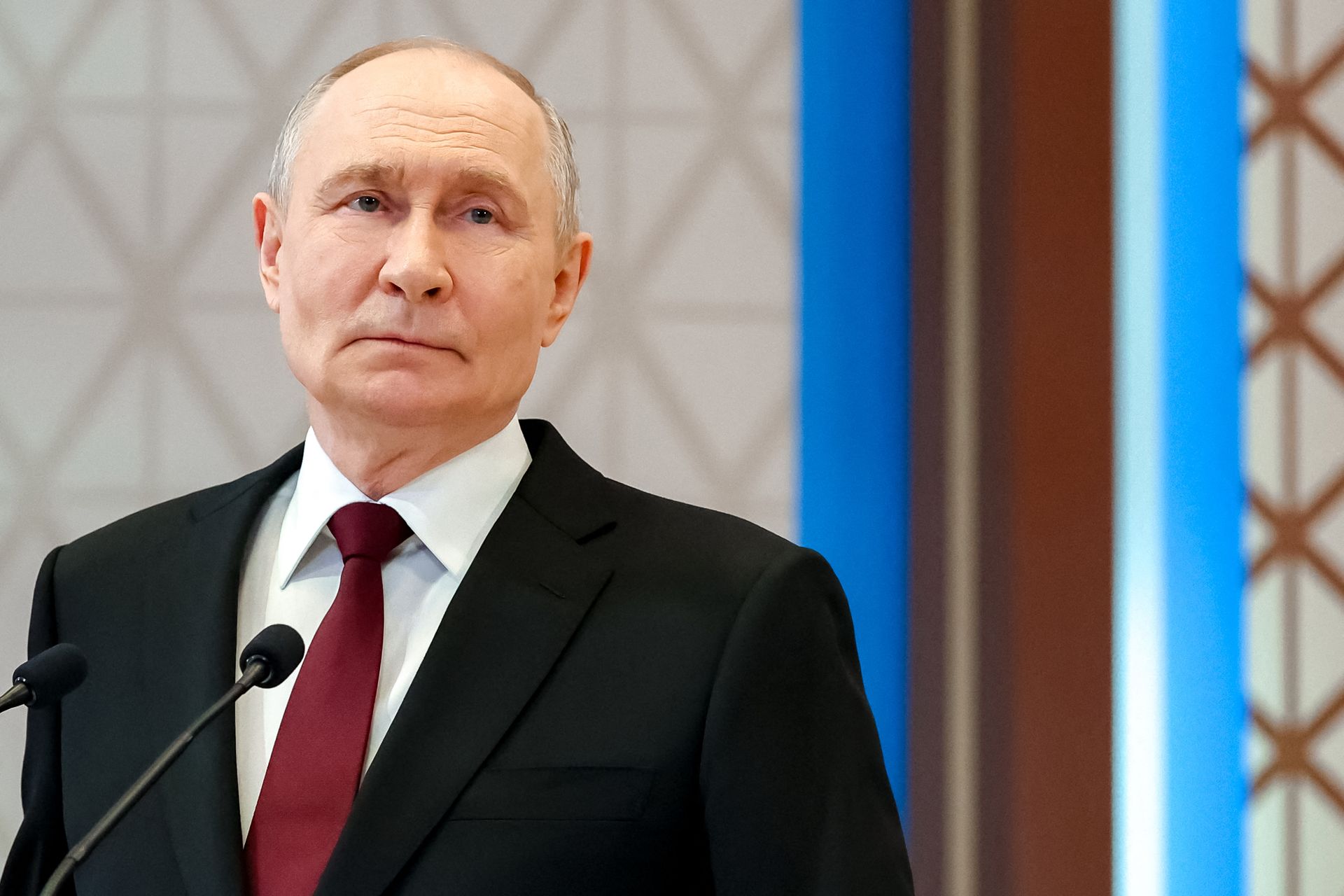
Russian President Vladimir Putin has reiterated maximalist war aims, asserting Russia's advancement and eventual achievement of objectives, despite a shifting battlefield reality and ongoing Ukrainian drone strikes. Speaking at Russia's flagship economic forum, Putin's rhetoric remained consistent with previous statements, emphasizing negotiations on Moscow's terms.
Analysts, however, point to a divergence between Putin's claims and the actual state of the war. Oleksii Melnyk of the Razumkov Center noted that Putin's belief in Ukraine's capitulation appears unchanged, despite growing difficulties for Russia in replacing battlefield losses. Putin's initial claim of capturing over 2.4 million square kilometers of Ukrainian territory, later corrected to 2,440 square kilometers, highlights his tendency to improvise while maintaining core demands.
While Russia retains advantages in manpower and defense-industrial capacity, military analyst Emil Kastehelmi argues that battlefield momentum is increasingly defined by medium-range strikes on logistics and military infrastructure, an area where Ukraine has gained the upper hand. Ukraine's strategy has shifted to striking deeper into Russia, targeting supply lines and industrial facilities, which could significantly increase costs for Moscow if it fails to adapt.
Kastehelmi noted that Russian advances have been limited, averaging less than 100 square kilometers per month this year, with May seeing the lowest gains since October 2023, despite an increase in assaults. Ukraine, meanwhile, is focused on maximizing Russian losses, having exceeded Russia's recruitment rate for five consecutive months.
Regarding the objective of liberating Donbas, Putin claimed full control of Luhansk Oblast, a claim largely supported by analysts. However, in Donetsk Oblast, approximately 20% remains under Ukrainian control, including heavily fortified urban areas that present significant challenges for Russian forces.
Putin also commented on Ukrainian President Volodymyr Zelensky's calls for European security, questioning Kyiv's reliance on U.S. aid. He praised U.S. President Donald Trump and referenced a past criticism of Zelensky's attire, which Melnyk interprets as an attempt to influence Trump and a sign of Putin's hope for Washington to pressure Kyiv into concessions.
Meanwhile, Ukraine continues to pursue diplomatic avenues, with President Zelensky holding a "very positive" conversation with U.S. envoys Steve Witkoff and Jared Kushner regarding efforts to end the war through negotiation.