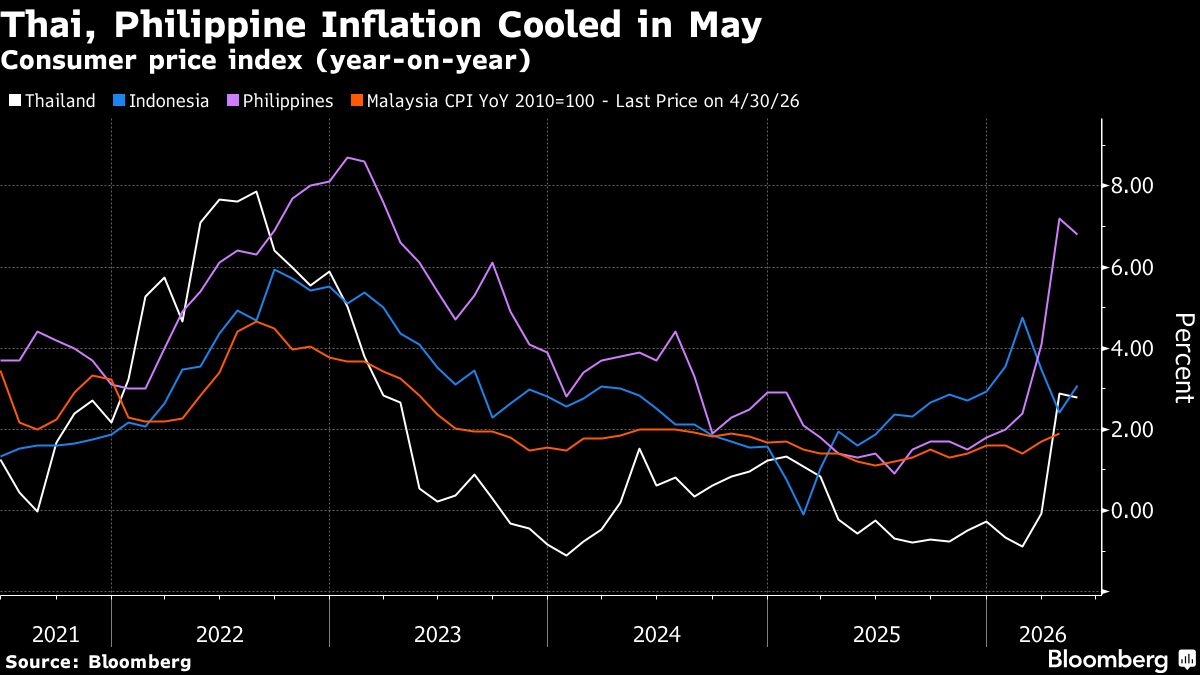
Philippines inflation slows to 6.8% in May
IN SHORT
Philippines CPI inflation decelerated to 6.8% year-over-year in May, down from 7.2% in April and below analyst forecasts of 7.5%-7.9%. The slowdown was driven by lower price growth in transport, food, and housing. Despite this, the Bangko Sentral ng Pilipinas plans to proceed with a rate hike.
Key Numbers
6.8%Philippines CPI inflation y/y in May
7.2%Philippines CPI inflation y/y in April
7.5%-7.9%Analyst forecasts for May CPI inflation
0.6%Seasonally adjusted CPI m/m fall in May
4.1%Annual core inflation in May
3.9%Annual core inflation in April
16.2%Transport index price growth y/y in May
5.7%Food and non-alcoholic beverages price growth y/y in May
7.8%Housing, water, electricity, gas, and other fuels price growth y/y in May
Who's Involved
Bangko Sentral ng Pilipinas (BSP)
Central bank considering interest rate hikes
Benjamin Diokno
Governor of the BSP, stated rate hike is still on track
Philippine Statistics Authority (PSA)
Reported inflation data