Key facts
- A potential US-Iran peace agreement aims to reopen the Strait of Hormuz.
- The G7 summit in Évian-les-Bains, France, will address this deal, an expiring tariff deadline, and a rare-earth crisis.
- President Donald Trump announced a settlement with Iran, subject to final document completion.
- Iran's foreign ministry confirmed a deal under discussion includes a memorandum of understanding.
- Europe sources nearly all its heavy and light rare earth elements and magnets from China.
- China's export restrictions on rare-earth magnets have severely impacted shipments and production.
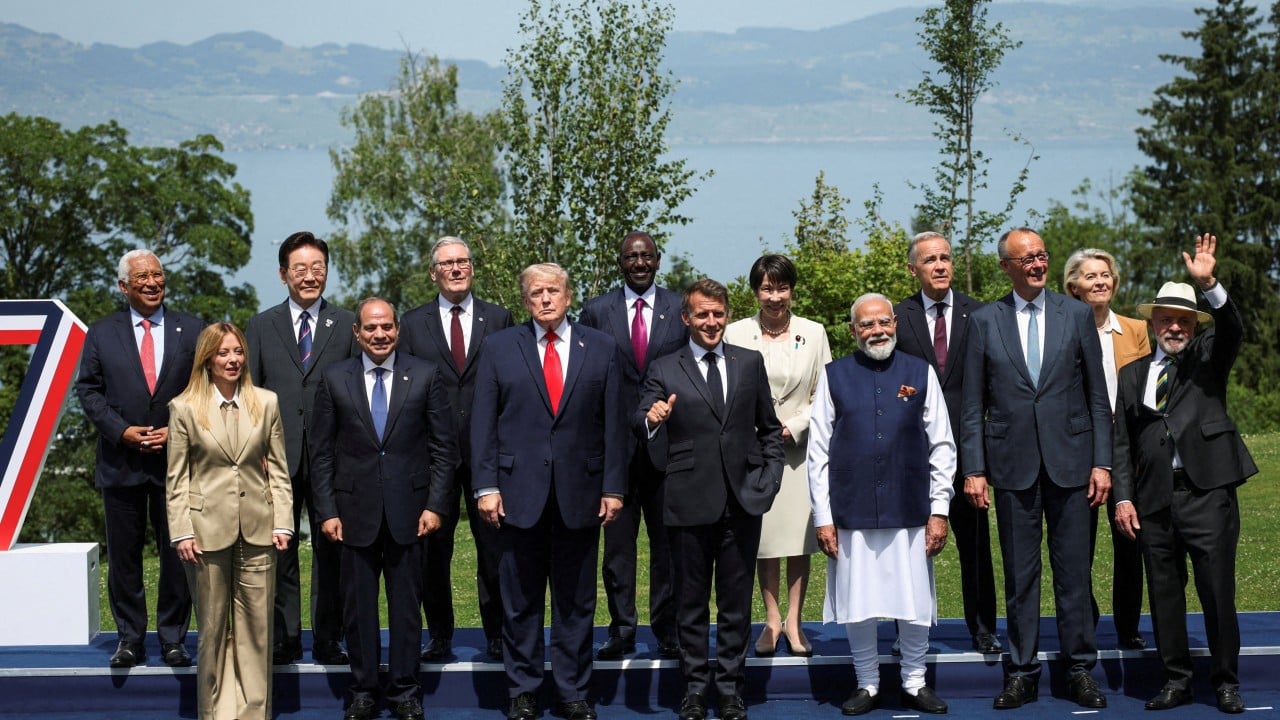
The G7 summit in Évian-les-Bains, France, is set to address three major global crises: a potential US-Iran peace agreement, an expiring import tariff, and a critical-minerals emergency.
President Donald Trump announced Thursday that the United States had reached a settlement with Iran, contingent on final document ratification, which could lead to the reopening of the Strait of Hormuz. Trump indicated that Vice President JD Vance and special envoy Steve Witkoff would represent the U.S. at a signing ceremony, possibly over the weekend in Europe. A senior Iranian official suggested a deal was likely, with Geneva being considered as a signing location. Iran's foreign ministry confirmed discussions include a memorandum of understanding as an initial phase, preceding broader nuclear negotiations within 30 to 60 days.
The conflict that led to the Strait of Hormuz disruption began on February 28 with military attacks by the United States and Israel on Iran, followed by Iran's retaliation. The Strait of Hormuz is a crucial waterway for global oil transit, carrying approximately 20 million barrels of oil daily. A ceasefire has been in place since April 8, but shipping volumes have not fully recovered.
Trump's announcement followed his cancellation of a planned strike on Iran, citing progress in talks. The proposed framework reportedly requires Iran to reopen the Strait of Hormuz within 30 days in exchange for a U.S. suspension of hostilities and, according to Iranian state media, reconstruction commitments and sanctions relief. However, Trump disputed Iranian accounts of the deal's terms.
The reopening of the Hormuz strait would significantly impact global maritime freight rates, tanker routing, and energy input costs for manufacturers. Oil prices have experienced volatility, rising on news of the potential deal and falling as Iranian officials disputed the terms.
Beyond the Iran deal, the summit's agenda includes a critical-minerals crisis, particularly concerning rare-earth elements. Europe relies heavily on China for these resources, with Beijing having tightened export licensing for rare-earth magnets. This has led to a substantial decrease in shipments, impacting automakers and the defense industry, with Europe and the United States estimated to have lost $1.5 trillion due to the crisis.