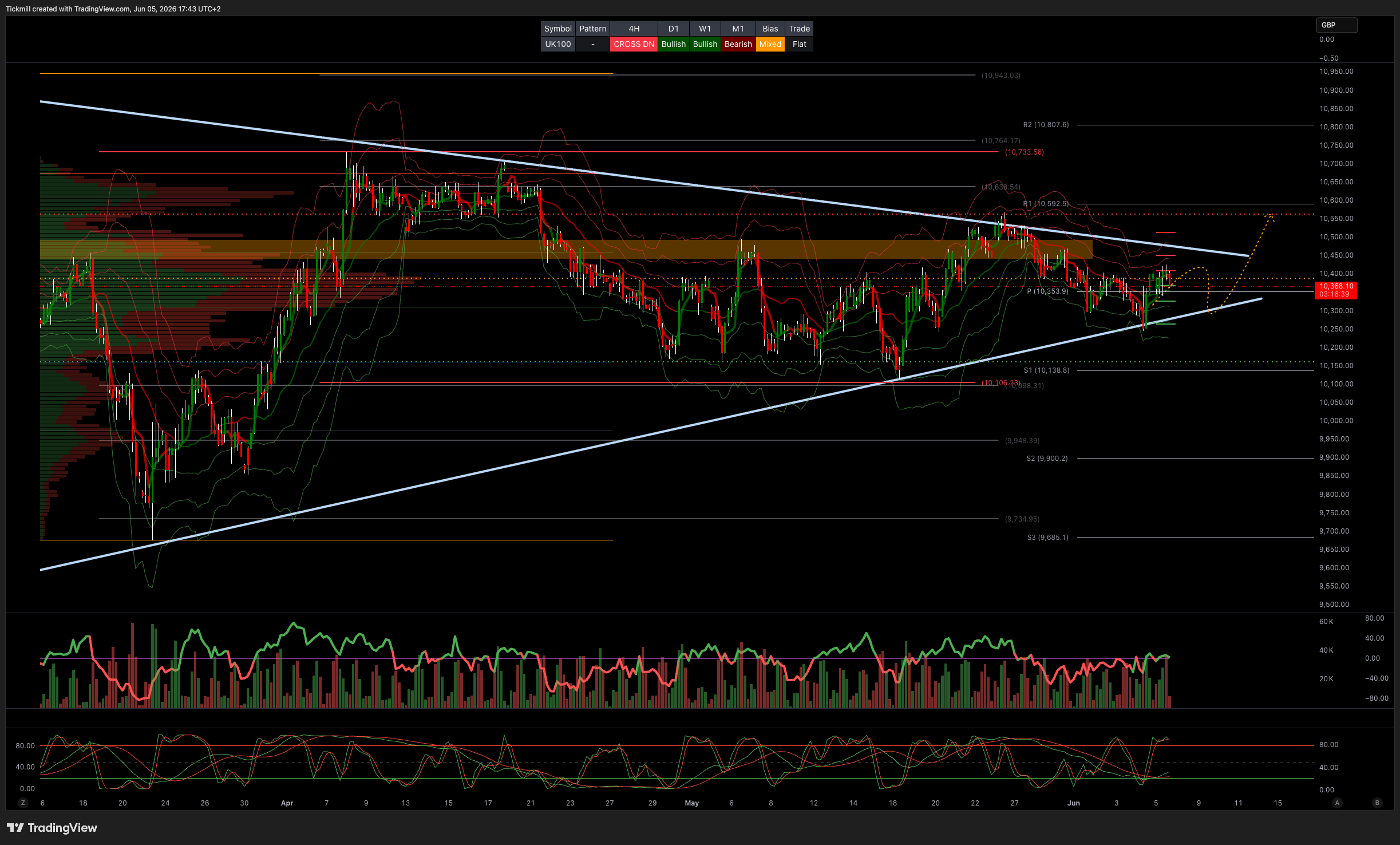
The FTSE 100 closed lower on Friday, impacted by rising Brent crude oil prices nearing $99 a barrel and increased market pricing for a Federal Reserve rate hike. Despite a Bank of England survey showing businesses expect slower price increases, geopolitical risks and strong US nonfarm payrolls data weighed on sentiment.

The FTSE 100 index closed lower on Friday, reversing earlier gains despite some positive news regarding UK inflation expectations. A Bank of England survey indicated that businesses anticipate raising prices at a slower pace, with 57% expecting to lift prices, a seven-percentage-point decrease from April. This suggested that initial inflationary pressures from higher energy costs might be easing.
However, the relief was tempered by persistent geopolitical risks and stronger US economic data. Brent crude oil prices moved back towards $99 a barrel, reflecting ongoing Middle East tensions. In the US, nonfarm payrolls increased by 172,000 in May, reinforcing the resilience of the labor market and leading to increased market pricing for a Federal Reserve rate hike, with a 25 basis-point increase now fully expected by year-end. This supported the US dollar and put global bonds under pressure.
Sector performance within the FTSE 100 showed technology stocks leading gains, up 2.1%, and personal care shares rising 1.7%. Conversely, precious metal miners underperformed, falling 2.2%. The UK construction PMI remained weak at 38.2. Geopolitical risks, particularly concerning the Strait of Hormuz, remained a key concern for markets. Domestic political uncertainty in the UK also added to the cautious backdrop.
Rising oil prices and expectations of further US interest rate hikes can negatively impact equity markets globally, including the FTSE 100, by increasing costs for businesses and reducing consumer spending power.