Key facts
- Eve Air Mobility is targeting 2028 for the certification of its electric vertical takeoff and landing (eVTOL) vehicle.
- The company's CEO stated Eve has sufficient cash reserves to fund operations until 2028.
- Eve recently delayed its certification timeline from 2027 to 2028.
- Brazil's aviation regulator ANAC considers the certification timeline realistic.
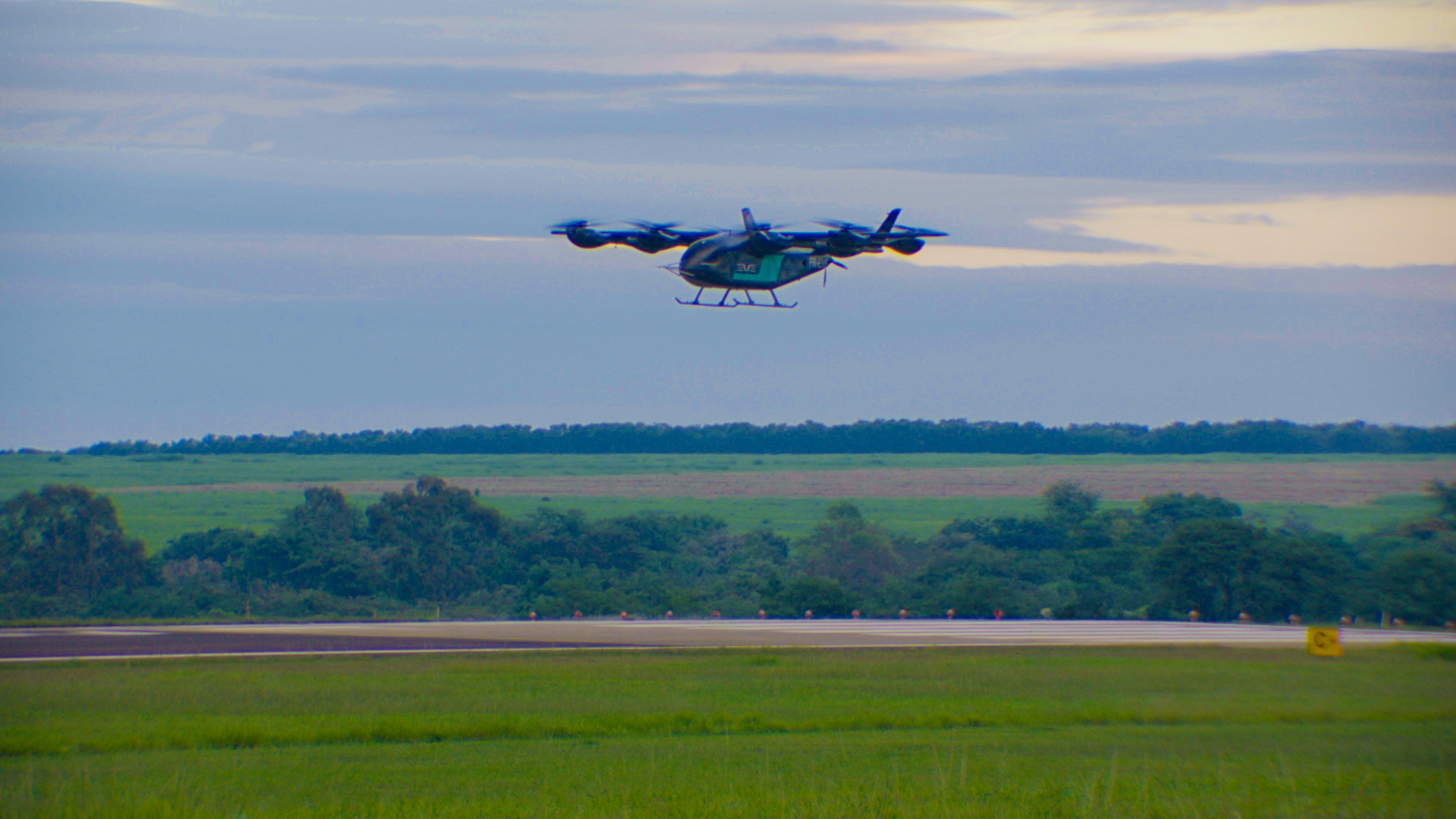
- Eve's engineering prototype has completed its first uncrewed hover flight.
Embraer's electric aircraft subsidiary, Eve, is proceeding with its electric vertical takeoff and landing (eVTOL) vehicle, now targeting certification by 2028. This represents a shift from its previous 2027 goal, with the company citing a need for cautious spending and sufficient cash reserves to support operations until the certification.
CEO Johann Bordais indicated that Eve has enough cash to last until 2028, noting a first-quarter cash position of $441 million. He also expects cash consumption in 2026 to be at the lower end of the previously guided $225 million to $275 million range. The company's engineering prototype has successfully completed its first uncrewed hover flight, which lasted approximately one minute and provided high-fidelity data on the airframe design and systems.
Brazil's aviation regulator, ANAC, has expressed that Eve's timeline is realistic, with its president, Tiago Faierstein, previously stating that certifying the air taxi is the agency's top priority and aiming for 2026. Eve's approach emphasizes certifying to fly rather than flying to certify, involving extensive ground testing before flight campaigns. The production model is designed to carry four passengers plus a pilot, with a range of about 60 miles, and is expected to have a significantly lower cost per seat than helicopters.