Key facts
- Bitcoin's 30-day hashrate average has turned downward with the price.
- Miner reserves are nearly flat, indicating they are holding Bitcoin.
Bitcoin's 30-day hashrate average has turned downward alongside price, indicating stress in the mining ecosystem. However, miner reserves remain nearly flat, suggesting they are holding Bitcoin rather than selling under pressure. This current hashrate dip is shallower than historical capitulation events.
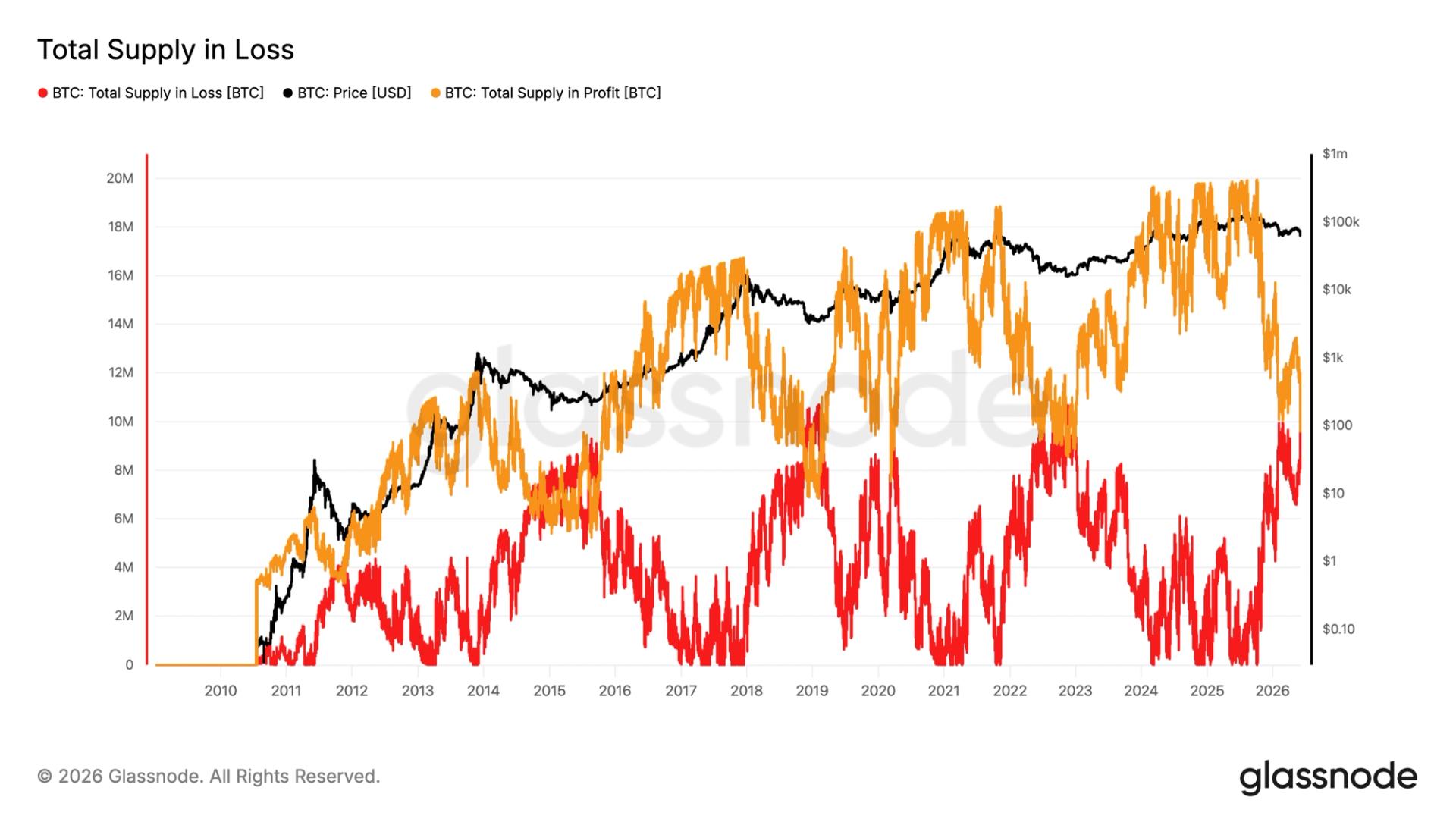
Bitcoin has experienced significant selling pressure, with a 16% drop since Monday, forcing a reassessment of market support levels. CryptoQuant analyst Woominkyu identified a signal in the mining data: the 30-day moving average of Bitcoin's hashrate has turned downward alongside the price decline. This indicates genuine stress in the mining ecosystem, as hashrate represents the network's physical security layer and the commitment of energy and capital by miners. Historically, hashrate pullbacks have clustered around cycle bottoms, with notable declines including a 43% drop during the 2021 China mining ban and a 28% contraction in the 2018 bear market. The current seven-day decline is approximately -6.6%, with the 30-day reading showing a -3.0% contraction. These figures are considered meaningful signals but are far shallower than previous capitulation events. Mining difficulty remains positive at +4.9% on a 30-day basis, indicating tightening economics for miners. However, miner reserves are nearly flat, suggesting they are holding their Bitcoin rather than sending it to exchanges for sale, which prevents the current setup from becoming an alarming capitulation event.
The downward trend in Bitcoin's hashrate, while historically associated with cycle bottoms, is currently less severe than previous capitulation events, and stable miner reserves suggest a lack of forced selling, indicating potential resilience around the $60,000 support level.