Key facts
- EU leaders agreed to extend sanctions against Russia for 12 months.
- The illicit drug market in the EU is estimated at €31 billion.
- EU leaders aim for a preliminary deal on the next seven-year budget by October.
- Ireland is tasked with proposing new revenue sources for the 2028-2034 EU budget.
- The proposed EU budget is €2 trillion.
- President Zelenskyy urged fast-track EU membership for Ukraine.
- Cyprus will work to advance accession talks for Ukraine and Moldova.
- European Commission President Ursula von der Leyen suggested considering a mandate for negotiating with Russia on Ukraine.
- Spanish Prime Minister Pedro Sánchez called for a more financially powerful EU.
- The EU is extending sanctions against Russia for an additional 12 months.
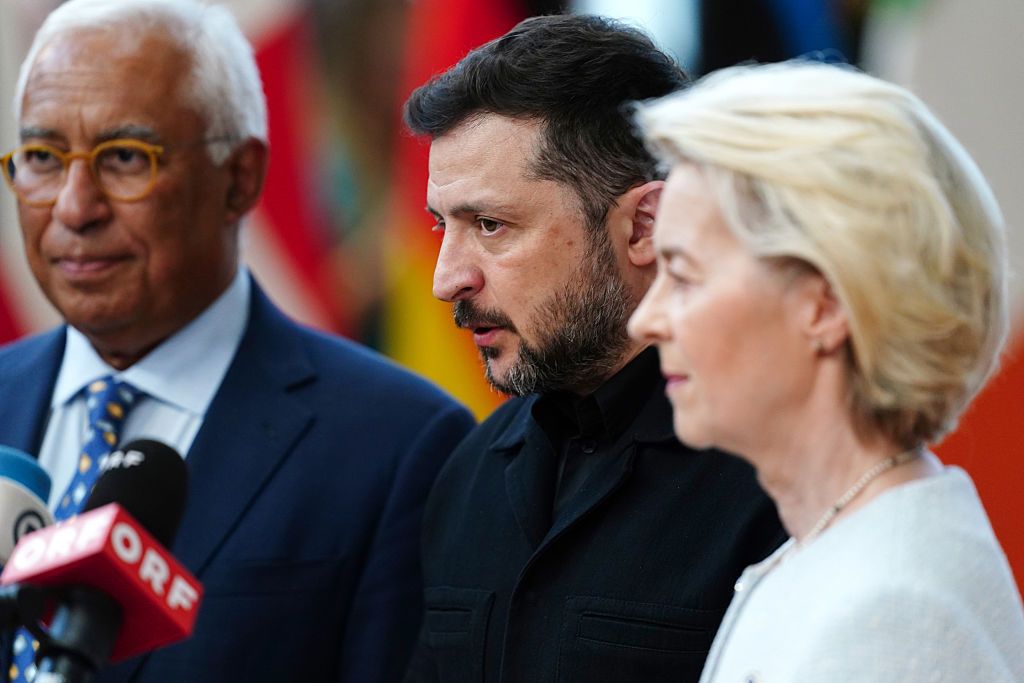
European Union leaders met at a summit to tackle a range of critical issues, agreeing to renew sanctions against Russia for an additional 12 months, a departure from the usual six-month extension aimed at simplifying the process. The leaders also committed to coordinated action against the escalating illicit drug market, valued at €31 billion, emphasizing the need for enhanced cooperation among EU bodies, member states, and international partners to combat drug trafficking and its associated harms. Discussions surrounding the EU's next seven-year budget, projected at €2 trillion, revealed persistent divisions among member states regarding spending priorities and funding mechanisms. A preliminary agreement on this budget is targeted for October, with Ireland, set to assume the EU presidency, tasked with proposing new revenue streams. Potential financing options under consideration include CO2 permit shares and digital taxes, reflecting a divide between net contributors and beneficiaries. Ukrainian President Volodymyr Zelenskyy addressed the summit, imploring EU leaders to grant Ukraine fast-track membership, highlighting the nation's sacrifices and defense efforts as vital for Europe's future security, and also requested support for air defense and fuel. Cyprus, nearing the end of its EU presidency, vowed to push for the advancement of accession talks for Ukraine and Moldova, calling their opening a "milestone" and proposing a compromise on the EU's long-term budget. Spanish Prime Minister Pedro Sánchez advocated for a more integrated and financially capable European Union, promoting trade diversification and dialogue with other regions, a stance that contrasts with more cautious approaches from some member states concerning China. European Commission President Ursula von der Leyen suggested considering a mandate for negotiating with Russia on Ukraine, following European Council President António Costa's initiative to establish a diplomatic channel with the Kremlin, which received mixed reactions.