Key facts
- Armenia is holding parliamentary elections on June 7.
- Prime Minister Nikol Pashinyan's party leads in polls.
- Armenia faced a military defeat in Nagorno-Karabakh.
- Opposition groups accuse the government of political pressure.
- Some opposition groups have pro-Russian leanings.
- Opposition groups warn of economic consequences from damaged Russia ties.
- Annita Demetriou was re-elected as speaker of the Cypriot parliament.
- The Cypriot speaker election is seen as an indicator for the 2028 presidential election.
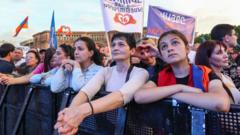
Armenia is currently holding its parliamentary elections on June 7, marking a significant test for Prime Minister Nikol Pashinyan's administration. The elections are seen as a crucial gauge of the public's support for Pashinyan's pro-European stance and his ongoing peace initiatives with Azerbaijan. Pashinyan's party is leading in the latest polls, suggesting a potential continuation of his government's policies. However, the Prime Minister faces considerable challenges, including mounting pressure from Russia and domestic criticism stemming from Armenia's recent military defeat in Nagorno-Karabakh. Opposition parties, some of which have strong pro-Russian affiliations, have voiced concerns about the electoral process. They accuse the current government of exerting political pressure on opponents and of damaging the country's historically close ties with Moscow. These opposition groups also warn of potential negative economic consequences for Armenia should relations with Russia continue to deteriorate. Meanwhile, in Cyprus, Annita Demetriou has been re-elected as the speaker of the Cypriot parliament. This re-election is being closely watched as it is considered an indicator of potential political alliances that could shape the upcoming presidential election in 2028.