Key facts
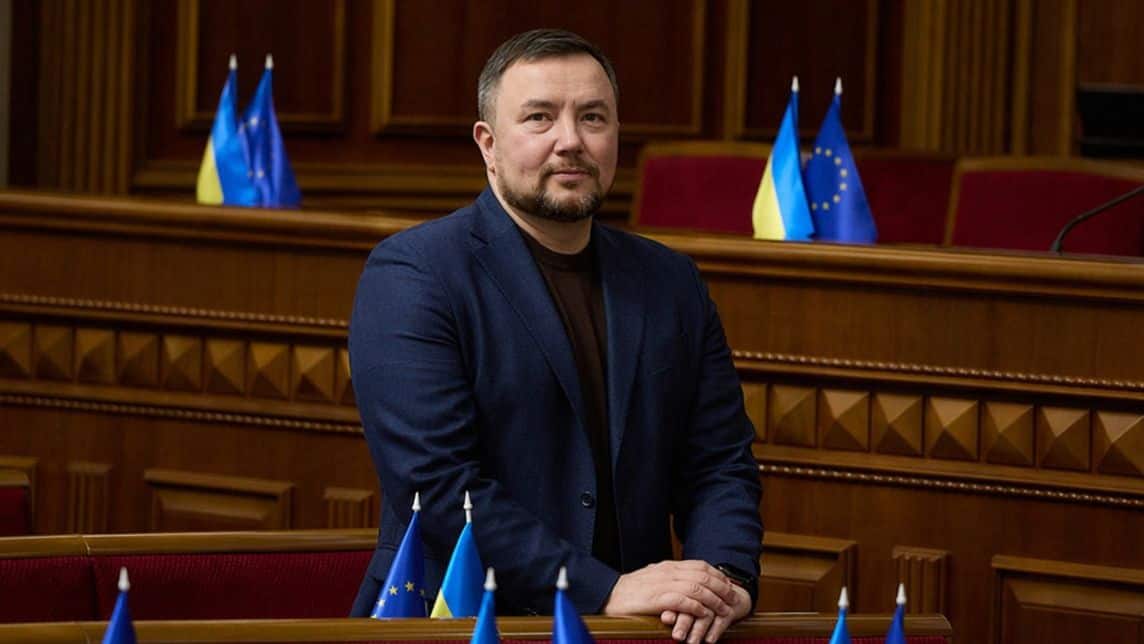
- Lawmaker Denys Maslov chairs Ukraine's judiciary committee and is expected to become justice minister.
- Ukraine's judicial reform faces criticism from the EU and civil society groups, particularly regarding the Supreme Court.
- A new law on judges' integrity declarations has been criticized for weakening the system.
- Maslov defends the reform, citing the need for balance between judicial accountability and independence.
- Disagreements exist over the role and nomination of international experts in verifying judges' declarations.
Lawmaker Denys Maslov, who chairs Ukraine's parliamentary committee responsible for judicial reform and is widely expected to be appointed the country's next justice minister, has defended the ongoing overhaul amid significant pressure from the European Union and criticism from Ukrainian civil society.
The reform effort has encountered recent flashpoints, including the failure to reform the Supreme Court and the passage of a law in June concerning judicial integrity declarations. Maslov, representing President Zelensky's Servant of the People party, stated in an interview that the objective is to balance judicial accountability with the principle of independence.
Judicial watchdog Dejure has argued that the new law on integrity declarations effectively dismantles the system as a tool for holding judges accountable, by reducing the number of specific questions judges must answer. Maslov dismissed these concerns, emphasizing that the substance of the declarations, rather than the number of questions, is what matters.
The Supreme Court has been a focal point of corruption scandals, with its former head, Vsevolod Kniazev, sentenced for bribery. Following Kniazev's arrest, the EU requested audits of incumbent Supreme Court judges' integrity declarations with international expert involvement. Parliament passed a bill mandating the Cabinet of Ministers to draft a separate bill on checking these declarations within six months, signed by President Zelensky on June 24.
Maslov attributed delays in Supreme Court reform to a lack of consensus among international partners and stated that the requirement was not part of the Ukraine Facility plan. He also noted that a previous bill proposing a new monitoring type for the Supreme Court was rejected by the Venice Commission, leading to a halt in that effort.
Another contentious issue is the role of foreign experts in verifying judges' declarations. While a plan by EU Commissioner Marta Kos and Deputy Prime Minister Taras Kachka mentioned 'internationally nominated independent experts,' Maslov argued that Ukraine's EU accession road map does not contain this phrase and that the Kos-Kachka plan is not legally binding. He believes Ukrainian experts are better suited for the task due to language and cultural understanding, though he indicated openness to Ukrainian experts nominated by international bodies if their powers are clearly defined.
Dejure contends that the new integrity declaration law is weaker than its predecessor, having eliminated 22 out of 28 specific questions. Maslov countered that the new, broader questions focus on substantive issues like corruption offenses and adherence to ethics codes, rather than specific conflicts of interest or wealth discrepancies.