Key facts
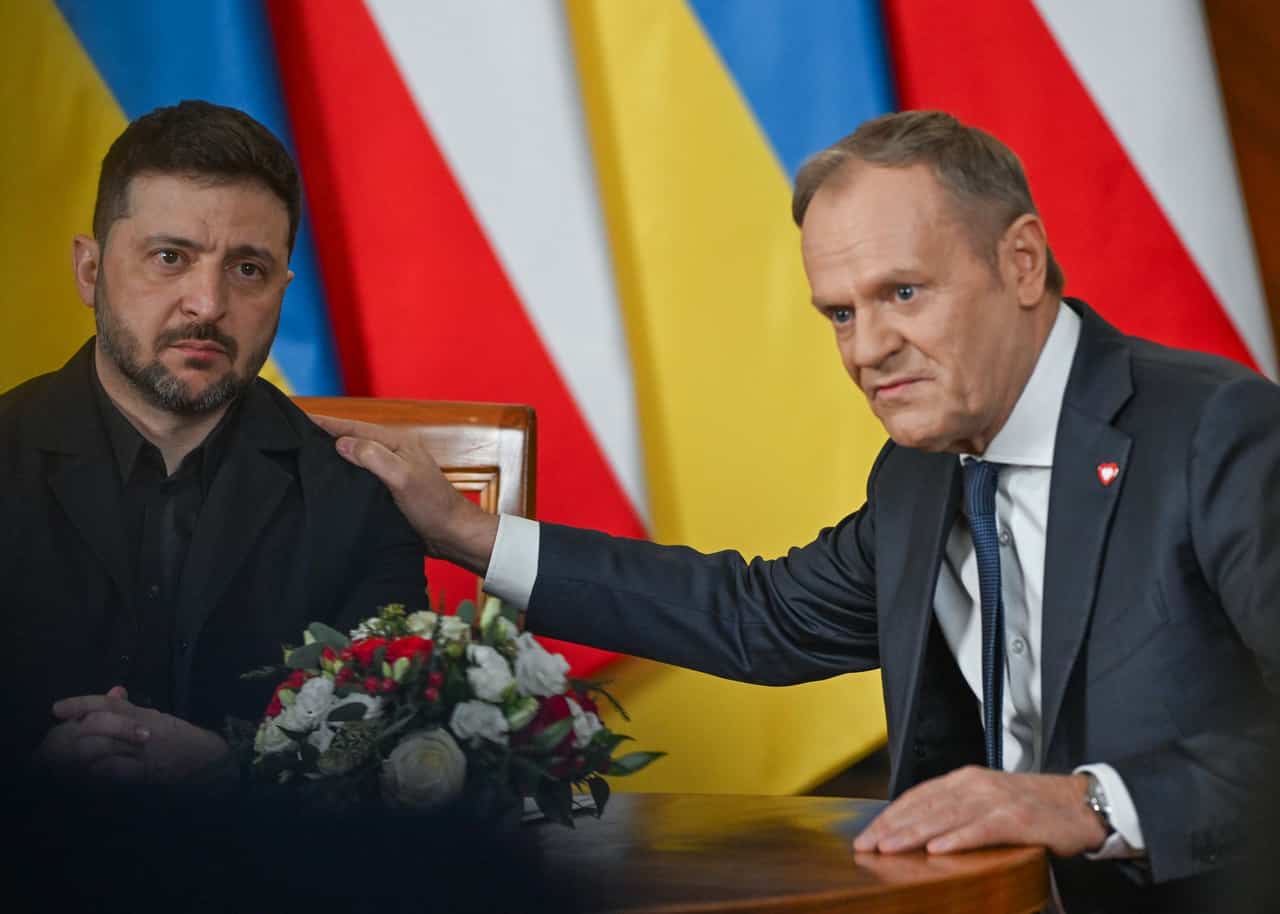
- Polish Prime Minister Donald Tusk is navigating a deepening rift between Warsaw and Kyiv.
- The dispute escalated after President Zelensky honored a military unit linked to the WWII-era Ukrainian Insurgent Army (UPA).
- In response, Tusk revoked a state honor previously awarded to Zelensky, who subsequently skipped the Ukraine Recovery Conference in Gdansk.
- Public opinion in Poland largely supports the hardline stance against Ukraine, with 51% backing the revocation of Zelensky's award.
- Polish President Karol Nawrocki has adopted increasingly anti-Ukrainian positions, clashing with Tusk's government on issues including refugee aid and historical narratives.
Polish Prime Minister Donald Tusk is facing a significant challenge in managing relations between Warsaw and Kyiv, as a dispute over historical narratives has strained ties between the two allied nations. The conflict intensified after Ukrainian President Volodymyr Zelensky honored a military unit associated with the World War II-era Ukrainian Insurgent Army (UPA), a group linked to atrocities against Poles.
In response to Zelensky's actions, Polish President Karol Nawrocki revoked the state honor previously awarded to the Ukrainian president. This move, supported by a majority of Poles according to recent surveys, has led to a diplomatic standoff. Zelensky's subsequent decision to skip the Ukraine Recovery Conference in Gdansk, an event meant to showcase Poland's partnership with Ukraine, cast a shadow over the proceedings and highlighted the deepening rift.
Tusk has publicly denounced the escalating tensions as a strategic blunder that benefits Russia, urging both Zelensky and Nawrocki to de-escalate. However, he finds himself caught between his pro-EU, pro-Ukraine foreign policy agenda and growing nationalist sentiment within Poland, amplified by President Nawrocki's assertive stance. Nawrocki, who has been pushing the boundaries of his presidential powers, has also introduced legislation criminalizing 'propaganda of the Bandera ideology' and delayed aid for Ukrainian refugees, further complicating Tusk's efforts.
Experts suggest that Nawrocki's actions are partly driven by domestic political calculations, aiming to capture votes from the far-right ahead of upcoming parliamentary elections. This internal political struggle within Poland is closely intertwined with the country's foreign policy direction, impacting Tusk's efforts to position Poland as a key player in European security and Ukraine's recovery.