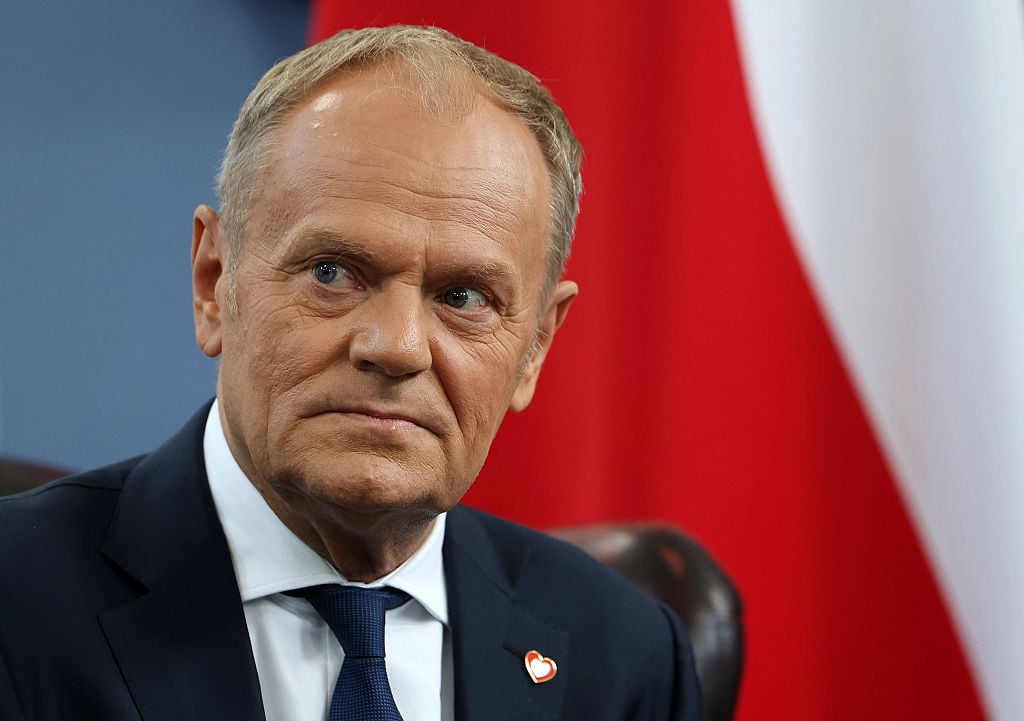
Polish Prime Minister Donald Tusk stated that Poland was blindsided by the U.S. decision to cancel the deployment of over 4,000 soldiers. Conflicting statements from U.S. officials and a subsequent order from Donald Trump to deploy additional forces have created strategic ambiguity and weakened deterrence.

Poland, a close U.S. ally, has experienced significant confusion and 'whiplash' due to recent U.S. defense policy shifts. The U.S. initially canceled the deployment of over 4,000 soldiers from the 2nd Armored Brigade Combat Team to Poland, a decision that blindsided Polish officials. Army acting Chief of Staff Chris LaNeve stated it "made the most sense for that brigade to not do its deployment in theater." This cancellation was met with criticism from U.S. Representative Don Bacon, who noted Polish officials were seeking clarification. Prime Minister Donald Tusk emphasized Poland's loyalty to the U.S. amidst the confusion. Further complicating matters, Vice President JD Vance suggested the deployment was merely paused, while former President Donald Trump posted on Truth Social that he had ordered an additional 5,000 forces to Poland, citing the election of Karol Nawrocki. This series of contradictory messages has created "unnecessary strategic ambiguity" and weakened deterrence, according to former head of Poland's National Security Bureau Jacek Siewiera. Adding to the diplomatic strain, former Polish Justice Minister Zbigniew Ziobro, facing 26 criminal charges in Poland, landed in the U.S. with expedited visa processing, a move Polish officials stated they did not want to become political. Poland currently spends 4.8% of its GDP on defense, the highest among NATO members. Public opinion in Poland regarding the U.S. as a reliable ally has also shifted, with a recent survey showing a majority answering "no" when asked if the U.S. is a reliable ally.
The contradictory U.S. military deployment decisions and the handling of the Ziobro case create strategic ambiguity, potentially weakening NATO's deterrence against Russia and straining relations with a key European ally. This instability could impact regional security and future U.S. foreign policy commitments.