Key facts
- The AfD party has targeted the Bauhaus school, a symbol of modernist design, as part of its cultural policy ahead of the Saxony-Anhalt state election.
- AfD criticizes Bauhaus for representing 'deracination' and 'the architecture of globalisation,' contrasting it with a 'patriotic' German identity.
- Bauhaus director Barbara Steiner stated that the movement's values are incompatible with the AfD's vision of German history.
- The AfD, polling around 40% in Saxony-Anhalt, aims to promote classical and traditional architecture and reform educational curricula.
- Cultural institutions and universities express concern over potential ideological influence on academic freedom and research.
A century after its founding as a radical center of modernist design, Germany's historic Bauhaus school has become a focal point in a brewing culture war ahead of a state election in Saxony-Anhalt. The far-right Alternative for Germany (AfD) party, favored to win the September election, has pledged a 'new patriotic cultural policy' and singled out Bauhaus as a target.
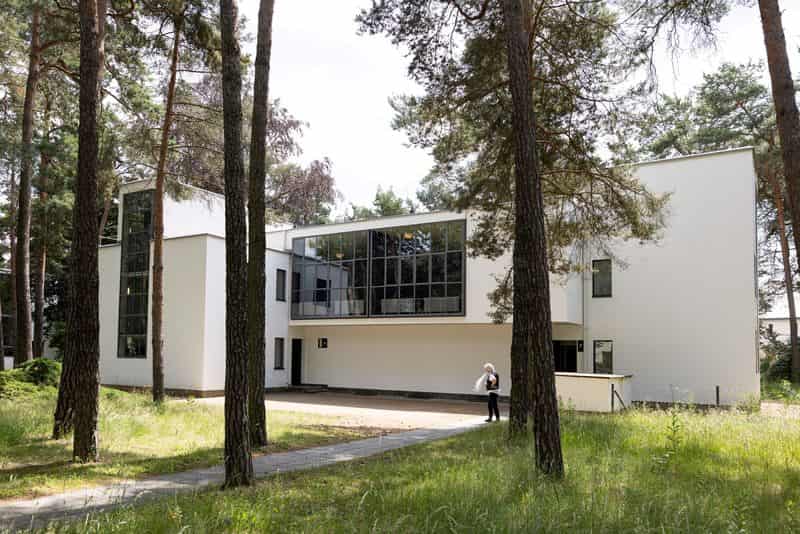
Hans-Thomas Tillschneider, the AfD's cultural spokesperson, described Bauhaus as standing for 'deracination' and 'the architecture of globalisation.' Founded after World War One as a social utopian project, the Bauhaus school championed the use of concrete, glass, and steel in spare, straight-edged designs that influenced global architecture and domestic design.
Barbara Steiner, director of the Bauhaus in Dessau, stated that Bauhaus and its principles do not align with the AfD's conception of German history. The AfD program criticizes modern architecture and what it deems 'anti-German art and culture,' advocating for classical and traditional styles, referencing a U.S. President Donald Trump order promoting such architecture for government buildings.
Despite the criticism, Tillschneider suggested that the Bauhaus institute, which receives mixed federal, state, and municipal subsidies, would likely be protected from prohibition under an AfD state government. The AfD is currently polling around 40% in Saxony-Anhalt, a significant lead that could influence cultural and educational policies.
Political scientists note that the AfD's focus on identity issues, particularly its view of eastern Germany as 'the better Germany,' signals potential for broader changes. Michael Kolkmann, a political scientist, suggested the AfD might use Saxony-Anhalt as a test case for other federal states. The prospect of the AfD gaining power has alarmed cultural institutions and universities, which the party has also targeted for potentially removing courses on gender studies and post-colonialism.
Germany's constitutional framework and the division of powers between federal and state governments may limit radical changes. Legal challenges are anticipated for any concerted attempts at significant reform. The widespread popularity of the Bauhaus museum and its restored buildings in Dessau, attracting tens of thousands of visitors annually, also provides a degree of protection, as any attack on the globally renowned movement is likely to attract worldwide attention.