Key facts
- Qualcomm's stock fell as much as 10% in pre-market trading.
- Nvidia announced its RTX Spark superchip, a Windows on Arm processor co-developed with Microsoft.
- The Nasdaq-100 index declined over 3% on Friday.
- U.S.-traded chipmakers lost more than $1 trillion in market value.
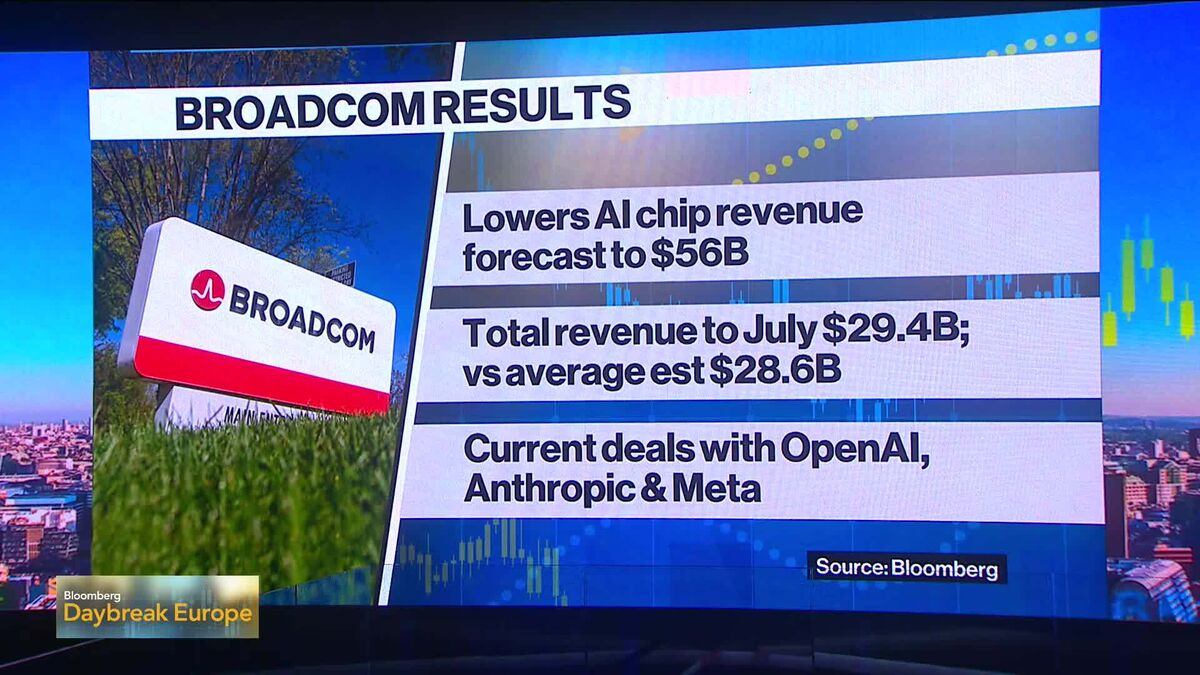
- Broadcom's shares tumbled over 12% after disappointing results and AI chip sales forecast.
- Intuit's stock price surged following a strong quarterly earnings report.
- GoPro shares dropped 10% after issuing weak guidance.
- Agilent Technologies stock declined due to speculation about a potential acquisition of QIAGEN.
- A $1,000 investment in Qualcomm 15 years ago is now worth significantly more.
- Nvidia CEO Jensen Huang stated that supply constraints remain a concern for AI growth.
Qualcomm's stock experienced a significant drop of up to 10% in pre-market trading following Nvidia's unveiling of its RTX Spark superchip, a new Windows on Arm processor developed in collaboration with Microsoft. This new chip is positioned as a direct competitor to Qualcomm's anticipated Snapdragon X Elite, slated for a fall 2026 launch. The negative pressure on Qualcomm shares was exacerbated by broader weakness across the semiconductor sector and reports suggesting Arm Holdings might be reconsidering a key licensing agreement. This situation highlights intense competition within the high-performance computing and mobile processor markets.
The broader tech sector also faced significant headwinds, with the Nasdaq-100 index declining over 3%. U.S.-traded chipmakers collectively saw their market value plummet by more than $1 trillion. Key players like Nvidia, Micron, and AMD were heavily impacted, with Broadcom also contributing to the downturn after releasing a weak report on its AI chip sales and future forecasts. Concerns regarding the valuation of high-flying technology stocks and the persistent influence of rising interest rates were cited as major drivers of this selloff.
Several other companies experienced notable stock movements. GoPro shares fell 10% after issuing weak guidance for the upcoming quarter, attributing the outlook to a challenging consumer environment and increased promotional activities. Agilent Technologies' stock declined due to market speculation surrounding a potential acquisition of QIAGEN, which the market interpreted negatively. Broadcom's shares tumbled over 12% following disappointing financial results and a subdued forecast for AI chip sales. Conversely, Intuit's stock surged after exceeding analyst expectations for revenue and profit, driven by its financial software platforms. SAP also saw its stock rise on the back of a positive outlook and strong recent sales figures.
Other companies reporting stock declines include Universal Music Group, whose shares fell as major shareholder Vivendi reportedly considered selling its 10.3% stake, creating uncertainty. Hang Feng Technology Innovation experienced a sharp 35% drop for reasons not immediately clear. Compass Pathways saw its stock fall significantly after its Phase IIb trial for psilocybin therapy in treatment-resistant depression failed to meet its primary remission endpoint, despite showing symptom improvement. Planet Labs and Ardent Health Partners also experienced significant stock drops amid unspecified concerns and a broader market downturn, respectively. Open Lending faced downward pressure due to analyst concerns, while IBM stock slid on weaker-than-expected first-quarter revenue, particularly in its hybrid cloud segment. Nokia's stock declined amid general market concerns, and Shake Shack's stock traded lower without specific reasons cited. SoFi Technologies' stock declined despite a positive update on its AI capabilities.
In contrast to the immediate stock performance, a $1,000 investment in Qualcomm made 15 years ago has reportedly grown to a value substantially higher than initially expected, indicating significant long-term appreciation for the company's stock. Nvidia CEO Jensen Huang noted that supply constraints remain a concern for the company's AI growth, even as it introduces new products to meet demand. Global markets also showed volatility influenced by geopolitical tensions and their potential impact on oil prices.