Key facts
- Toshiba reported a record net profit of 1.9673 trillion yen for fiscal 2025.
- The company's net profit was seven times higher than the previous year.
- The profit surge was primarily due to the sale of Toshiba's stake in Kioxia.
- Kioxia, formerly Toshiba's memory business, has become a significant semiconductor company.
- Kioxia's market capitalization reached approximately 42.7 trillion yen by June 2026.
Toshiba Corporation has announced a record net profit of 1.9673 trillion yen ($12.5 billion) for fiscal year 2025, a sevenfold increase from the prior year. This significant financial turnaround is largely attributed to the successful sale of its stake in Kioxia, the company's former memory chip division.
Kioxia, which was originally Toshiba's 'crown jewel' memory business, was spun off and later listed on the Tokyo Stock Exchange Prime Market in December 2024. Despite an initial IPO offering price of 1,455 yen that saw a weak opening, Kioxia's stock experienced a dramatic surge, reaching 77,540 yen by June 2, 2026, and achieving a market capitalization of approximately 42.7 trillion yen. This represents an increase of roughly 53 times from its offering price.
The origins of Kioxia trace back to the 1980s when engineer Fujio Masuoka invented NOR and NAND flash memory at Toshiba. Although Toshiba was the first to mass-produce NAND flash memory, the invention was not initially highly valued within the company, leading Masuoka and other engineers to leave. Toshiba licensed NAND technology to Samsung Electronics, inadvertently nurturing a major competitor.
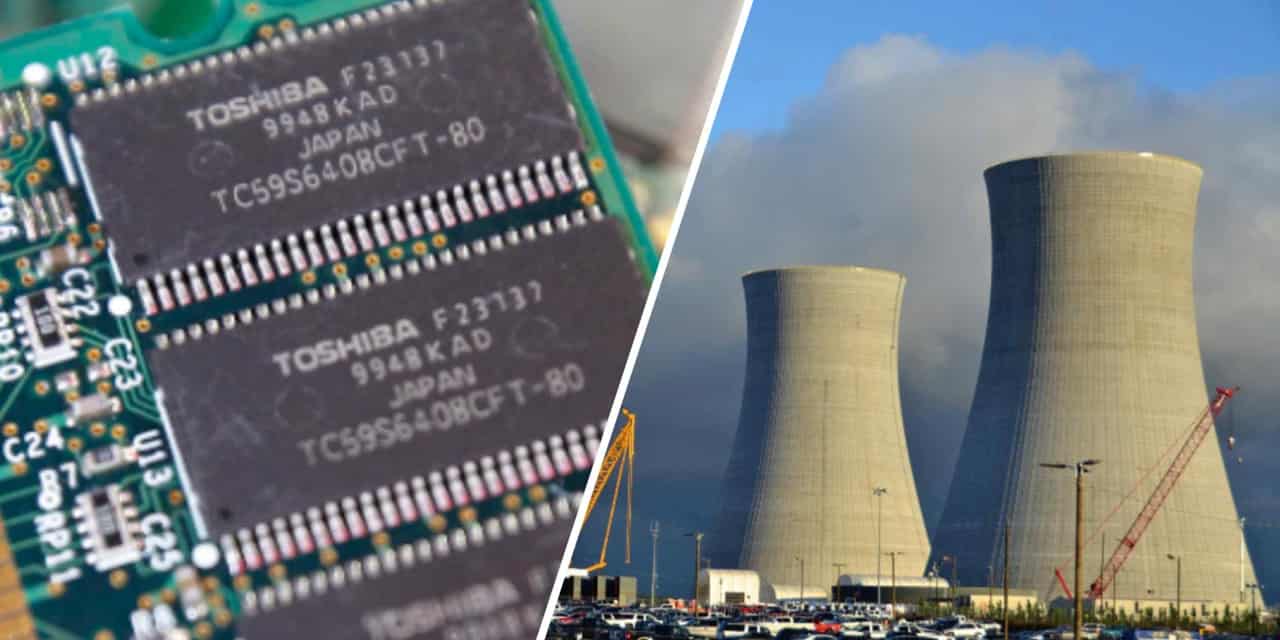
The decision to sell the memory business was driven by a severe business crisis at Toshiba, primarily stemming from massive losses incurred by its U.S. nuclear power unit, Westinghouse Electric, which filed for bankruptcy in 2017. To resolve a capital deficit and avoid delisting, Toshiba was compelled to sell its highly profitable memory business.
Ironically, both the semiconductor field, where Kioxia now thrives, and nuclear power, which led to Toshiba's crisis, are experiencing a boom in the current era of artificial intelligence.