Key facts
- Seven out of 10 stocks on South Korea's main and secondary markets declined in July.
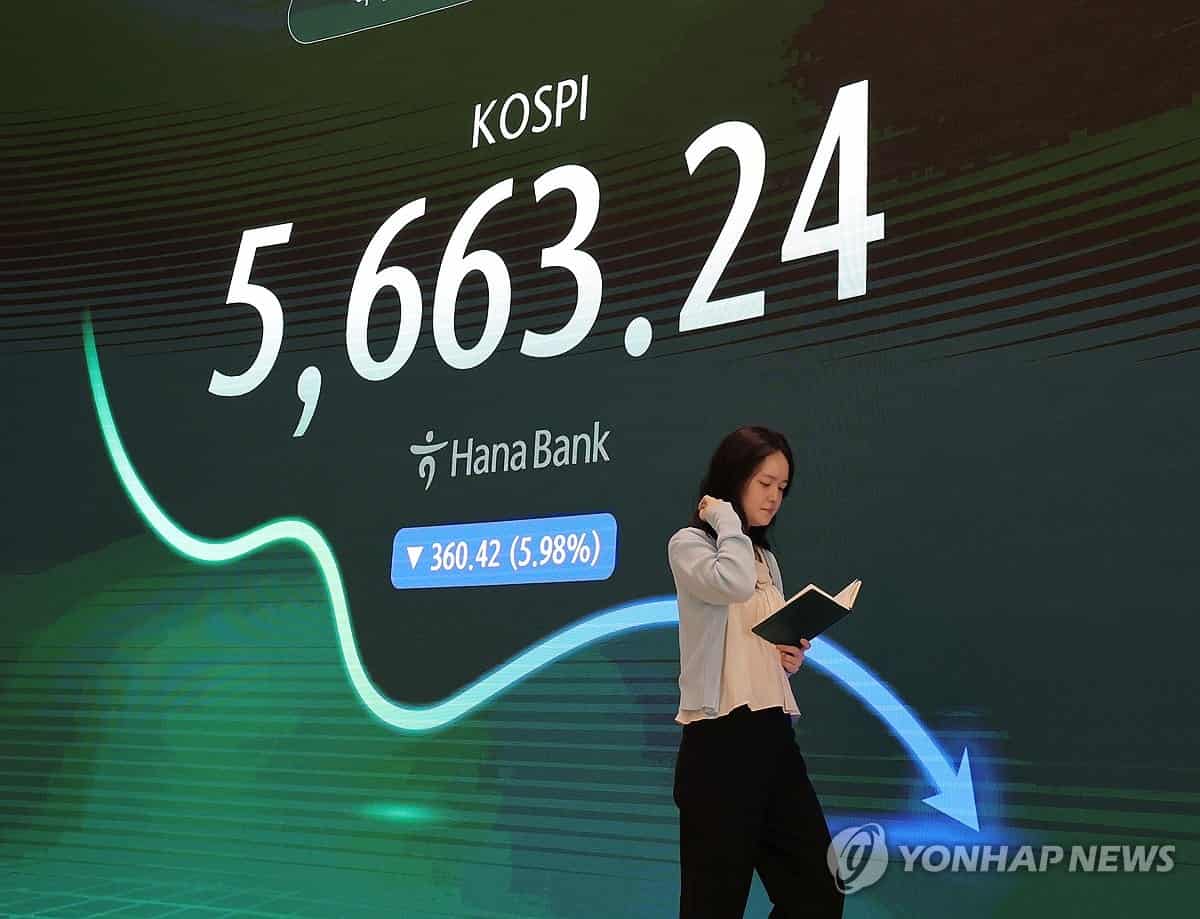
- The KOSPI index fell 22.2% and the KOSDAQ index dropped 21.4% in July.
- These monthly declines were the steepest recorded since October 2008.
- Kolon TissueGene experienced an 86% drop, making it the largest loser on the KOSDAQ.
- Contentree JoongAng saw a 67% decrease in its stock price on the KOSPI.
South Korea's stock markets experienced their most significant monthly downturn since the 2008 global financial crisis in July, with approximately 70% of listed stocks declining. The benchmark KOSPI index saw a 22.2% decrease, while the tech-heavy KOSDAQ index fell by 21.4%.
Data from the Korea Exchange (KRX) revealed that 1,859 stocks closed lower by the end of July compared to June's closing prices. This represented about 70% of the total 2,645 companies listed across both markets. Specifically, 566 KOSPI-listed companies (62% of 917) and 1,293 KOSDAQ-listed companies (75% of 1,728) registered losses.
Among the notable decliners, biotechnology firm Kolon TissueGene was the biggest loser on the KOSDAQ, with its stock price plummeting 86% to 13,000 won from 93,600 won. The Technology and Kolon Life Science also saw significant drops of 76% and 67%, respectively. On the KOSPI, Contentree JoongAng plunged 67% following liquidity pressures on its parent company, JoongAng Group.
Han Ji-young, an analyst at Kiwoom Securities, described the KOSPI as being in an oversold state due to heavy selling. However, the analyst anticipates a recovery in investor sentiment, driven by strong earnings from major companies like Samsung Electronics and SK hynix.