Key facts
- ServiceNow beat its second-quarter revenue and profit estimates.
- The company raised its annual subscription revenue forecast for the second time.
- ServiceNow now expects full-year 2026 subscription revenue between $15.760 billion and $15.780 billion.
- Second-quarter subscription revenue was $3.88 billion, exceeding analyst estimates.
- The company's third-quarter subscription revenue forecast fell below analyst expectations.
ServiceNow raised its annual subscription revenue forecast for the second time, exceeding second-quarter revenue and profit estimates, largely due to increased demand for its AI-powered software. The company's shares saw a rise of over 5% in extended trading, despite an overall decline of about 37% year-to-date.
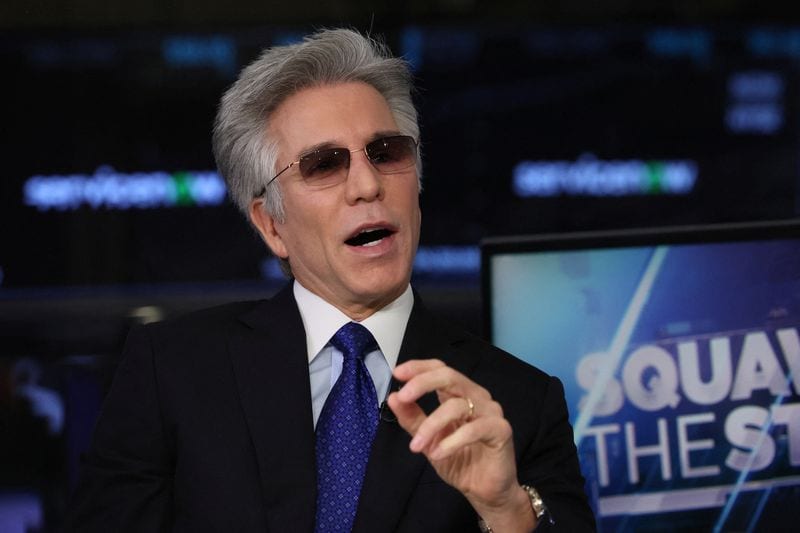
Despite concerns about a "SaaSpocalypse" affecting software-as-a-service companies due to advancements in AI, ServiceNow has expanded its AI agent portfolio. Its AI platform, including the AI experience Otto launched earlier this year, is being adopted by enterprise clients to automate complex workflows and improve services. The company also bolstered its capabilities through acquisitions of cybersecurity startup Armis and AI startup Moveworks.
ServiceNow reported that its AI platform has seen significant adoption in the public sector, with nearly all U.S. states utilizing it for citizen services and operational modernization. The company now projects full-year 2026 subscription revenue to be between $15.760 billion and $15.780 billion, an upward revision from its previous guidance of $15.735 billion to $15.775 billion.
In the second quarter, ServiceNow's subscription revenue reached $3.88 billion, and adjusted profit per share was 90 cents, surpassing LSEG-compiled analyst estimates of $3.82 billion and 85 cents, respectively. However, the company's third-quarter subscription revenue forecast of $3.975 billion to $3.980 billion fell short of the estimated $4 billion.
As of June 30, ServiceNow's current remaining performance obligations, representing contract revenue expected within the next 12 months, stood at $13.20 billion, marking a 21% increase from the previous year. CEO Bill McDermott stated that the company's $29 billion in remaining performance obligations is supported by longer customer commitments and strong demand from its partner ecosystem.