Key facts
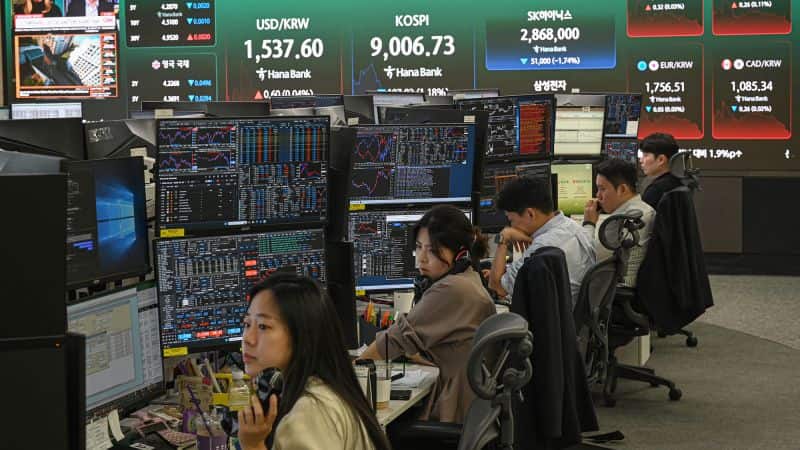
- South Korea's Kospi index plunged 10%, triggering a circuit breaker and a trading halt.
- Major chipmakers SK Hynix and Samsung saw their shares fall over 12%.
- The Nasdaq and S&P 500 declined 2.21% and 1.44% respectively.
- AI-related stocks and semiconductor shares experienced significant sell-offs globally.
- Volatility has returned to tech stocks, raising concerns about the sustainability of recent rallies.
Global stock markets experienced a sharp increase in volatility, with AI-related stocks and semiconductor shares leading the sell-off. South Korea's Kospi index tumbled 10% on Tuesday, triggering a circuit breaker and a 20-minute trading halt. This significant decline was largely driven by major memory chipmakers SK Hynix and Samsung, whose shares fell more than 12%. The two companies constitute a substantial portion of the Kospi's market value.
In the United States, the tech-heavy Nasdaq Composite dropped 2.21% and the S&P 500 fell 1.44%, marking their worst day in about two weeks. The Dow Jones Industrial Average, with less exposure to technology stocks, declined by approximately 0.1%. This sell-off followed a milder tech downturn on Monday, which spilled into Asian trading hours and intensified on Tuesday.
Market analysts attributed the volatility to a growing trend of rising nervousness in tech stocks, with some suggesting it indicates excessive froth and questions the sustainability of recent rallies. While there was no single obvious catalyst for the widespread selling, some investors may be taking profits after strong gains. Jitters were also sparked by notable declines in Google and SpaceX on Monday, though these moves had specific reasons related to executive defections and post-IPO adjustments, respectively. Nvidia shares were down about 4%, and Oracle experienced a more than 5.5% drop, contributing to a 27% decline for the month.
Semiconductor stocks, which had previously led the market rally, fell sharply. Micron Technology dropped 13%, and Marvell Technology sank 9%, with traders awaiting Micron's quarterly earnings. The fear and panic trading extended to other Asian markets, with Japan's Nikkei 225 falling 3.6% and tech giant Softbank sinking 15%. Most other Asian indexes were down more than 1%.
Analysts also suggested that markets might be reacting to the possibility of the Federal Reserve raising interest rates later in the year, a sentiment reinforced by recent statements from the new Fed Chairman. However, this information is not new, and the market's reaction suggests a broader concern about the sustainability of high valuations in AI-driven companies.