Key facts
- European shares traded flat on Wednesday amid uncertainty over U.S.-Iran negotiations.
- Defense group Rheinmetall experienced its largest single-day drop, falling 18.7%, after Germany canceled a planned frigate program.
- Thyssenkrupp's marine unit TKMS saw its shares jump 16% as it will supply smaller frigates.
- The real estate sector was a notable gainer, with Segro rising 17.4% following a public bid.
- Miners and energy stocks were among the biggest decliners, tracking lower commodity prices.
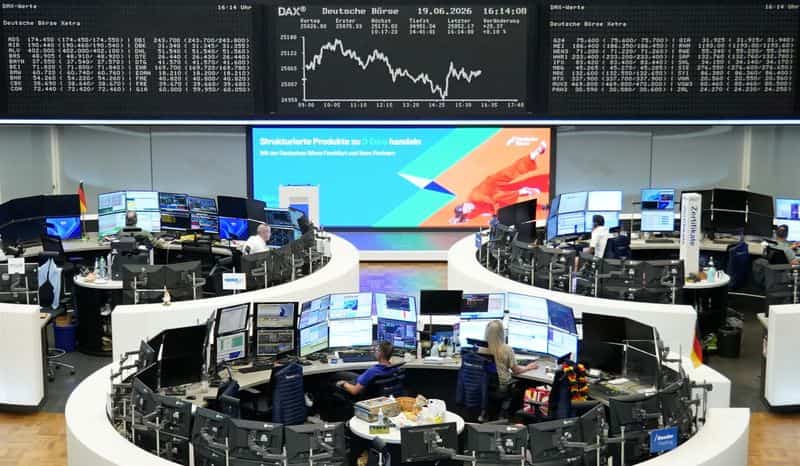
European shares traded with little change on Wednesday as investors weighed developments in U.S.-Iran negotiations, while defense contractor Rheinmetall saw a significant drop. The pan-European STOXX 600 index closed 0.1% higher, with Germany's DAX index down 0.6%.
Rheinmetall's shares plummeted 18.7%, marking its largest single-day decline on record, after Germany decided against proceeding with a planned six F126 frigate program due to delays and cost overruns. Instead, Berlin will opt for smaller Meko A-200 frigates from Thyssenkrupp's marine unit TKMS, whose shares rose 16%. The broader aerospace and defense sector shares fell 0.8%, and the industrials sector on the STOXX 600 declined 0.2%.
Michael Field, chief equity market strategist at Morningstar, noted the disconnect between ongoing conflicts and positive sentiment for the defense sector. Commodity-linked sectors were the largest decliners on the STOXX 600, with miners and energy stocks falling 2.5% and 2.3% respectively, mirroring a dip in metals and oil prices.
Conversely, the real estate sector gained 3%, driven by Segro's 17.4% surge after U.S.-based Prologis publicly disclosed its $16.6 billion bid for the warehouse landlord, which Segro had previously rejected. The tech sector reversed earlier gains, closing down 0.3%, following its largest single-day drop in nearly five months in the prior session. Chipmaker Infineon fell 1.2%, BE Semiconductor dropped 1.3%, and ASML declined 0.5%.
Jennifer Bender, global chief investment strategist at State Street Investment Management, suggested that the tech selloff was similar to other short-term market corrections seen this year, likely involving retail traders taking profits. Brent crude had reached its lowest levels since the start of the U.S.-Israeli conflict with Iran, as concerns over supply disruptions eased following a peace agreement, though caution persisted due to disagreements on key terms.
On the data front, German business morale improved in June, with companies expressing more optimism about their current situation than they have in nearly two years. Market participants were also observing cues for major central banks' monetary policy paths, with traders pricing in a potential 25-basis-point rate hike by the European Central Bank by the end of the year.