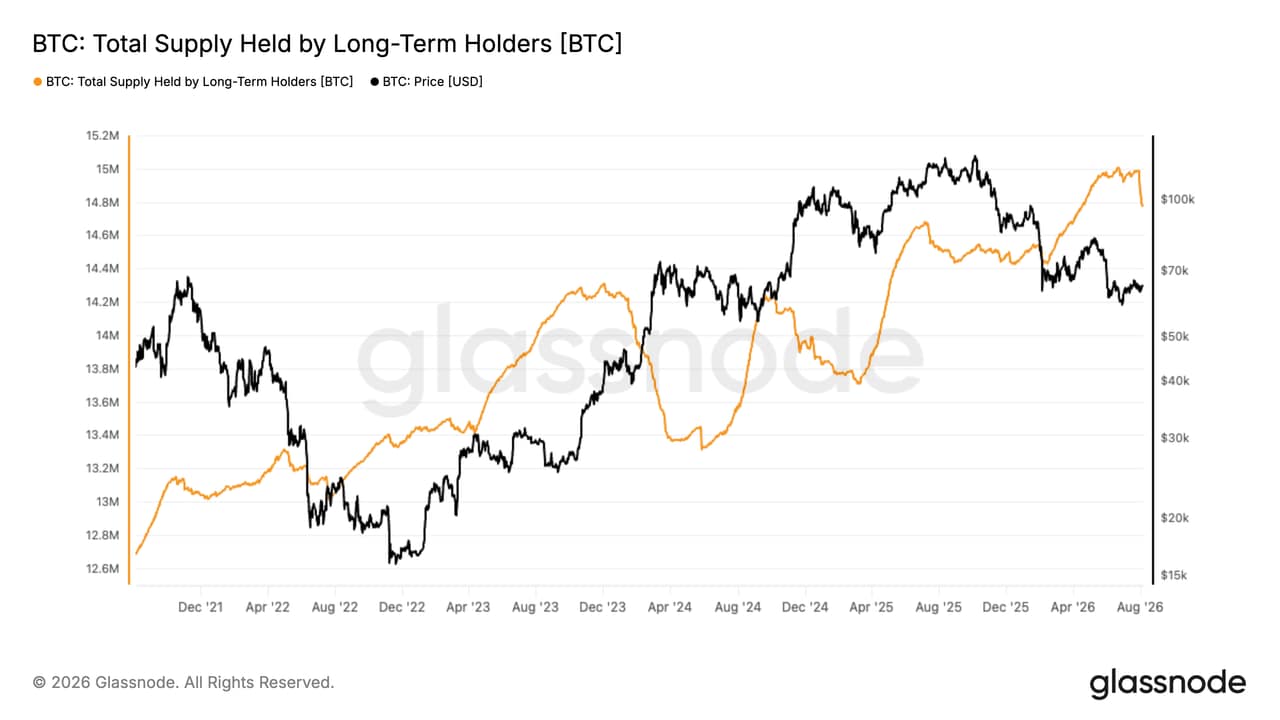
Key facts
- Approximately 210,000 BTC moved from long-term holder wallets in the past week.
- This is the largest decline in BTC from long-term holder wallets since December 2024.
- A Coldcard security breach is linked to the BTC outflows.
- July saw $247.4 million in cryptocurrency stolen.
- The Coldcard exploit accounted for at least $100 million of July's crypto thefts.
- US spot Bitcoin ETFs have seen approximately $620 million in inflows this week.
- A Bitcoin wallet dormant since 2011 moved nearly 50 BTC.
- The 50 BTC moved is valued at approximately $3.2 million.
- The BTC from the dormant wallet was transferred to a SegWit address used with FalconX.
- Russia's President Putin signed a law establishing a regulated crypto market set for 2026.
In the past week, approximately 210,000 BTC has been moved from long-term holder wallets, representing the largest such decline since December 2024. This significant outflow is attributed to a security breach affecting Coldcard hardware wallets, a popular choice for self-custody of Bitcoin. The exploit has led to substantial financial losses, with at least $100 million of the total $247.4 million in cryptocurrency stolen during July being linked to the Coldcard incident.
The Coldcard hack has reignited debates surrounding the security of self-custody versus regulated investment vehicles. Concurrently, US spot Bitcoin ETFs have experienced a week-long surge in inflows, attracting approximately $620 million. Analysts are discussing whether this trend indicates a shift in investor preference away from hardware wallets and towards exchange-traded funds. This period of heightened security concerns and market activity also saw a Bitcoin wallet, dormant since 2011, move nearly 50 BTC, valued at approximately $3.2 million, to a SegWit address previously used in transactions with institutional brokerage FalconX.
In parallel developments, Russia's President Putin has signed a law establishing a regulated cryptocurrency market, set to take effect in 2026. This move by Russia indicates a growing global trend towards regulatory frameworks for digital assets, contrasting with the ongoing security challenges faced by individual users and hardware providers in other regions.
Looking ahead, the implications of the Coldcard breach for the broader self-custody ecosystem remain a key point of discussion. The continued inflows into Bitcoin ETFs suggest a sustained investor appetite for Bitcoin exposure through regulated channels.