Key facts
- Approximately 210,000 BTC has moved from long-term holder wallets.
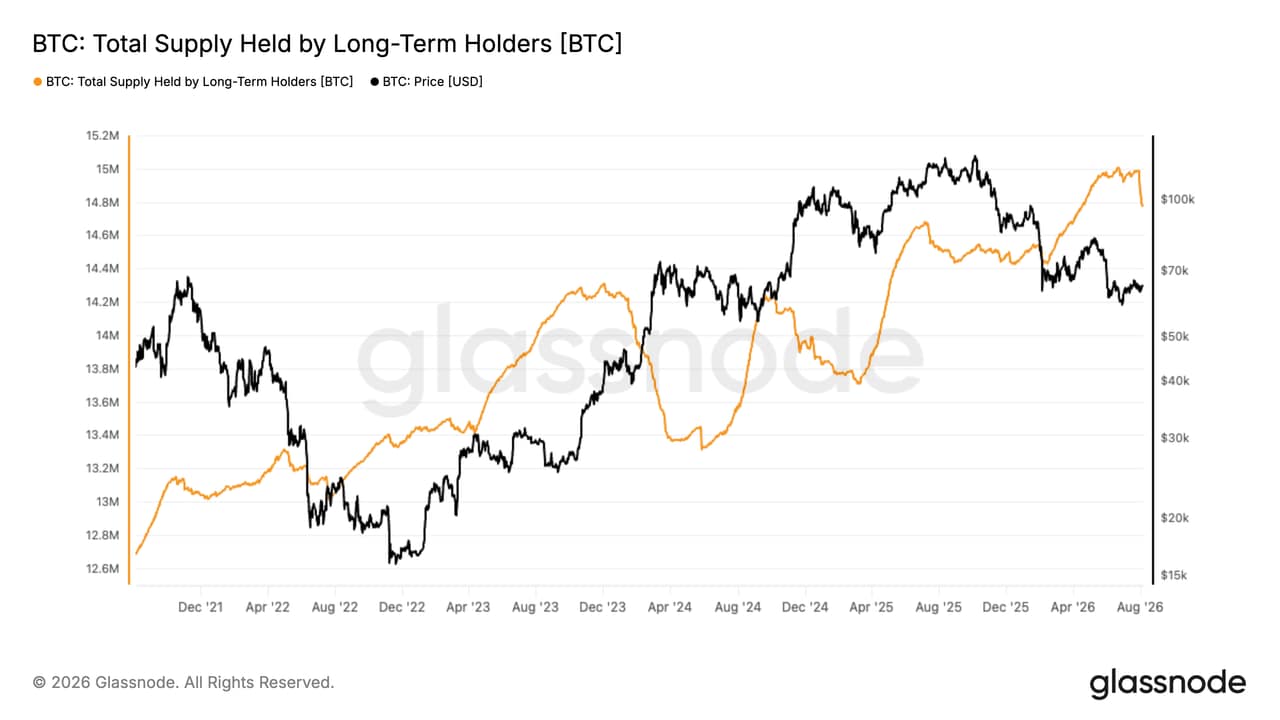
- Long-term holder supply has fallen from nearly 15 million BTC to approximately 14.7 million BTC.
- The movement follows a security breach involving Coldcard firmware.
- Users are transferring bitcoin to newly generated wallets or regulated custody services.
- U.S. spot bitcoin ETFs saw inflows of around $754 million in the past week.
The fallout from a security breach affecting Coldcard hardware wallets has led to a significant movement of bitcoin from long-term holder (LTH) wallets. According to Glassnode data, approximately 210,000 BTC has been transferred out of LTH wallets over the past week, marking the largest such decline since December 2024. LTHs are defined as entities holding bitcoin for about 155 days or more, and their supply has fallen from nearly 15 million BTC to approximately 14.7 million BTC.
Historically, such outflows from LTHs have coincided with market peaks, as experienced holders took profits. However, this movement is occurring while bitcoin trades around $64,000, roughly 50% below its all-time high. This suggests the outflows are not primarily profit-taking but rather a migration in storage methods following the Coldcard incident. The breach, caused by weak randomness in affected firmware, allowed attackers to reconstruct recovery phrases and drain user funds, with estimated losses reaching as high as $114 million.
Coldcard advised users to generate new wallets due to compromised keys. Consequently, some holders are likely moving their bitcoin to newly generated wallets with enhanced security or to regulated custodians and spot bitcoin exchange-traded funds (ETFs). U.S. spot bitcoin ETFs experienced inflows totaling approximately $754 million in the past week, with BlackRock's iShares Bitcoin Trust being a significant contributor. This on-chain movement may represent a broader shift in bitcoin custody rather than a loss of investor conviction.