Key facts
- A proposed Bitcoin Improvement Proposal, BIP-110, aimed to limit non-financial data on the blockchain.
- The proposal was intended to restrict data types like Ordinals inscriptions.
- BIP-110 led to a voluntary fork of the Bitcoin network.
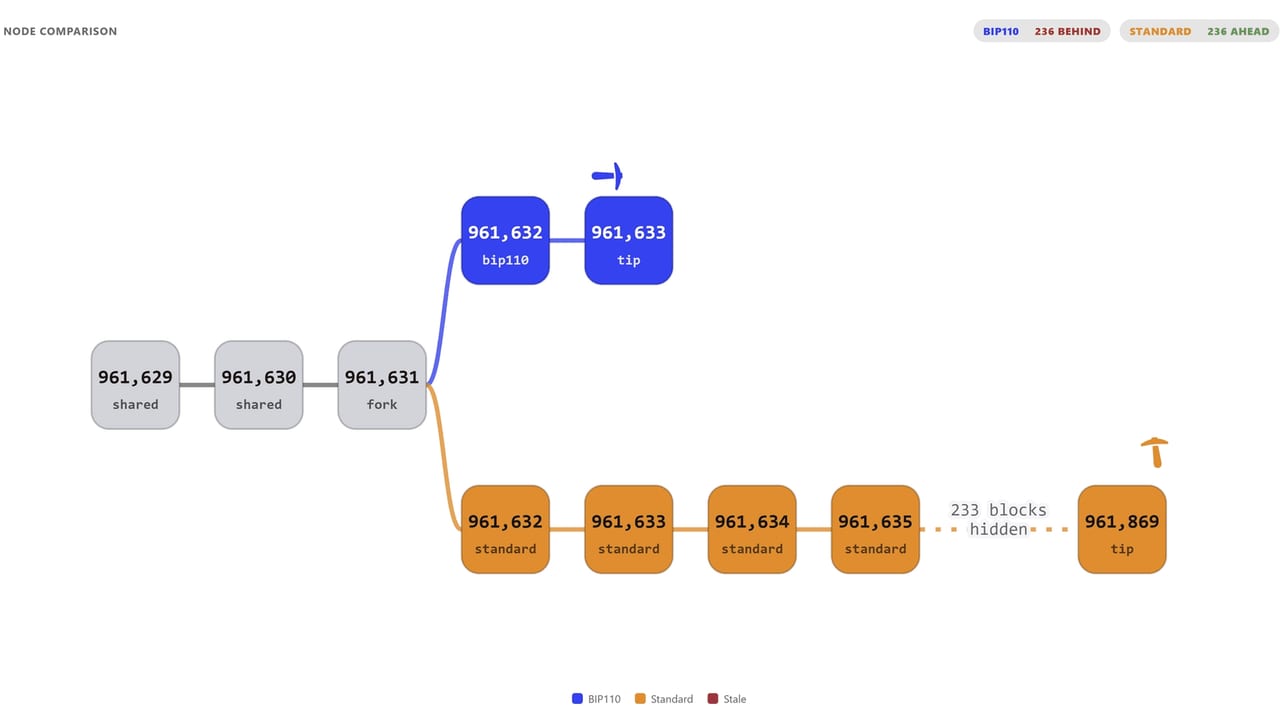
- The breakaway chain managed to mine only two blocks.
- The fork failed to gain sufficient hashrate support.
- The new chain stalled and fell significantly behind the main Bitcoin network.
- The original Bitcoin network continued to operate uninterrupted.
- The event demonstrated Bitcoin's decentralized and free-market design.
A proposed Bitcoin Improvement Proposal, known as BIP-110, which aimed to restrict non-financial data from being stored on the blockchain, has stalled. The proposal sought to limit data types, specifically mentioning Ordinals inscriptions as an example of content it intended to restrict. This effort led to a voluntary fork of the Bitcoin network, creating a breakaway chain. However, this new chain failed to gain sufficient consensus and hashrate support from miners. After mining only two blocks, the fork's hashpower dropped significantly, causing it to stall and fall far behind the main Bitcoin network. The original Bitcoin network continued to operate without interruption, demonstrating its decentralized and free-market principles. The failure of the fork to gain traction highlights the resilience of the established Bitcoin network and the difficulty of enacting significant changes without broad community and miner support.