Key facts
- A proposed Bitcoin Improvement Proposal (BIP)-110 aimed to limit non-financial data like Ordinals inscriptions.
- The proposal was debated openly by the developer community but did not secure broad support.
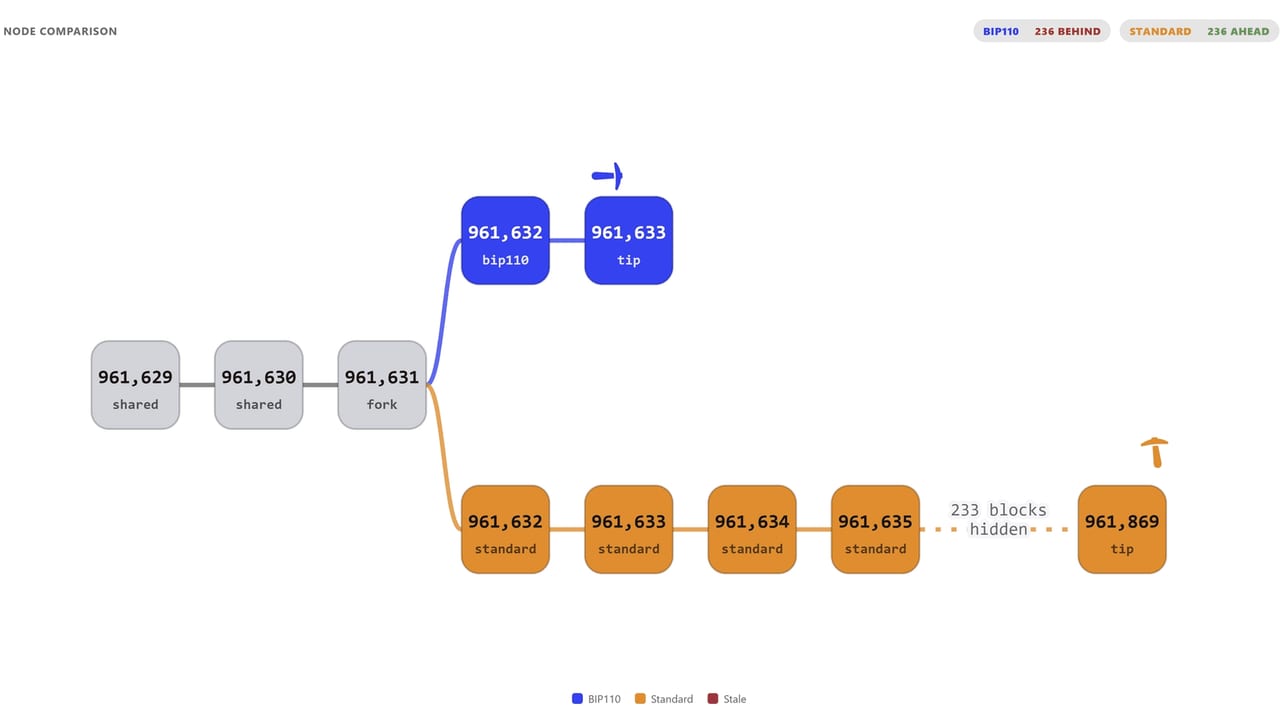
- Supporters of BIP-110 voluntarily forked the blockchain at block 961,632 to implement their preferred rules.
- The new chain quickly stalled due to insufficient hashpower, producing only two blocks.
- The original Bitcoin network continued to operate normally, retaining most activity and security.
The recent BIP-110 saga on the Bitcoin blockchain served as a demonstration of its radically free-market and permissionless design. The proposal, intended to limit non-financial data such as Ordinals inscriptions to free up blockchain space, was debated openly within the developer community. It ultimately failed to gain broad support, being effectively denied by distributed consensus rather than any central authority.