Key facts
- European natural gas prices have decreased.
- Concerns about winter gas supply persist due to low storage levels and slow refilling.
- Norway's natural gas exports increased by 1.06 billion cubic meters.
- California natural gas prices reached historic lows in early 2026.
- Oil prices declined on hopes of reduced U.S.-Iran conflict.
- Brent crude futures settled at $93.09 a barrel.
- U.S. West Texas Intermediate crude finished at $90.54 a barrel.
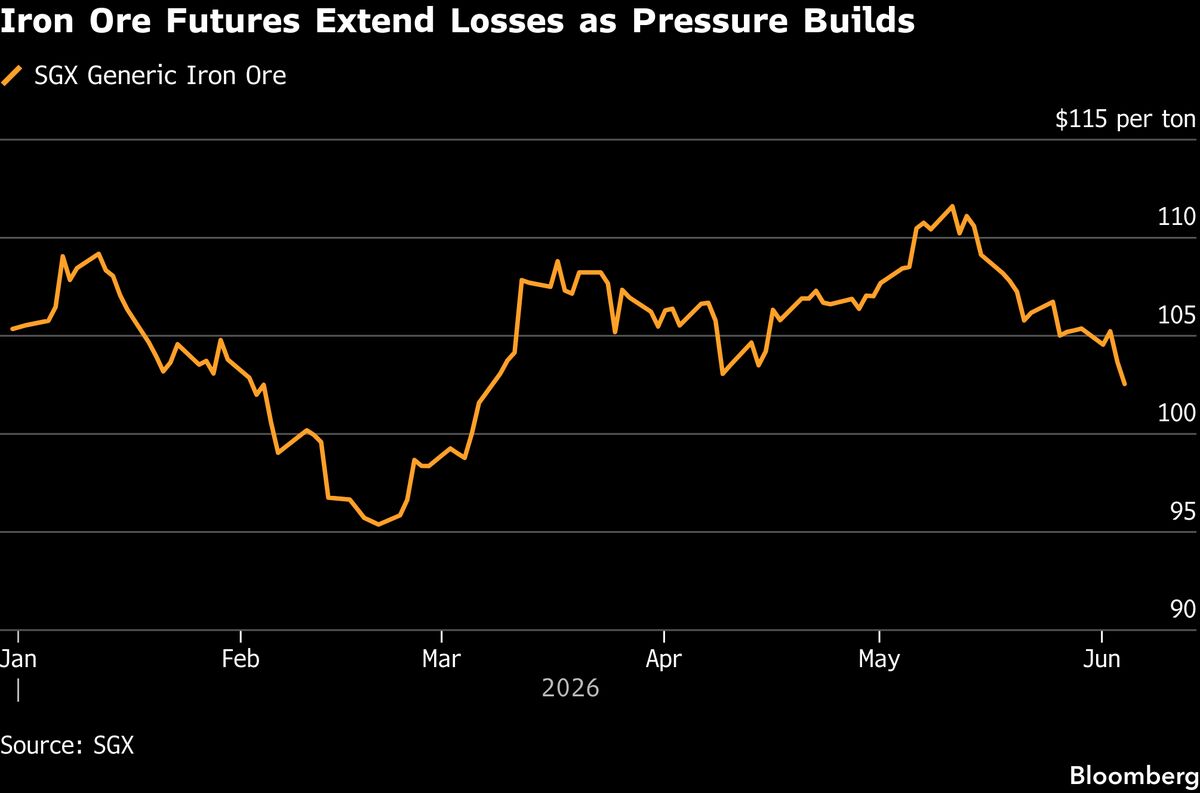
- Iron ore futures are heading for a fourth weekly loss.
- Increased exports from Guinea's Simandou project are pressuring iron ore prices.
- CBOT wheat futures declined due to ample supplies and weak U.S. demand.
- European fuel sales have declined.
- Price pressures from Middle East disruptions are impacting consumer demand.
European natural gas prices have seen a decrease, though persistent concerns about winter supply remain due to low storage levels and slow refilling processes. Limited Russian pipeline gas and Norway operating at maximum capacity contribute to these supply anxieties. Norway's natural gas exports have notably increased by 1.06 billion cubic meters, according to JODI data. Despite stable demand, ongoing geopolitical tensions in the Middle East are also influencing European gas prices, leading to a decline in inventory levels in Northwest Europe and a subsequent increase in gasoline margins. California natural gas prices reached historic lows in early 2026.
Oil prices have also declined, driven by increased confidence that renewed conflict between the U.S. and Iran is becoming less likely. Brent crude futures settled at $93.09 a barrel, marking a 2.04% decrease, while U.S. West Texas Intermediate crude finished at $90.54 a barrel, down 2.69%. Sree Kochugovindan of Aberdeen Investments commented on a 0.72% drop in Brent crude prices to $94.30 per barrel, analyzing factors affecting investor confidence in the Middle East and Africa. The Financial Times, citing Argus analysis, reported a decline in European fuel sales, with price pressures stemming from Middle East disruptions impacting consumer demand.
In commodity markets, iron ore futures are poised for their fourth consecutive weekly decline. This downward pressure is attributed to a seasonally weakening market and increased exports from Guinea's Simandou project. CBOT wheat futures have also fallen, influenced by favorable U.S. crop weather that is increasing yield expectations and ample global supplies that are pressuring demand for U.S. shipments. Speculators are reportedly exiting stale war longs, with July corn futures testing April lows.