Key facts
- Australian farmers are planting 50% less wheat due to drought and high input costs.
- Australia's wheat exports may decrease by 10 million tonnes.
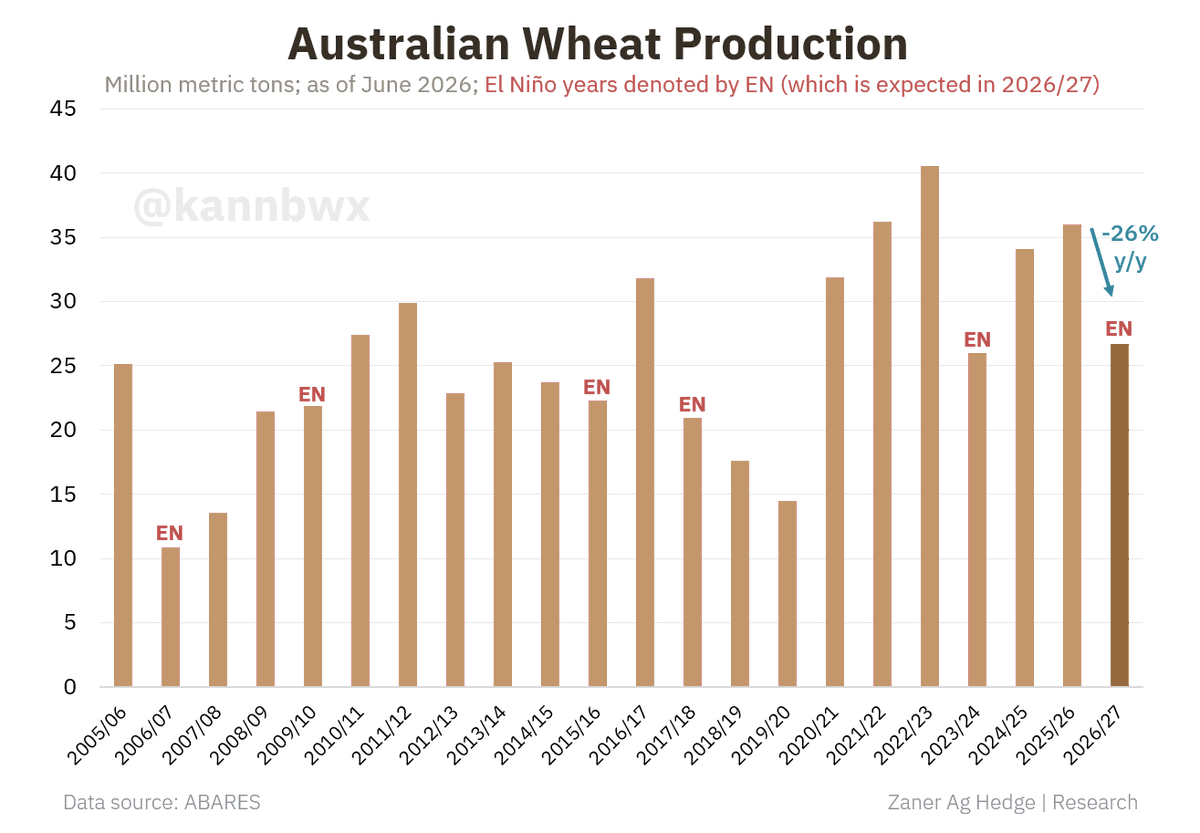
- ABARES forecasts Australia's wheat harvest at 26.7 million metric tons, the smallest in three years.
- High fertilizer costs, linked to the war in Iran, are impacting Australian crop growth.
- UK winter wheat crop ratings are at 64% good or excellent.
- UK winter barley crop ratings are at 62% good or excellent.
- Heavy rainfall in northeastern Alberta from May 31 to June 2 damaged canola crops.
- Russia's spring wheat planting is delayed by persistent rain.
- Irish beef production has declined by 14% year-on-year.
- Irish farmers are facing losses due to falling cattle prices despite reduced production.
Global agricultural output is facing significant headwinds from adverse weather and high input costs. In Australia, wheat production is set to decline sharply, with farmers planting 50% less due to a lack of rainfall and soaring fuel and fertilizer prices. This reduction could decrease the nation's exports by 10 million tonnes. Coupled with an anticipated El Nino weather pattern, this situation may shift the global wheat market from a surplus to a deficit, potentially driving up prices. ABARES forecasts Australia's upcoming wheat harvest to be the smallest in three years, at 26.7 million metric tons, attributing the decline to high fertilizer costs, linked to the war in Iran, and dry weather conditions.
In the United Kingdom, crop ratings have generally declined in May due to dry weather and record temperatures, impacting soil moisture. The AHDB reports that winter wheat ratings have fallen to 64% good or excellent, and winter barley is at 62%. The next two weeks are considered critical for yield potential, though recent rains have offered some improvement. In Canada, heavy rainfall in northeastern Alberta between May 31 and June 2 has caused substantial crop damage, leading some farmers to abandon canola planting due to waterlogged fields. While southern Alberta benefited from the rain, the northeastern regions face considerable losses.
Russia's spring wheat planting is experiencing delays due to persistent rain, which poses a risk to harvest yields across the country. In a contrasting development, Irish beef production has seen a 14% year-on-year decline. However, the Irish Cattle and Sheep Farmers' Association (ICSA) notes that falling cattle prices are defying logic given the tightened supplies, leading to significant losses for farmers as factory quotes drop.
The confluence of these factors—drought in Australia, excessive rain in parts of Canada and Russia, and dry spells in the UK—highlights the vulnerability of global food supplies to climate variability and economic pressures like fertilizer costs. The potential shift in the global wheat market from surplus to deficit, driven by Australian production cuts, could have far-reaching implications for food security and commodity prices worldwide.