Key facts
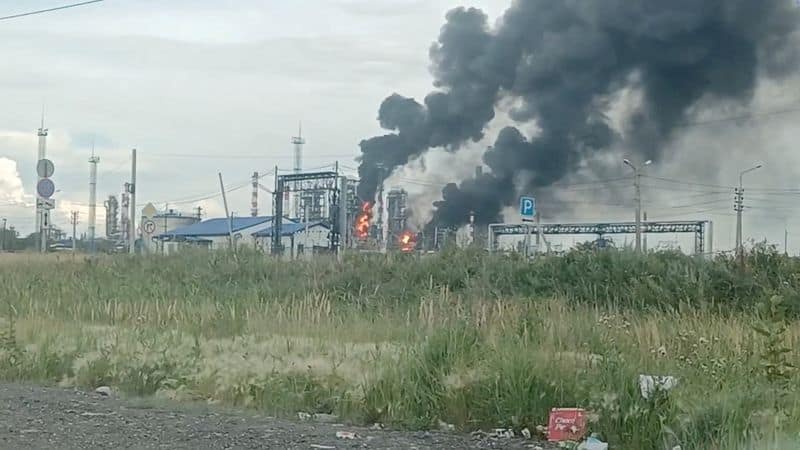
- Russia's largest oil refinery, Omsk, has halted operations after a Ukrainian drone attack.
- The attack damaged crude distillation unit CDU-10, accounting for 38% of the plant's production capability.
- Another primary processing unit, CDU-11, was also halted due to damaged network links.
- The refinery's halt is expected to worsen fuel shortages in Russia.
- Restoration work is underway, and one unit may resume operations soon.
Russia's largest oil refinery, located in Omsk, has ceased operations following a Ukrainian drone attack that inflicted damage on critical processing units. The strike, occurring deep in Siberia, is considered one of Ukraine's longest-range attacks in the ongoing conflict.
Anatoly Seryshev, President Vladimir Putin's representative in Siberia, confirmed that facilities at the refinery were damaged and that restoration work is underway, though he did not specify the extent of the operational impact. No plant personnel were reported injured.
According to industry sources, the attack specifically damaged crude distillation unit CDU-10, which represents approximately 38% of the plant's production capacity with a daily processing capability of 24,580 metric tons. Additionally, primary processing unit CDU-11, responsible for 37% of the plant's capacity (24,000 tons per day), was also halted. While CDU-11 was not directly hit, essential network links for its operation were damaged. Sources indicated that CDU-11 might resume operations in the near future.
The halt in production at the Omsk refinery, a major producer of gasoline and diesel, is anticipated to exacerbate existing fuel shortages across Russia. Data from the Saint Petersburg International Mercantile Exchange shows the refinery has stopped selling gasoline and diesel since Tuesday.
Omsk refinery processed approximately 22 million tons of oil, or 440,000 barrels per day, in 2024, yielding 5 million tons of petrol and 8 million tons of diesel. The refinery possesses two mothballed primary refining units, CDU-7 and CDU-8, each with a capacity of 10,000 tons, which could theoretically be restarted.