Key facts
- The Middle East war has severely disrupted global liquefied natural gas (LNG) flows and prices.
- LNG prices have doubled since January, leading to demand destruction and a return to coal power in some regions.
- Attacks in the Strait of Hormuz indicate a prolonged period of subdued energy trade through the chokepoint.
- China is increasing LNG purchases, benefiting from both its own domestic production decline and potential redirection of supply.
- Despite new capacity expected by 2030, ongoing geopolitical risks may sustain high LNG prices.
The ongoing Middle East war is significantly disrupting global energy markets, with a particularly severe impact on liquefied natural gas (LNG) flows and pricing. While crude oil often dominates headlines, the situation for LNG is arguably more critical and warrants greater attention, as some analysts believe the conflict could fundamentally reshape the commodity's long-term outlook.
Shell had previously forecast a robust growth trajectory for LNG, projecting demand to reach close to 700 million tons annually by 2050, a substantial 65% increase from 2025 levels. This projection was based on countries prioritizing the flexible and reliable energy security offered by gas and LNG. Liquefaction technology has indeed enabled a truly global trade in natural gas.
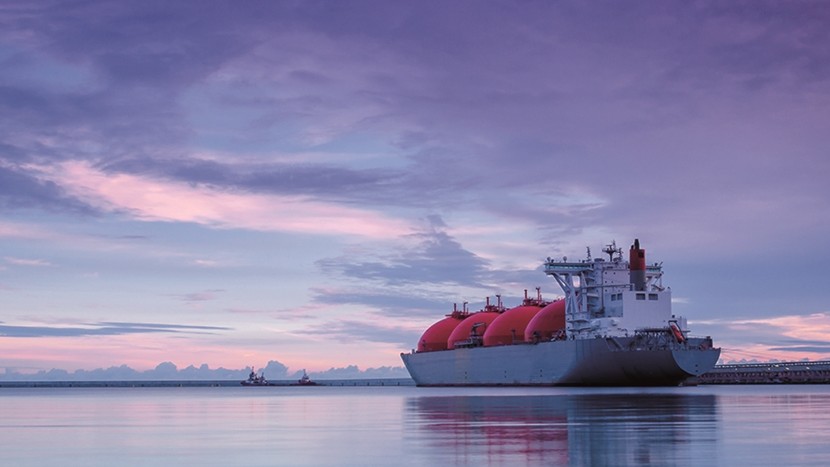
However, the current conflict has led to a force majeure declaration at Qatar's liquefaction hub, the world's largest, drastically slowing LNG exports from the Persian Gulf. This scarcity has driven up prices, with LNG costs doubling since January. Buyers who paid $10 per million British thermal units (MMBtu) in January have faced prices of $20 to $22/MMBtu for much of July. This price surge is forcing energy importers to pay a premium, a situation that is expected to hurt demand.
Even nations with limited financial resources, such as Pakistan, have paid these elevated prices to secure essential gas cargos during peak demand seasons. Other major LNG importers, including Japan, the world's second-largest, have ramped up their use of coal power plants as a substitute for expensive liquefied gas. Europe is also experiencing demand destruction, falling behind on gas storage refills due to high LNG prices.
According to Gas Strategies, global LNG demand could potentially dip by 8% this year from 2025 levels if the subdued flow of gas from the Persian Gulf persists throughout the year. Recent attacks on LNG carriers in the Strait of Hormuz suggest that a normalization of energy trade through this critical chokepoint is unlikely in the near future, especially with ongoing geopolitical tensions.
Not all regions are equally affected. China, for instance, reduced its LNG purchases in the second quarter but has seen imports rebound as electricity demand increased with rising temperatures and declining domestic production. China is in a relatively stronger position as it imports both LNG and pipeline gas from Russia, unlike the European Union, which is set to end its Russian gas imports by 2027. This shift could potentially free up more LNG for buyers like China and redirect demand towards other major exporters, such as the United States and Australia.
The U.S. is already the largest LNG exporter and is expanding its liquefaction capacity. Theoretically, this increased supply should lead to lower prices. However, with Qatari supply constrained by the ongoing issues in the Strait of Hormuz, the 'war premium' is likely to remain significant regardless of additional supply. Pat Breen of Gas Strategies suggests that while the short-term supply is tight, this situation is expected to change by next year, prompting LNG producers to reconsider expansion plans. By 2030, approximately 207 million tons of new annual LNG capacity is projected to come online, though it remains uncertain whether sufficient buyers will exist.
Despite the current challenges and the push towards renewable energy sources like wind and solar, gas is expected to retain its importance. Its ability to generate electricity on demand and its storability make it a crucial component of the energy mix, suggesting that demand will likely rebound once prices stabilize.