Key facts
- Hungary will sink two barges in the Danube River to increase water levels for the Paks nuclear plant.
- The Paks nuclear plant is currently operating at 25% capacity due to a severe drought.
- The barges are expected to raise the water level by 20 centimeters in the short term.
- A permanent riverbed sill will be constructed to raise the water level by up to 1 meter.
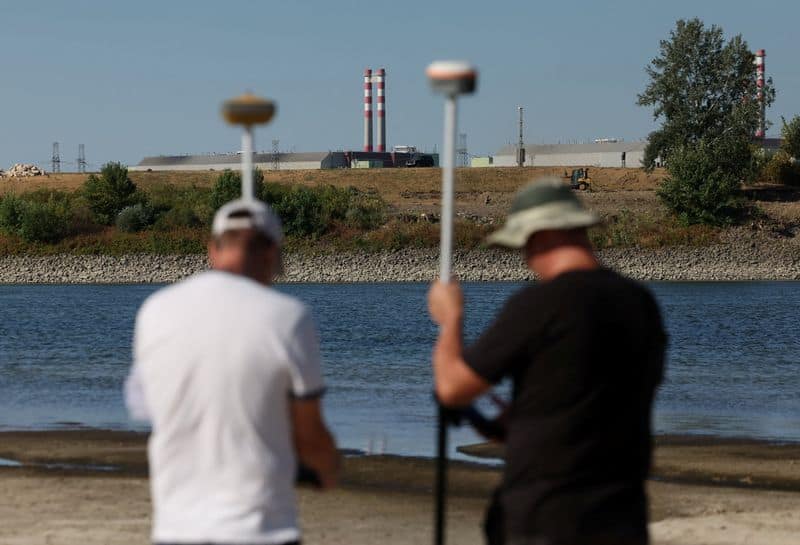
Hungarian authorities are preparing to sink two barges in the Danube River to address critically low water levels affecting the Paks nuclear plant's cooling system. Prime Minister Peter Magyar announced that the controlled sinking of the barges would begin later on Friday.
The Paks plant is currently operating at only 25% of its capacity because the historic drought has led to record low water levels in the Danube, the plant's primary source of coolant. This situation mirrors broader challenges across Europe, where drought has impacted power generation, shipping, and public health systems.
To mitigate the immediate crisis, the two 80-meter (260-foot) barges will be submerged near the plant. This measure is expected to temporarily raise the water level by approximately 20 centimeters (8 inches), allowing the plant's two turbines to continue operating. In parallel, the government is planning to construct a submerged, dam-like structure, known as a riverbed sill, across the river channel. This permanent solution is anticipated to increase the water level by up to 1 meter (3.3 feet) and is expected to take several weeks to complete.
Neighboring Romania also faced severe drought impacts, leading to the shutdown of its last operational nuclear reactor on Thursday. The extreme climate conditions have prompted discussions in both Hungary and Romania about adapting nuclear energy infrastructure to a changing climate.