Key facts
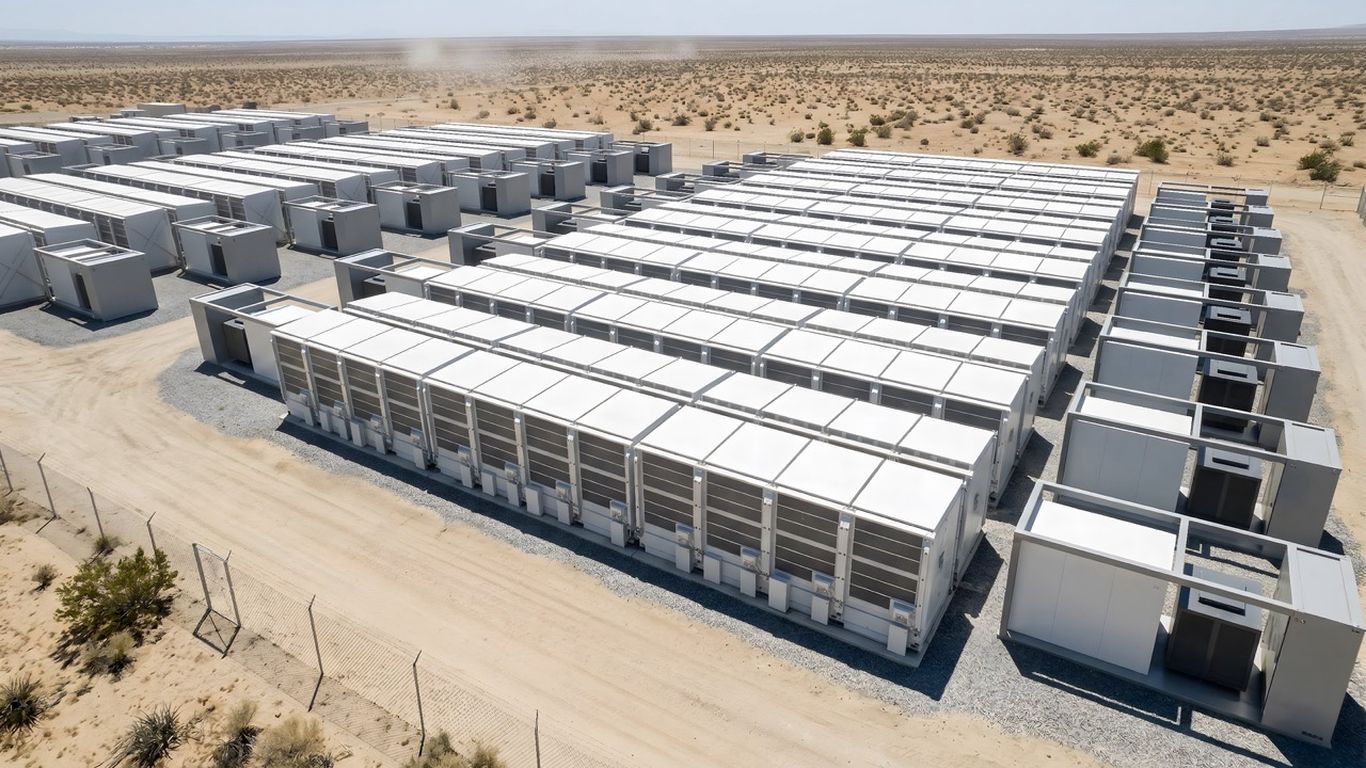
- General Motors is expanding its energy storage business by developing batteries for utilities, data centers, and other businesses.
- The company is focusing on sodium-ion battery technology, which is more suitable for stationary storage than for electric vehicles.
- GM is partnering with Peak Energy to develop next-generation sodium-ion battery cells for grid-scale storage.
- GM and LG Energy Solution are repurposing an electric-vehicle battery plant in Tennessee to produce energy storage batteries.
- The shift is driven by surging electricity demand from AI data centers and slower-than-anticipated EV sales.
- GM aims for its storage batteries to be 20-25% cheaper than systems using repurposed EV batteries.
General Motors is strategically shifting its battery production focus from electric vehicles to stationary energy storage systems, a move driven by both slowing EV sales and a surge in demand for power solutions to support artificial intelligence data centers. The automaker plans to leverage its existing battery manufacturing capacity, including repurposing a plant in Tennessee with partner LG Energy Solution, to produce lithium-iron phosphate and sodium-ion batteries.
GM's venture arm is investing in Peak Energy to develop next-generation sodium-ion cells, which are seen as ideal for grid-scale storage due to their lower cost and use of abundant materials, unlike the lithium-based batteries typically used in EVs. GM battery chief Kurt Kelty highlighted that their purpose-built storage technology is expected to be 20% to 25% cheaper than systems using repurposed EV batteries, differentiating from competitors who rely on Chinese technology.
The broader industry is also seeing this trend, with companies like Ford establishing energy subsidiaries. The demand for electricity storage is escalating, with grid regulators warning of potential shortfalls due to increased consumption from AI data centers. GM is also exploring software solutions to turn bidirectional EVs into grid assets, though widespread implementation depends on utility participation and customer trust.
This pivot positions GM not just as a carmaker but as a potential supplier of critical power infrastructure, aiming for steadier business in the AI build-out's energy needs compared to the more volatile automotive market. The success of this strategy hinges on whether GM can compete in a crowded, low-margin market dominated by Chinese manufacturers, leveraging its existing capacity as a key advantage.