Key facts
- Between 2020 and 2025, the inflation-adjusted price of comparable battery electric vehicle (BEV) models in Germany fell by approximately 18%.
- During the same period, the median nominal price for a BEV rose by 42% to about €53,000, while internal combustion engine vehicles (ICEVs) saw a 15% increase.
- The number of available BEV models more than quadrupled, while combustion engine options declined.
- Carmakers increasingly focused on large, premium electric vehicles, which drove up average prices between 2020 and 2024.
- New EU CO₂ targets for 2025 led manufacturers to prioritize more affordable BEV models, causing average prices to drop in 2025.
Battery electric vehicle (BEV) models became more affordable in Germany between 2020 and 2025, according to data from the International Council on Clean Transportation and Fraunhofer ISI. Despite this trend, the average BEV price increased during the same period, a shift attributed to manufacturers prioritizing larger, more expensive vehicles.
Inflation-adjusted prices for comparable BEV models fell by approximately 18%, while prices for internal combustion engine vehicles (ICEVs) rose by about 2%. However, the median nominal price for a BEV surged by 42% to around €53,000, compared to a 15% increase for ICEVs. The number of available BEV models more than quadrupled to 159, while ICEV options decreased.
Global battery prices, adjusted for inflation, dropped by 35-37%, but this had a limited effect on vehicle prices. The increased average electric range of BEVs by about one-third suggests that cost savings were reinvested in vehicle improvements.
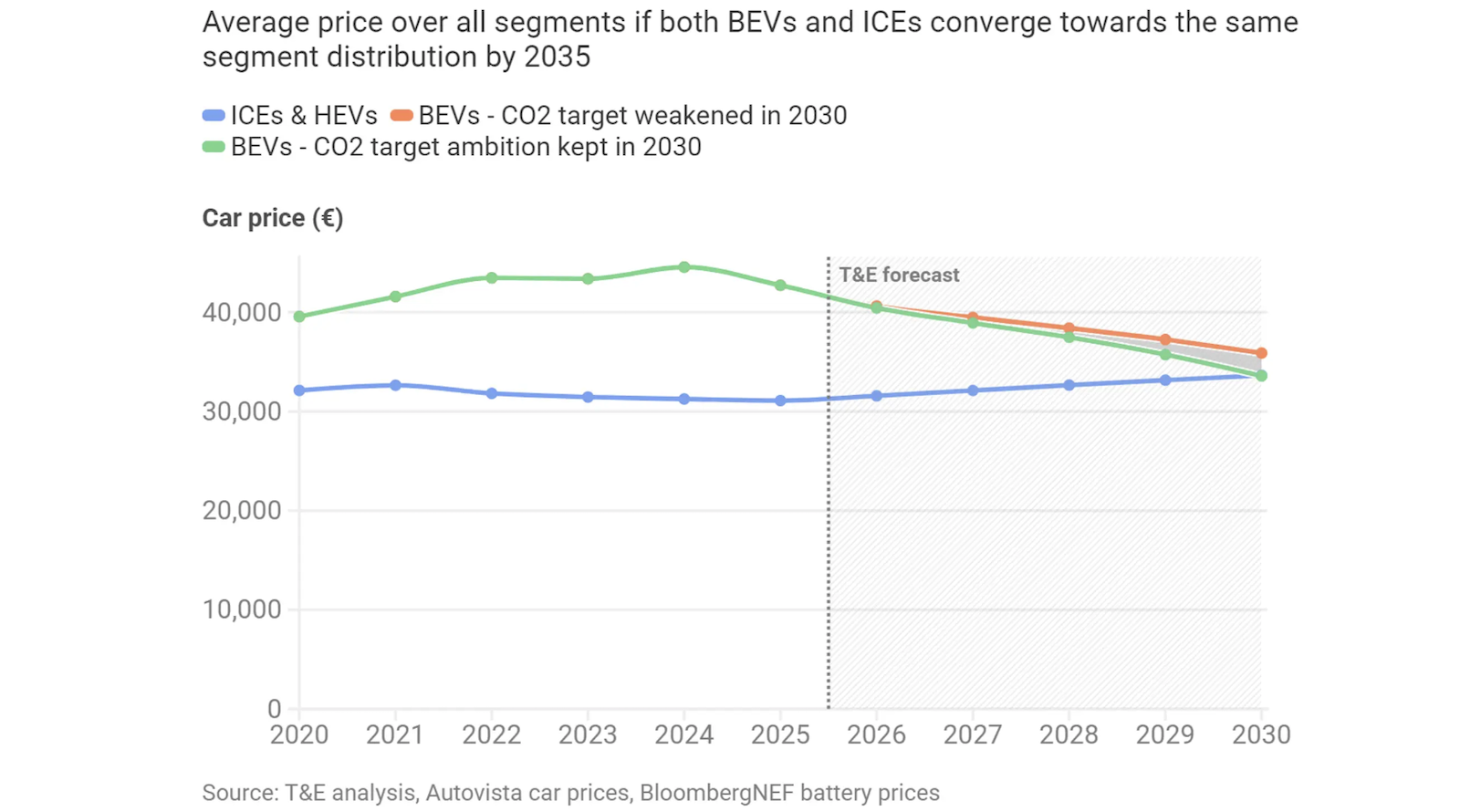
Between 2020 and 2024, the average BEV price rose by approximately €5,000 to €45,000, a 13% increase. This was driven by a product strategy focused on profit optimization, with the share of large, premium electric vehicles in sales doubling from 28% to 64%. Without this shift, the average BEV price would have been closer to that of a combustion car.
In 2025, average BEV prices decreased by €1,800, or 4%, to €42,700. This reversal is linked to new EU CO₂ targets that came into force, prompting manufacturers to increase BEV volumes and launch more affordable models. The EU's CO₂ targets are seen as the most effective initiative for driving down BEV prices and achieving price parity with combustion cars.