Key facts
- July Copper futures turned positive after a mid-session rebound.
Copper futures turned positive after a mid-session rebound, recovering from earlier losses. Goldman Sachs and Citigroup raised copper price forecasts amid projected supply shortfalls and mine disruptions. Separately, central banks purchased 244 tonnes of gold in Q1 2026, providing a structural floor for the metal.
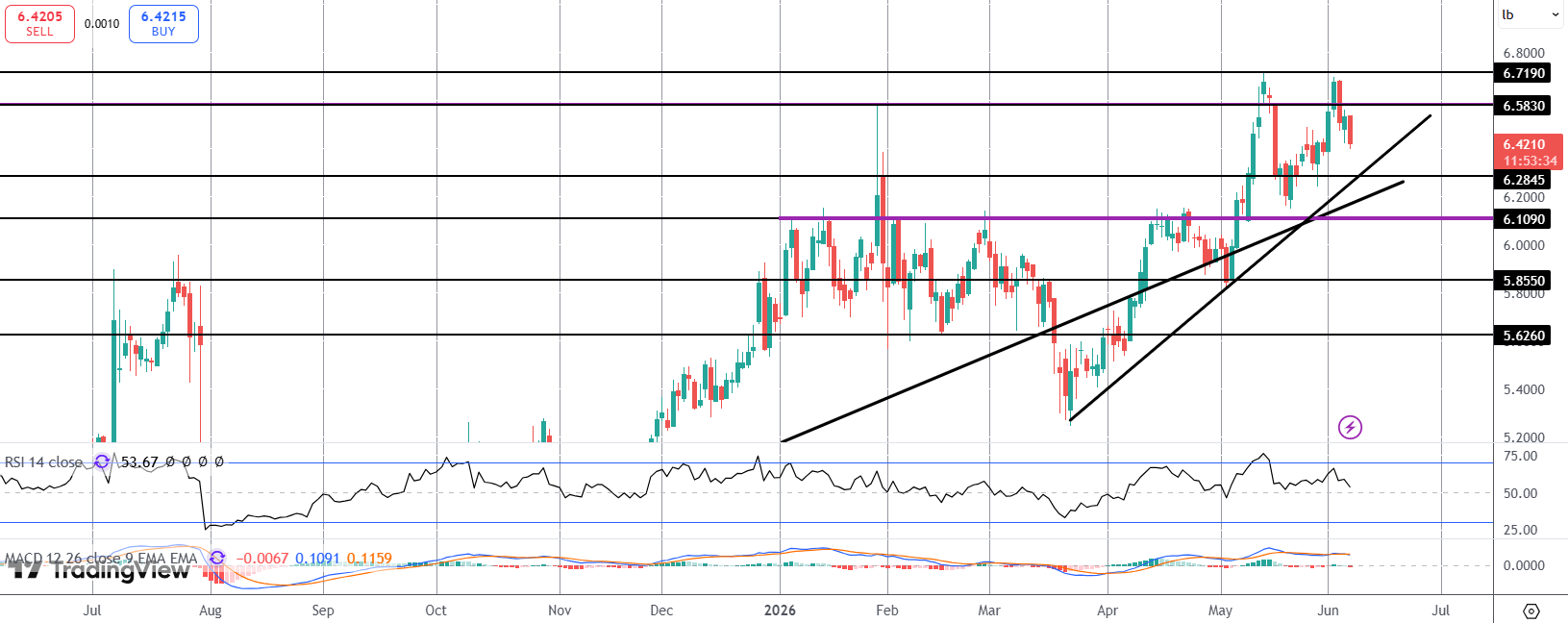
July Copper futures experienced a mid-session rebound, turning positive after earlier losses. The commodity had recently fallen short of its all-time highs. Market sentiment is currently shaped by anticipated trade policies, particularly a forthcoming report from the U.S. Commerce Department scheduled for June 30, which will dictate future tariffs on refined copper. Financial institutions Goldman Sachs and Citigroup have revised their copper price projections upward, citing an anticipated global supply deficit of 640 thousand tons outside the United States in 2026, driven by significant mine disruptions in key producing regions like Indonesia and the Democratic Republic of Congo. The rally in copper has stalled at the retest of the 6.7190 highs, with price reversing lower. The next support zone to watch is 6.2845, which coincides with the bull trend line from year-to-date lows. Bulls need to defend this zone to prevent a deeper drop towards 6.1090.
Separately, central banks and other official institutions purchased 244 tonnes of gold in Q1 2026, defying fears of widespread selling during the Iran conflict. UBS argues that while official demand is not the primary driver of gold prices, it continues to provide a structural floor, helping absorb supply and support the long-term bull market.
Copper's price movements are sensitive to global trade policies and supply disruptions, while gold's stability is underpinned by central bank demand, indicating differing drivers for these key commodities.