Key facts
- Brazil's grain production reached a record 350.2 million tons in the 2024/25 harvest.
- Agricultural exports totaled $164.3 billion last year.
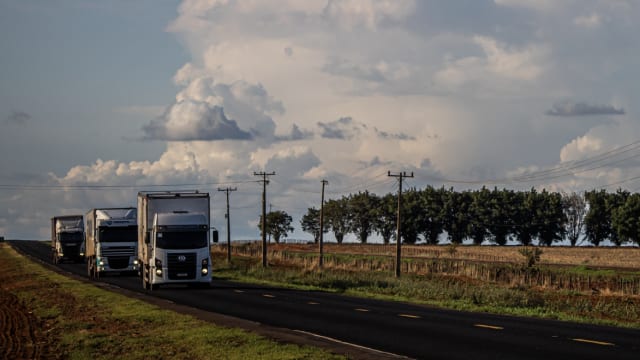
- Brazil's transportation network is heavily reliant on roads, accounting for 65% of freight transport.
- Only 13.7% of Brazil's approximately 1.5 million km of highways are paved.
- Road transport accounts for approximately 68.8% of soybean and 75.6% of corn transportation.
- The country faces a significant storage deficit for its agricultural production.
Brazil's agricultural sector, a major global producer and exporter, is facing significant logistical challenges that are hindering its growth and increasing costs. Despite substantial increases in grain production, reaching a record 350.2 million tons in the 2024/25 harvest, and substantial export revenues totaling $164.3 billion last year, the country's infrastructure development has lagged behind.
The primary issues stem from an unbalanced transportation matrix and a significant storage deficit. Brazil's vast continental dimensions exacerbate these problems. The transportation network is heavily concentrated on highways, with roads accounting for 65% of all freight transport, a share higher than in the US, Australia, the EU, and Ukraine. Out of approximately 1.5 million km of highways, only 13.7% are paved. This over-reliance on road transport is particularly pronounced in agribusiness, with roads handling about 68.8% of soybean, 75.6% of corn, and 86% of fertilizer transportation.
Waterway and rail transport infrastructure are underdeveloped, covering significantly shorter distances compared to highways. This logistical "nightmare" creates a paradox where increased production leads to greater problems, impacting both domestic marketing and international competitiveness.