Key facts
- Yum Brands is selling its US Pizza Hut business and operations in the rest of the world (excluding China) to LongRange Capital for about $1.5 billion.
- Yum China is acquiring full brand rights for Pizza Hut's mainland China operations for roughly $1.2 billion.
- The deals are expected to close in the third quarter, subject to regulatory approval.
- Pizza Hut's US sales have declined by approximately five percent recently, trailing behind competitor Domino's.
- Approximately 250 unprofitable Pizza Hut locations were closed in the first half of 2026 under the "Hut Forward" program.
Pizza Hut, once an iconic American fast-food brand, is undergoing a significant ownership change as its parent company, Yum! Brands, sells off major parts of the business. LongRange Capital, a Connecticut-based private equity firm, is set to acquire the US and international (excluding China) operations for approximately $1.5 billion. Concurrently, Yum China Holdings will purchase the rights to Pizza Hut's mainland China business for roughly $1.2 billion, expanding its existing operations in the region.
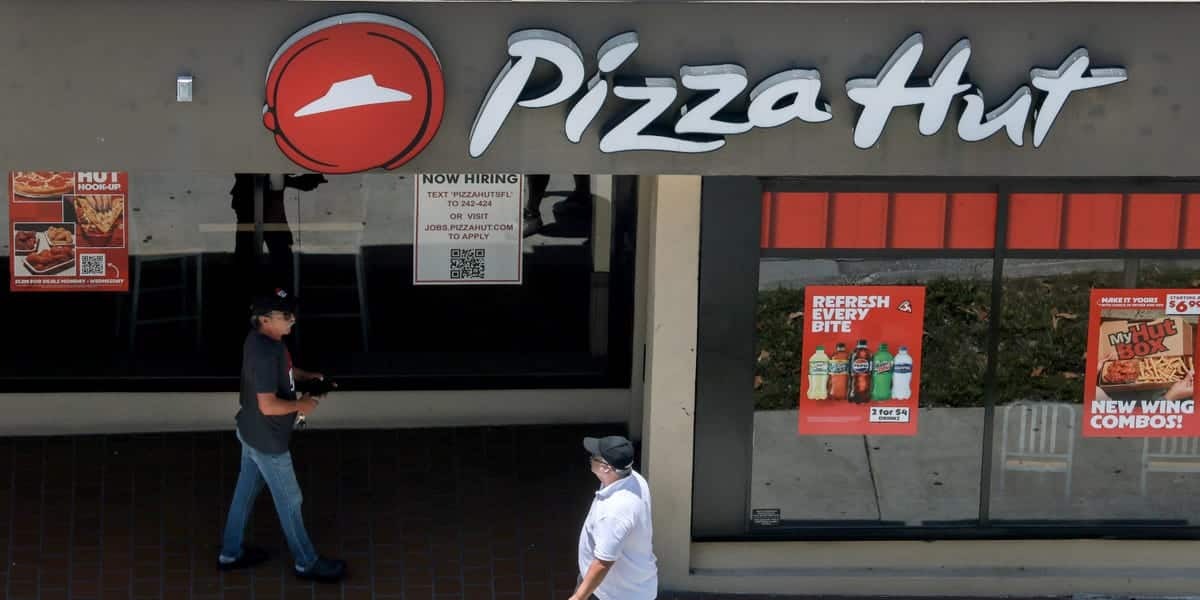
The sale comes as Pizza Hut faces challenges in the US market, with sales declining and numerous locations closing. The brand, founded in 1958, has struggled to adapt to changing consumer preferences that favor speed, convenience, and digital ordering, areas where competitors like Domino's have invested more heavily. Pizza Hut's comparatively large dine-in locations are seen as a liability in a market increasingly focused on delivery and lower operating costs.
Industry observers, like restaurant-management consultant Ishann Dhawan, note that while the overall pizza market remains strong, Pizza Hut "slept through" the fundamental shift in customer behavior. The brand's future under LongRange Capital remains uncertain, with questions about whether modernization efforts will be sufficient to revitalize the aging brand. LongRange Capital, a relatively new firm managing around $1.7 billion in assets, is known for operational improvements rather than financial engineering, a strategy that may be what the brand needs.
For Yum! Brands, the divestiture appears to be a strategic move to focus on its stronger-performing brands, particularly KFC, which continues to expand globally. Pizza Hut's performance had been a drag on the company's balance sheet for years. The stock market's muted reaction to the sale suggests that investors are cautiously optimistic, awaiting concrete plans from the new owners.